
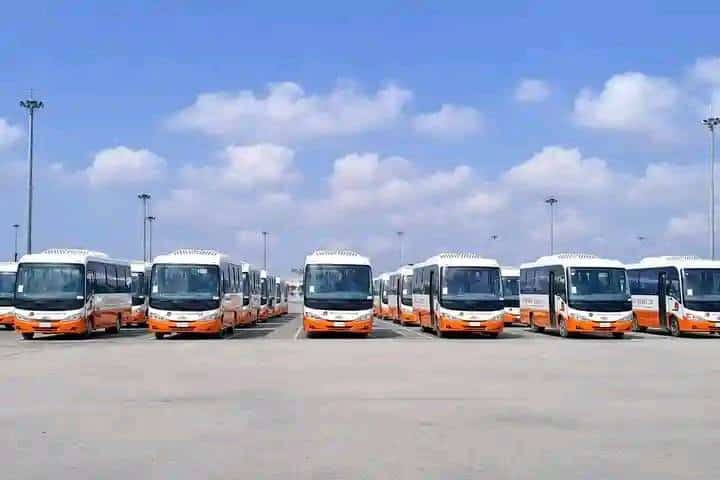
Ghana’s public transport sector is set for a much-needed boost as the first batch of 100 Metro Mass Transit buses from Egypt heads to the country, marking the beginning of a broader effort to rebuild the struggling state-owned transport system and ease pressure on commuters.
The new buses are part of a larger procurement plan expected to deliver more than 300 modern vehicles to Metro Mass Transit Limited (MMTL) by the end of the year. The move comes after months of severe transport shortages across major cities such as Accra, Kumasi, and Takoradi, where commuters have struggled daily to find affordable buses, especially during peak hours.
For many Ghanaians, the news goes beyond just the arrival of new vehicles — it signals a potential turning point in a transport system that has been under intense strain due to aging fleets, rising fuel costs, and increasing urban population pressure.
Public transportation in Ghana has quietly reached a breaking point in recent years. With a significant number of Metro Mass buses grounded due to mechanical failures and lack of maintenance, private transport operators have filled the gap, often charging higher fares. This has hit low- and middle-income commuters the hardest, particularly workers, traders, and students who depend on affordable daily transport.
The arrival of these Egyptian-built buses is therefore not just an infrastructure update; it is an economic intervention.
Reliable public transport reduces the cost of movement, stabilizes fares, and improves productivity by helping workers arrive on time. In economic terms, a functional transport system lowers the cost of doing business, supports urban mobility, and improves access to markets and jobs.
When commuters spend less time and money on transportation, the overall economy benefits through increased efficiency and consumer spending power.
The buses, manufactured in Egypt under a government-backed arrangement, reflect growing economic cooperation between African countries in sectors like transport, manufacturing, and infrastructure.
In December 2025, Ghana’s Deputy Minister of Transport, Dorcas Affo-Toffey, led a technical delegation to Egypt to conduct a final inspection of the Isuzu buses before shipment. The visit was aimed at ensuring that the vehicles meet Ghana’s operational and environmental standards.
According to the transport ministry, the buses are modern 29-seater units designed for efficiency, durability, and passenger comfort. Manufacturers will also provide maintenance support for the first 12 months, while Ghanaian engineers receive specialized technical training to manage the fleet independently afterward.
This approach is significant because Ghana has previously struggled with maintenance culture in public transport systems. By embedding technical support and spare parts supply into the agreement, authorities are attempting to avoid the common problem where new buses quickly become non-operational due to poor maintenance.
The delivery of the first 100 buses forms part of a broader transport reform strategy by the Ministry of Transport (Ghana), aimed at restoring confidence in public mass transit.
Government officials describe the initiative as a “transport reset,” combining state procurement with private-sector involvement to ensure sustainability. Additional buses from private transport investors are also expected to arrive in the coming months, creating a more balanced and resilient system.
From a policy perspective, this signals a shift away from relying solely on government-owned fleets toward a hybrid model where public and private operators work together to meet demand.
Transport economists often recommend this model because it spreads financial risk, improves efficiency, and ensures better service delivery.

Also Read: Shocking CCTV Footage Shows How Arrested Jewelry Robbery Gang Stormed Shops in Accra
Economic and Social Impact
The impact of these new buses could be felt almost immediately once they begin operations.
First, they are expected to reduce transport fares on busy routes by increasing supply and competition. When more buses are available, private operators typically reduce prices to remain competitive.
Second, the improved fleet will ease congestion at major transport terminals, where passengers currently spend long hours waiting for buses.
Third, it will improve safety and reliability, as newer buses are less likely to break down compared to aging vehicles currently in circulation.
For students, traders, and workers, this means shorter travel times, lower daily transport costs, and more predictable commuting schedules.
In the long term, improved public transport also contributes to urban development by supporting structured mobility and reducing reliance on informal transport systems.
The success of this initiative could shape the future of public transport in Ghana.
If the new buses are properly maintained and managed, the government may expand similar partnerships with other African and international manufacturers to modernize the entire Metro Mass fleet.
There is also the possibility of integrating digital ticketing, route tracking systems, and fuel-efficient technologies to improve operational efficiency.
Some transport policy experts suggest that Ghana could eventually move toward electric or hybrid buses to reduce fuel dependency and environmental impact, aligning with global trends in sustainable transportation.
Additionally, the training of local engineers under the Egyptian partnership could strengthen Ghana’s technical capacity, opening doors for future local assembly or manufacturing of buses.
This would not only reduce import costs but also create jobs in engineering, manufacturing, and logistics.
As the first 100 buses arrive, attention will shift to implementation.
Key questions include how quickly the buses will be deployed, which routes they will serve, and whether maintenance systems will be strong enough to keep them operational over the long term.
The real success of the programme will depend not just on procurement, but on management, accountability, and continuous investment in the transport sector.
For now, the arrival of the Metro Mass buses from Egypt offers a sense of relief and cautious optimism for thousands of commuters who rely on public transport every day.
It is a reminder that strategic investment in infrastructure, when properly executed, can directly improve the daily lives of ordinary citizens while strengthening the broader economy.

Also Read: Ghana Opens Its Arms to Africa: Free Visas for Every African Citizen Starting May 25!