
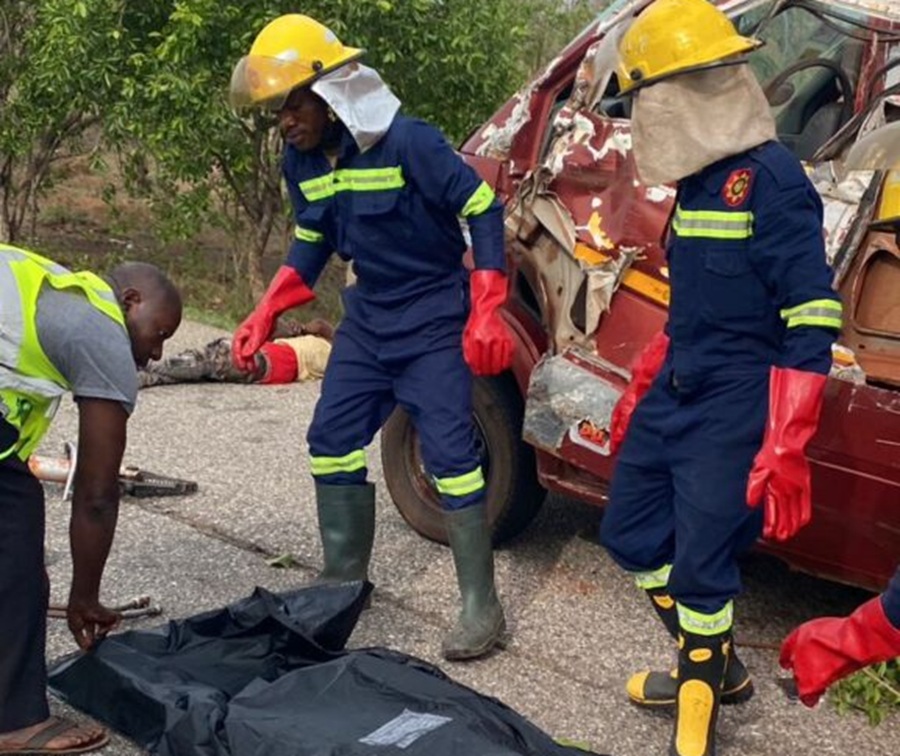
A tragic road crash at Dawadawa on the Kintampo–Tamale Highway in the Bono East Region has once again drawn national attention to the persistent dangers on Ghana’s highways, after four people lost their lives and fourteen others were injured in a collision involving a cargo truck and a passenger bus. The incident, confirmed by the Ghana National Fire Service, highlights a recurring pattern of fatal accidents along one of the country’s most critical transport corridors.
The early morning crash paints a grim picture of how fragile road safety remains in Ghana, especially on highways that connect the northern and southern parts of the country. The Dawadawa stretch has long been known for heavy commercial traffic, including cargo trucks transporting goods such as poultry feed, food items, and industrial materials. Passenger buses also rely heavily on this route to move travelers between regions, making it one of the busiest transport arteries in the country.
When emergency responders arrived at the scene after receiving a distress call, they were confronted with severely damaged vehicles and trapped passengers. Rescue teams worked to free victims from the wreckage, but four individuals could not be saved. The injured were rushed to Kintampo Municipal Hospital for urgent medical care, while authorities began investigations into the cause of the crash.
Beyond the immediate tragedy, this incident raises deeper questions about road safety enforcement, vehicle maintenance, and driver behavior on Ghana’s highways. The Kintampo–Tamale road plays a strategic role in national trade and mobility, linking major economic zones and facilitating the movement of goods and passengers daily. Any serious accident along this route disrupts not only lives but also commercial activities and regional transportation.
Road safety experts often point to a combination of factors behind such accidents. Poor visibility in early morning travel, driver fatigue, overloading of cargo trucks, and speeding are frequently cited as major contributors. In many cases, commercial drivers operate under pressure to meet tight delivery schedules, leading to long hours on the road without adequate rest. This increases the likelihood of human error, which remains one of the leading causes of road crashes in Ghana.
Infrastructure also plays a role. While several highway improvement projects have been carried out in recent years, many roads still lack proper lighting, clear signage, and designated rest stops for long-distance drivers. Without these safety features, highways become high-risk zones, particularly during night and early morning travel periods when visibility and alertness are reduced.
The involvement of a cargo truck and a passenger bus in this crash reflects a common pattern in Ghanaian road accidents. Heavy trucks often share narrow highways with commercial passenger vehicles, creating dangerous traffic conditions. When a collision occurs between these two types of vehicles, the consequences are usually severe because of the size and weight difference.
This latest tragedy also highlights the crucial role played by emergency services in saving lives. The rapid response by the Ghana National Fire Service demonstrates the importance of having trained rescue teams ready to respond to road emergencies. In many situations, timely intervention makes the difference between survival and fatality, especially when victims are trapped in damaged vehicles and require immediate extraction.
From a policy standpoint, the incident reinforces the urgent need for stronger road safety enforcement and stricter monitoring of commercial transport operations. Experts believe that regular vehicle inspections, mandatory rest periods for long-distance drivers, and the installation of speed monitoring systems could significantly reduce the frequency of such accidents. Public education campaigns on defensive driving and road discipline are also essential in changing behavior on highways.

The human cost of road accidents goes far beyond statistics. Families lose breadwinners, businesses lose workers, and communities lose productive members of society. Each fatal crash leaves emotional and economic scars that can last for years. In rural and semi-urban areas, where access to emergency healthcare is limited, the impact becomes even more severe.
Looking ahead, this accident should serve as a wake-up call for both authorities and road users. Ghana has made progress in improving road infrastructure and emergency response systems, but more coordinated action is needed to prevent recurring tragedies. Investment in safer highways, better traffic regulation, and modern transport monitoring systems could help reduce the number of fatal crashes across the country.
The Dawadawa incident is not just another road accident report; it is a reminder that road safety remains one of Ghana’s most urgent public safety challenges. Until stricter enforcement, improved infrastructure, and responsible driving become the norm, highways like the Kintampo–Tamale road will continue to pose serious risks to travelers and transport operators alike.
For many Ghanaians who rely on long-distance travel for business, education, and family connections, safer roads are not a luxury but a necessity. This tragedy underscores the need for immediate action to protect lives and ensure that such devastating incidents become far less common in the future.
Also Read: President Mahama Calls Emergency Cabinet Meeting as Fuel Prices Spike – “We Will Cushion Ghanaians”