
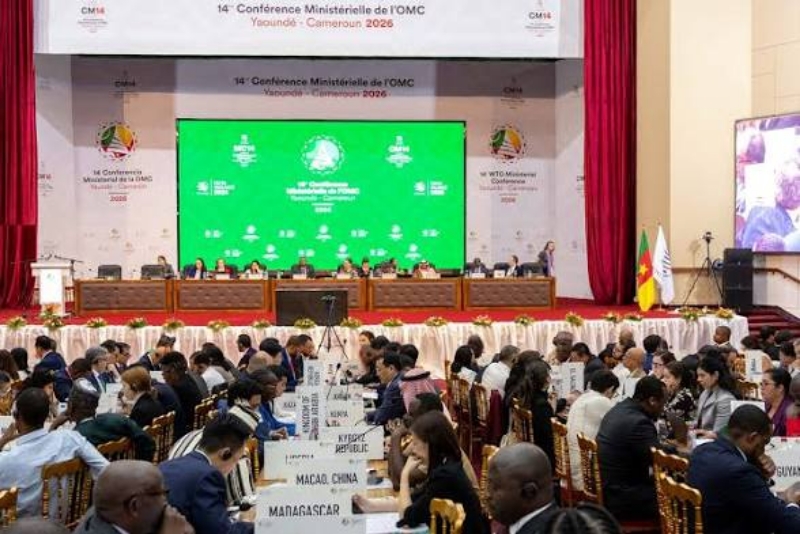
Trade ministers from around the world gathered in Yaoundé, Cameroon, for the World Trade Organization’s 14th Ministerial Conference (MC14), hoping to make real progress on updating global trade rules.
Instead, the four days of talks wrapped up early Monday morning with no major agreements — leaving many issues unresolved and highlighting deep divisions, including within Africa.
The meeting was meant to push forward WTO reform, find common ground on agriculture trade, and decide whether to extend (or even make permanent) a long-standing global ban on customs duties for electronic transmissions like digital downloads, streaming services, and e-commerce.However, sharp disagreements — especially over the e-commerce moratorium — led to a stalemate. Brazil and
Turkey blocked attempts to extend the moratorium, linking it to slow progress on agriculture issues that matter greatly to developing countries. As a result, most key decisions have been pushed back to further talks in Geneva.African countries arrived with mixed expectations. Some pushed strongly for reforms that would give developing nations more flexibility and support,
while others worried about protecting local industries and farmers. The deadlock has left the continent divided on the best way forward, with concerns that the WTO is struggling to remain relevant in a world of rising protectionism and geopolitical tensions.WTO Director-General Ngozi Okonjo-Iweala acknowledged the disappointment but tried to sound hopeful, saying members had come close to a “Yaoundé package” of agreements and would now continue working in Geneva.For many in Africa, the outcome is a setback.
The continent had hoped for concrete steps to make global trade rules fairer and more supportive of smaller and developing economies. Instead, the failure risks pushing more countries toward smaller, separate deals outside the full WTO framework — a trend that could leave African voices even weaker.The talks took place against a difficult global backdrop, including ongoing conflicts affecting supply chains and energy prices. While some smaller decisions on supporting least-developed countries and fisheries subsidies saw limited progress, the big-ticket items remain stuck.