
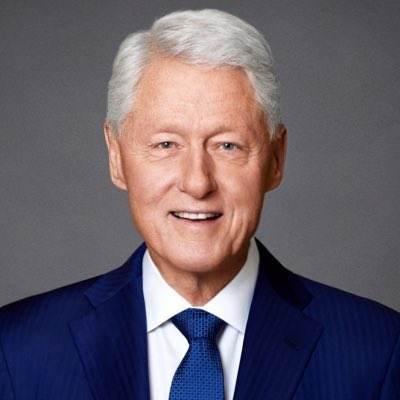
Former U.S. President Bill Clinton’s office has issued a strongly worded statement demanding complete transparency in the release of documents related to Jeffrey Epstein, raising concerns about what it describes as selective disclosures by the U.S. Department of Justice (DOJ).
The statement, released by Angel Ureña, a spokesman for the former president, references the Epstein Files Transparency Act and stresses that the law places a clear legal obligation on the Department of Justice to release the full and complete records sought by the public. According to Clinton’s office, what has been disclosed so far falls short of that standard.
“What the Department of Justice has released so far, and the manner in which it did so, makes one thing clear: someone or something is being protected. We do not know whom, what or why. But we do know this: We need no such protection.”
The statement argues that the current approach to releasing information fuels suspicion rather than clarity. Clinton’s office insists that transparency, not insinuation, should guide the process, particularly in a case that has drawn intense public scrutiny for years.
In line with this position, the former president’s office is calling on President Donald Trump to instruct Attorney General Bondi to immediately release any remaining materials that refer to, mention, or include photographs of Bill Clinton. The request extends broadly to all records subject to disclosure under the Act, including grand jury transcripts, interview notes, photographs, and investigative findings from the U.S. Attorney’s Office for the Southern District of New York.
The statement further warns that failure to release the full records would reinforce widespread suspicion that the DOJ’s actions are not genuinely about transparency. Instead, it suggests that selective disclosures could be creating damaging insinuations about individuals who, according to the statement, have already been repeatedly cleared by the Department of Justice across multiple administrations from both political parties.
By making this demand public, Clinton’s office says it is seeking clarity and accountability, emphasizing that partial disclosures only deepen mistrust and speculation rather than resolving long-standing questions surrounding the Epstein case.
