
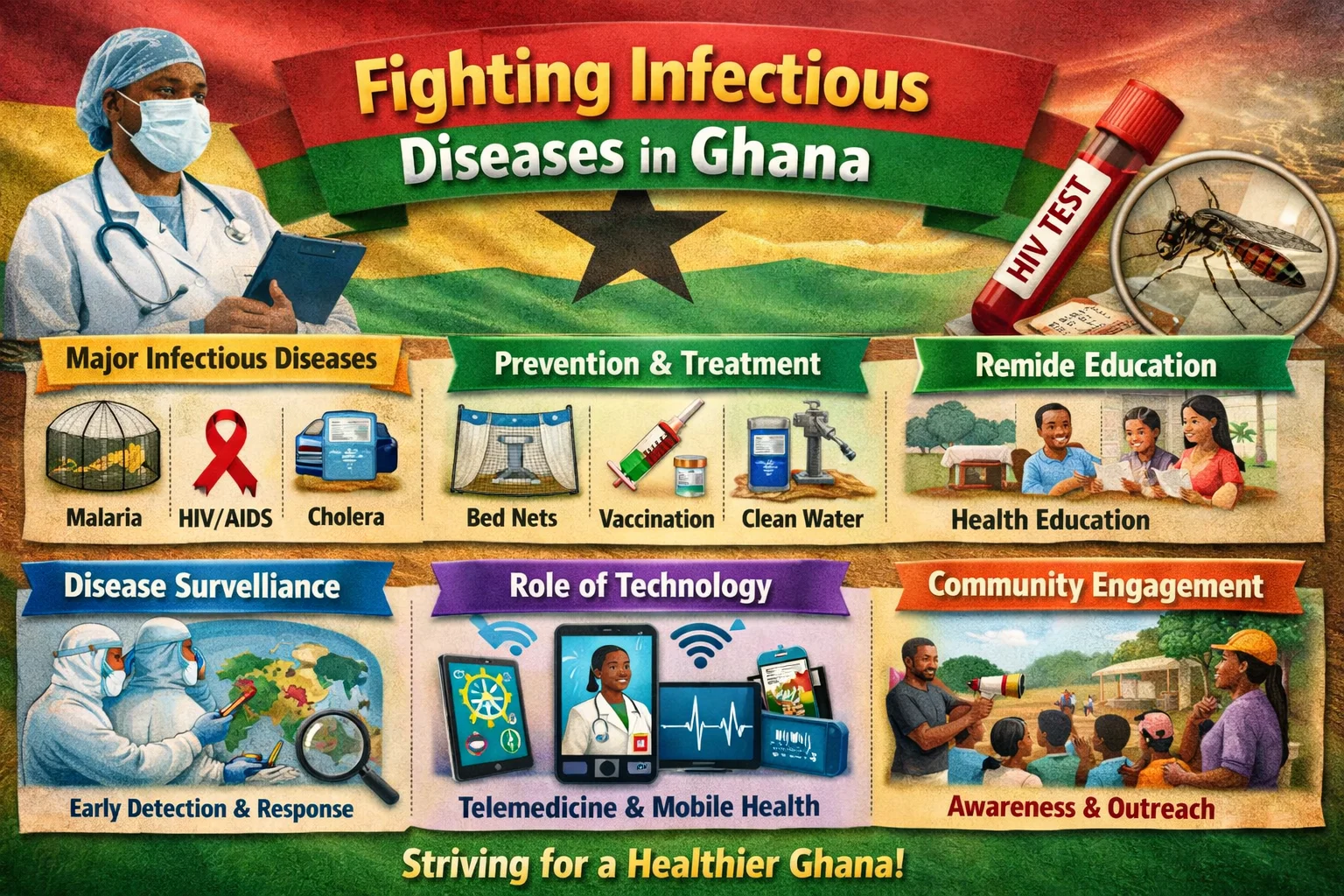
In Ghana, infectious diseases are still a prominent challenge to health. Thousands of people are affected by diseases in Ghana annually. They lead to morbidity, mortality and financial issues. Hospitals and health professionals are also strained by these diseases. Others, such as malaria, are quite widespread.
COVID-19 is a new disease found in the previous few years. It can indicate how fast the infection can spread. Traditional ailments such as HIV/AIDS and tuberculosis are still affecting the lives of many people. It is not just a health problem; It also has importance for economic growth.
It is significant to know the various classes of infectious diseases and the way in which Ghana is combating them. It helps the citizens, health workers and policymakers to work together. This article will focus on the major infectious diseases in Ghana and the future challenges.
The adverse effects of infectious diseases in Ghana
Infectious diseases continue to afflict Ghana. They are transmitted by mosquitoes, contaminated water and human interactions. There are those diseases that are familiar, such as malaria. Others are developing or reoccurring, such as Lassa fever.
Malaria
Malaria is one of the most serious diseases in Ghana. It is caused by the Anopheles mosquitos. Ghanaians get infected in millions every year. The greatest risks are associated with children below five years and pregnant women.
Ghana has made efforts to combat malaria. Mosquito nets are provided by the government. Through indoor spraying, high-risk areas are sprayed. Women during pregnancy receive preventive care. Malaria medications are administered to children on a seasonal basis. Malaria vaccine program among children was also initiated in Ghana.
These initiatives have minimized cases. However, malaria remains a menace. Ghana has plans that include the reduction of deaths by malaria.
HIV/AIDS and TB
HIV/AIDS and TB are other major spreads. In Ghana, HIV lures tens of thousands. There is availability of antiretroviral therapy, though it is not fully covered.
TB also remains a concern. HIV victims are vulnerable to contracting TB. Ghana has initiatives that can be used to identify, cure and prevent such diseases. Education of the masses and community outreach facilitate infection reduction.
Cholera
Cholera usually comes in the rainy season. It is brought by polluted water and poor sanitation. It is the same in the urban and rural regions.

Ghana has interventions to regulate cholera. National Sanitation Day assists in the cleanup of communities. Hygiene and safe water use education minimizes outbreaks.
Strategies to Fight Infectious Diseases
Diseases and Re-Emerging Diseases
There are also new and re-emerging infections. There are incidents of influenza, Lassa fever and once in a while, polio outbreaks. COVID-19 demonstrated the speed at which viruses spread.
Such diseases demonstrate the importance of well-developed surveillance and emergency response.
Disease Prevention
Early recognition of the disease is vital. Ghana continues to work on malaria, HIV, TB, cholera and other serious diseases.
The coordinator of responses is the Public Health Emergency Operations Center. Regional centers deal with the outbreaks.
Vaccination
Vaccines can prevent a various infectious diseases. The Additional Program on Vaccination in Ghana is used for children against measles, polio and tetanus. The vaccines now include Malaria and COVID-19.
Vaccination is a measure that stops the spread of the disease and saves lives. It is among one of the most cost-effective public health instruments.
Environmental Health and Vector Control
Malaria is reduced through the control of mosquitoes. Bed nets and indoor spray are some of the measures. Societies are taught to eliminate standing water.
The water quality and sanitation avert cholera and other diseases caused by water. These are backed up by environmental health campaigns.
Health Education
Health education is vital. Hygiene, mosquito nets, safe sex and early treatment are taught to people. Messages are distributed in schools, media and community workers. Consciousness prevents infections and life is saved.
Building Stronger Health Systems
Well-developed health systems combat diseases. Ghana makes investments in hospitals and laboratories as well as educated staff. The improved supply chains make sure that drugs and vaccines are delivered to communities.
The issue of combating the infectious diseases
Ghana has a number of issues:
- Lack of resources: There are numerous health initiatives that are donor funded. Local funds are limited.
- Antimicrobial resistance: Bacteria are those that are resistant to antibiotics. This makes treatment harder.
- Sanitation and poverty: Diseases are more common in the poor. Risks are increased by dangerous and congested water.
- Access to care: Health care in rural communities has low access in general.
Role of Technology and Telemedicine
Technology is assisting in fighting diseases in Ghana. Telemedicine can allow doctors to meet the patients at a distance. This is useful where there are limited health facilities, especially in the rural regions.
The mobile applications and online platforms assist in monitoring disease outbreaks. Real-time information enhances monitoring and reaction. Technology is utilized to report cases using health workers. Modern equipment has been adopted by laboratories to diagnose at a faster rate. Digital tools are used in monitoring vaccination programs. The technologies minimize delays and save lives.

Social media are also used in community awareness campaigns. Hygiene messages, mosquito net messages and safe water messages are communicated to more people. Ghana is transforming its way of combating infectious diseases that are being influenced by technology and telemedicine. They hasten and streamline the process of prevention, diagnosis, and treatment.
The Future of Disease Control in Ghana
Ghana has further plans regarding the control of the disease:
- Research and research: More research and improved treatment are required.
- Surveillance networks: The real-time information will help in the early detection of the outbreaks.
- Community interventions: Education and outreach will continue the reduction of infections.
- Global partnership: Ghana is assisted in its programs by WHO, CDC, and so on.
Such interventions will help in reducing Diseases in Ghana and protect the health of citizens.
Conclusion
Fighting the infectious diseases in Ghana is a continuous exercise. There are still challenges of malaria, HIV, TB, cholera and emerging diseases. Prevention, treatment, vaccination, education and surveillance are some tactics employed by the country in combating these threats. Both effective health systems and communities are important.
Ghana will be able to save lives and decrease the disease burdens with further attention. The future appears optimistic even though more effort and investment must be made to contain Diseases in Ghana.