
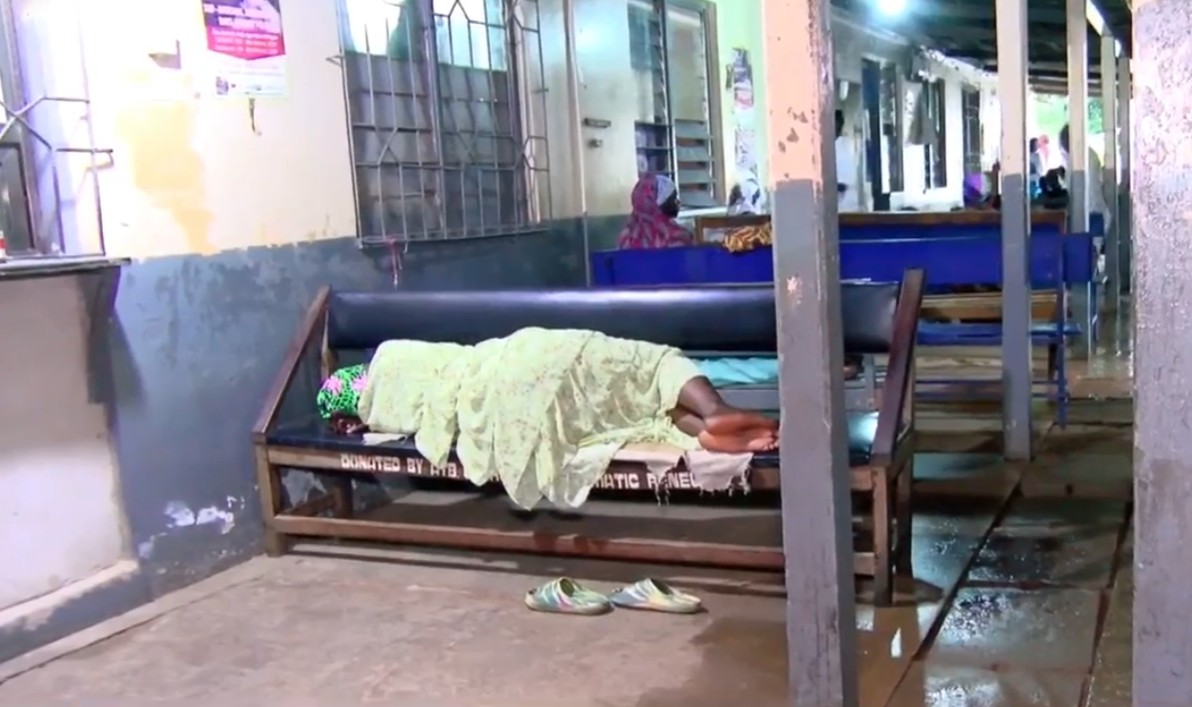
For many Ghanaians, visiting a major hospital during an emergency often comes with a frightening uncertainty: Will there be a bed available? Families have long faced the painful reality of being turned away from one facility to another in search of space for critically ill patients is a situation widely known as the “no bed syndrome.”
The government is now taking a technological approach to tackle this long-standing problem by piloting a real-time bed management system across teaching hospitals nationwide. The initiative is designed to allow health facilities to monitor, track, and allocate hospital beds instantly, ensuring that patients in urgent need are directed to facilities with available space.
This move marks a significant shift in how Ghana manages emergency healthcare logistics and could redefine hospital coordination across the country.
The phrase “no bed syndrome” has become part of Ghana’s public health vocabulary over the past decade, often linked to tragic cases where patients died after being rejected by multiple hospitals due to lack of space.
At its core, the problem is not always the total number of beds available nationwide. Rather, it is a coordination and information gap. Hospitals operate independently, and in emergency situations, there is often no centralized system showing where beds are available in real time. Ambulances and families sometimes travel long distances only to discover that a facility is already full.
This leads to delays in treatment, overcrowded emergency units, and unnecessary loss of lives.
The new bed management system aims to close this information gap by creating a digital network where hospitals can update their bed availability continuously. In simple terms, doctors, emergency teams, and administrators will be able to see which hospital has space at any given moment and direct patients accordingly.
The introduction of a real-time bed tracking system is not just a technological upgrade; it is a public health reform with life-saving potential.
First, it improves emergency response efficiency. When hospitals can share data instantly, patients in critical condition — such as accident victims, pregnant women in distress, or heart attack patients — can be transferred to the right facility without delay.
Second, it strengthens accountability in the healthcare system. With digital tracking in place, it becomes easier to monitor how hospital resources are used and whether facilities are accurately reporting bed availability.
Third, it reduces pressure on major teaching hospitals by ensuring patient distribution is more balanced across the system.
From a healthcare management perspective, this is a move toward data-driven decision-making, which is widely regarded as essential for modern medical systems.
Real-time bed management systems are already used in advanced healthcare systems in Europe, North America, and parts of Asia. These systems integrate hospital data, emergency services, and patient flow management to ensure resources are used efficiently.
By piloting such a system in teaching hospitals, Ghana is aligning its healthcare infrastructure with global best practices.
Teaching hospitals are the logical starting point because they handle the highest number of emergency cases and serve as referral centers for smaller hospitals. If the system works effectively at this level, it can eventually be expanded to regional and district hospitals across the country.
Healthcare technology experts often emphasize that digital coordination tools are just as important as physical infrastructure like buildings and equipment. A hospital with enough beds but poor coordination can still face a crisis, while a well-managed system can operate efficiently even with limited resources.
While the bed management system is a promising solution, the real challenge lies in implementation and sustainability.
Healthcare policy experts point out that technology alone cannot solve the problem unless it is supported by proper training, reliable internet connectivity, and strong administrative discipline.
Hospital staff must update bed availability regularly and accurately for the system to work. Emergency response teams must also be trained to rely on digital data rather than traditional communication methods such as phone calls and manual coordination.
Another key issue is infrastructure. Some hospitals still struggle with unstable internet and power supply, which could affect real-time data updates.
For the system to succeed, the government will need to invest not only in software but also in network stability, staff training, and continuous monitoring.
If successfully implemented, the bed management system could transform Ghana’s healthcare delivery in several ways.
In the short term, it could significantly reduce emergency referral delays and improve patient survival rates.
In the medium term, the system could be integrated with ambulance services, allowing emergency teams to know exactly where to take patients before leaving the accident scene or community clinic.
In the long term, it could become part of a broader national digital health infrastructure, linking hospitals, pharmacies, laboratories, and emergency services into a unified system.
This could also pave the way for electronic medical records, predictive healthcare planning, and improved resource allocation across the country.
Ultimately, the system has the potential to shift Ghana’s healthcare model from reactive crisis management to proactive, coordinated care.
For many Ghanaians, the fear of hearing “no bed available” during an emergency has eroded confidence in the healthcare system. Families often feel helpless when they are forced to move from one hospital to another while a loved one’s condition worsens.
The new pilot programme sends a strong message that authorities are taking practical steps to address the problem.
If implemented effectively, it could restore public trust and demonstrate that technology can be used to protect lives and improve service delivery.
The success of this initiative will ultimately depend on how well hospitals adopt the system and how consistently it is maintained. But for now, it represents a hopeful step toward ending one of Ghana’s most persistent healthcare challenges and ensuring that no patient is left without care simply because there was no available bed at the right time.

Also Read: 100 Metro Mass Buses from Egypt as Government Moves to Fix Public Transport Crisis