
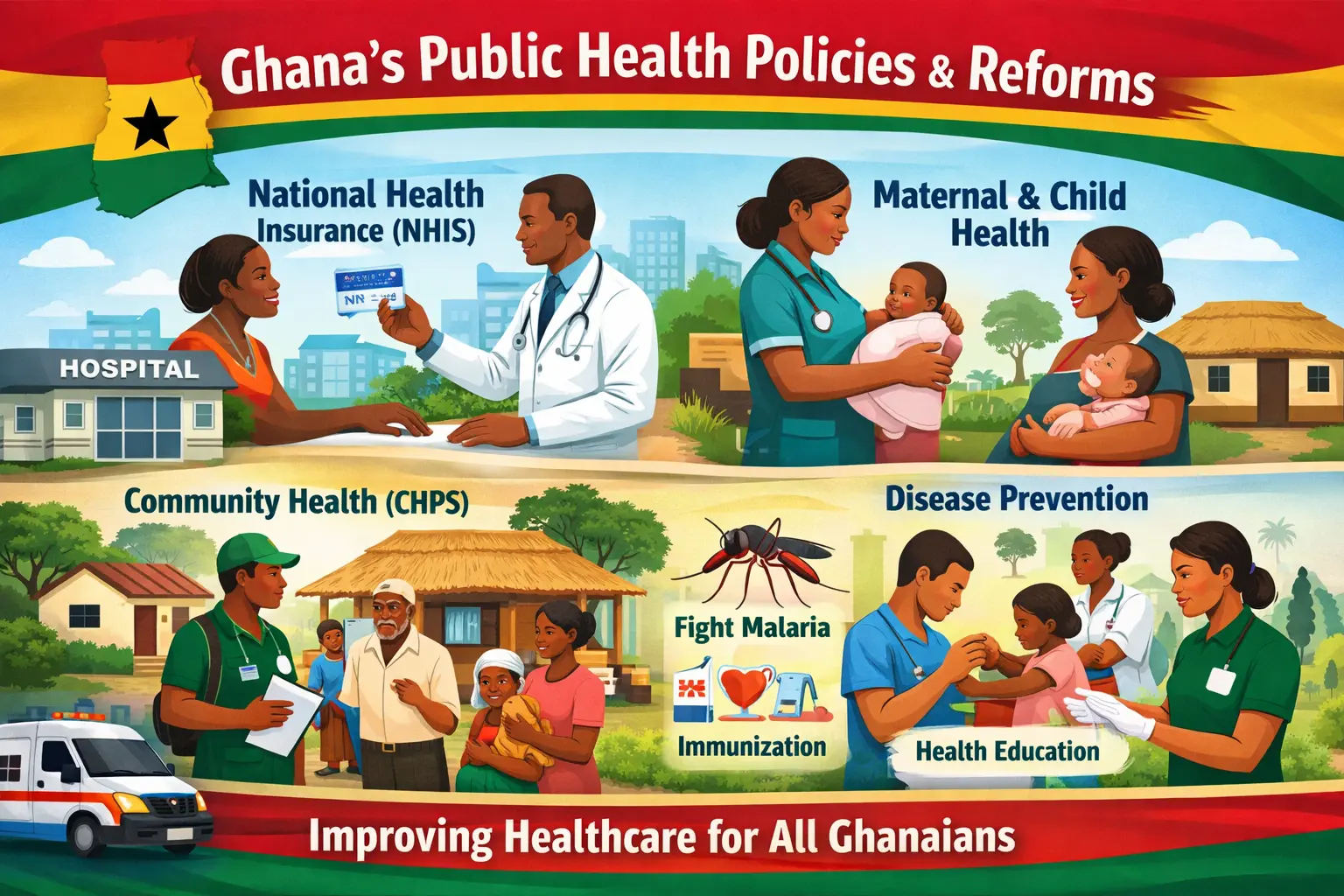
Ghana has, over the years, made great attempts to enhance the health of the people. The nation realizes that good health is a pillar to national development. The healthy population contributes to economic development, education and social stability. It is due to this that Ghana has implemented a number of reforms to make its health policies system stronger.
Ghana has a focus on prevention, access and equity in public health. The government collaborates with local and international stakeholders in order to enhance the delivery of healthcare. These would help to curb disease, enhance life expectancy and cushion exposed populations. Although there are still problems, the improvements can be observed in most industries.
Here, we discuss the policies and reforms in Ghana related to public health. This is aimed at giving a concise and useful background to those readers who may wish to know about the health journey in Ghana.
An Overview of Health Policies in Ghana
The Health Policies in Ghana are aimed at providing quality health care to all the citizens. The policy development and implementation is done by the Ministry of Health. These policies direct hospitals, clinics and community health services.
Another key goal is equity. The vision of health services is to target underserved and rural communities. This involves the construction of clinics and the development of community health workers. The government does not think that there should be any left-behind citizens.
Ghana encourages joint ventures as well. Funding, research and technical expertise are contributed by the international organizations. Such collaborations enhance the policy outcomes.
Important Health Policies that have influenced the reforms in the field of public health
National health insurance scheme
The National Health Insurance Scheme in Ghana is one of the greatest reforms to be made on health. It was established to make healthcare cheaper for the citizens. A good number of individuals are now able to access hospitals without incurring huge costs.
NHIS is basic medical services. These are outpatient services, maternity services and basic drugs. The scheme has enhanced accessibility, particularly to low-income families.
Community-Based Health Planning and Services (CHPS)
The CHPS program takes healthcare nearer to communities. Health workers and nurses reside and operate in localities. This assists individuals to get serviced without having to drive far.
CHPS is centered on prevention and early treatment. It particularly works well in rural areas. This program has decreased the medical care delays.
The Health Programs on Mothers and Children
Ghana lays much emphasis on maternal and child health. There are policies that promote safe childbirth and pregnancy. Expectant mothers are taken through frequent examinations and professional delivery.

Disease Prevention and Health Promotion Policies
The disease prevention is promoted by the public health policies. Bed nets and early treatment are presented at the malaria control programs. The common diseases are prevented through vaccination of children.
Health Policies that are in support of disease prevention and control
Ghana health policies have put a strong focus on disease prevention and control. Such initiatives have minimized deaths caused by malaria.
Another success story is in regard to vaccination programs. Ghana is highly covered in immunization. You can get children inoculated against diseases that are widespread at no expense. This secures communities and families.
Healthy lifestyles are promoted by education campaigns to the public. Messages promote handwashing, use of clean water and good sanitation. These are the easy ways of avoiding numerous diseases.
In the case of health emergencies, policies lead to rapid response. This was exhibited by Ghana during disease outbreaks. Timely intervention and civic collaboration acted as a way to curb the harm.
The Health Policies in Enhancing Healthcare Infrastructure
Health Policies have helped bring significant changes to healthcare infrastructure. Several new hospitals and clinics have been constructed in the country. These facilities enhance the delivery of services and save on time that patients spend on traveling.
Medical equipment is also a government investment. The contemporary diagnostic equipment assists physicians in making the right judgments. Better equipment enhances patient outcomes. Another priority is to train healthcare workers. Education and ongoing training are facilitated by policies. Qualified personnel enhance the quality of care.
There is an increase in digital health systems. Efficient delivery of service is supported by electronic records and telemedicine. There are such systems that enhance coordination and minimize errors.
Ghana Public Health Reforms Achievements
The reforms in the public health of Ghana have met significant success. There is increased life expectancy in the years. Several diseases that are preventable are controlled.
Availability of healthcare has increased. Mobile clinics and CHPS compounds are useful to rural communities. Better care is given to women and children. There is greater awareness of the people. The citizens are aware of the need for prevention and early treatment. This development has the role of health education.

These achievements are shown through the international recognition. Ghana has been cited as a model of health insurance coverage in the African region. Such achievements motivate more reforms.
Problems Associated with Ghana’s Health System
- Limited Healthcare Funding
Finance is a significant issue. The cost of healthcare keeps on increasing. Small budgets have an impact on the quality and service growth.
- Poor Infrastructure In Healthcare
The hospitals and clinics are not sufficient in all areas. It is mostly in the rural areas. Long-distance delays treatment.
- Skilled Health Worker Shortage
Ghana has a lack of skilled professionals. Medical practitioners and experts are concentrated in cities. There are usually unskilled personnel in rural areas.
- Loopholes in Policy Operations
Good policies do not always work well during implementation. There is slow coordination of agencies. There should be better monitoring systems.
Government and Stakeholder Role
Government is at the center of reforming public health. Policies and resources are created in ministries. Legislation is championed by parliament.
Programs are taken by local governments at community levels. Public health education is also supported by traditional leaders. International partners provide financial contributions and skills. NGOs aid in the delivery of awareness and service. Teamwork reinforces performance.
The role is played by citizens themselves. The involvement of the community enhances the success of the programs. It is a collective responsibility of health.
Future Trends in Ghanaian Public Health
The future of the Ghanaian public health is bright. Investment in prevention will help save lives. Policy-wise, health threats that can arise can be combated with stronger policies.
There will be a larger role of technology. Electronic health systems have a chance to enhance access and efficiency. Telemedicine is able to extend to the distant.

Sustainable financing is a necessity. Health insurance and alliances can be strengthened, which will help in growth. There is a need to adjust policy changes in accordance with changing needs. Health risks that may be caused by urbanization and climate change.
Conclusion
The Ghanaian policies and reforms in the field of public health are highly dedicated to enhancing the health outcomes. There is a growing access, prevention and equity. Such programs as NHIS and CHPS have transformed healthcare delivery.
The difficulties are not completely gone, and the experience teaches to act in the future. Further cooperation and innovation will also improve the system.
Hospitals are not the only thing associated with public health. It is concerned with individuals, groups and prevention. The experience of Ghana demonstrates the idea that effective policies can bring a change.