
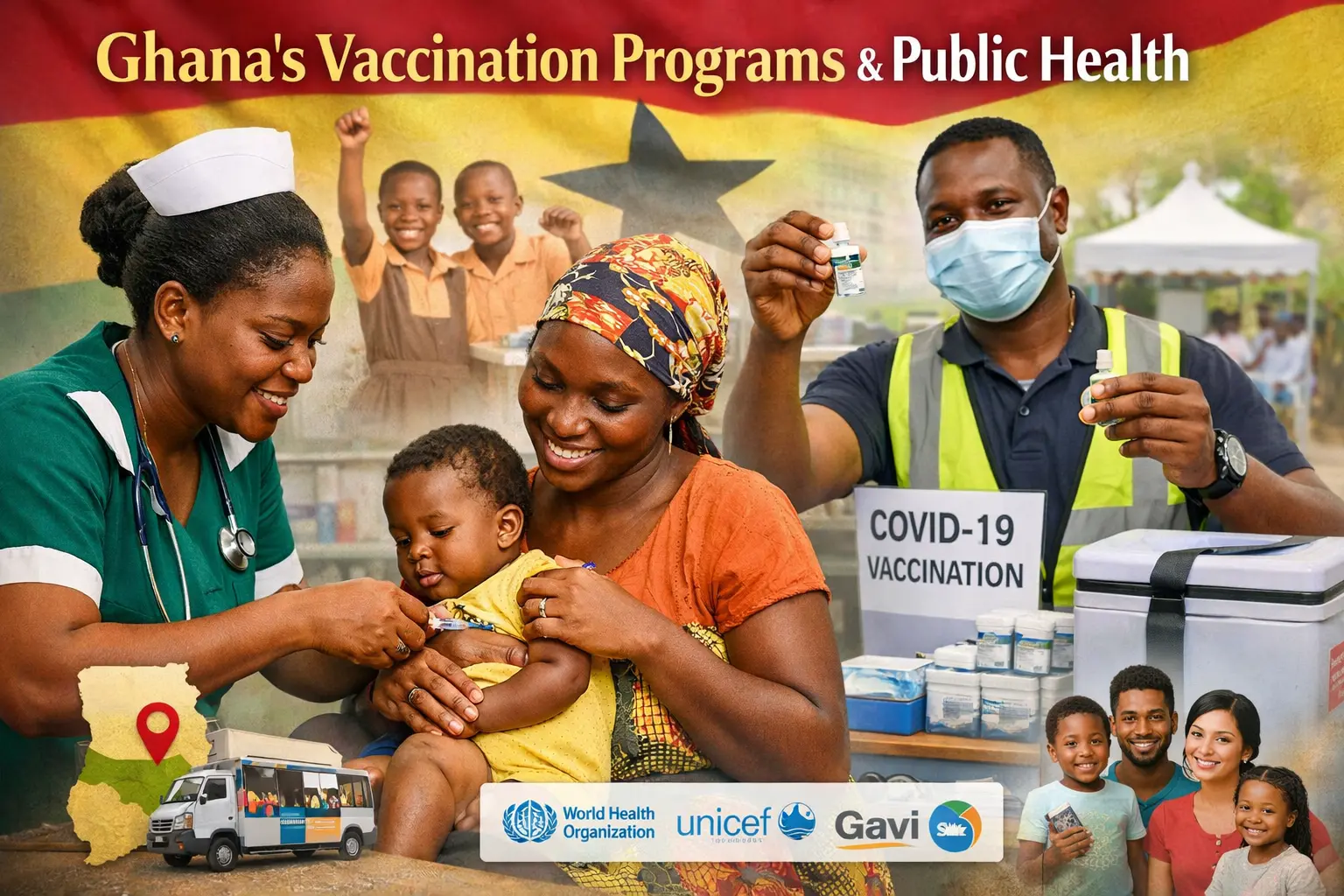
In Ghana, the national health system almost depends on the vaccination schemes. Vaccines can save millions of people from fatal diseases. They transform the children into healthy people and make adults lead productive lives. Ghana has achieved significant milestones in preventing diseases through powerful planning and backing of the community.
The idea of public health emphasizes maintaining the health of people prior to their falling ill. Vaccination will well meet this objective. Vaccines can decrease the strain on hospitals and decrease healthcare expenses by preventing outbreaks. The fact that Ghana remains committed to immunization illustrates its willingness to have a long-term commitment to national health.
Public Health and Vaccination in Ghana
Vaccination refers to prevention of infection by infectious diseases through development of immunity in individuals. Vaccination programs in Ghana are included in the national strategy of public health. The purpose of such programs is to prevent diseases, lower the cost of healthcare, and save lives.
In Ghana, the emphasis of public health is based on prevention of diseases and not treatment. Vaccines aid in the prevention of outbreaks prior to occurrence. Such a strategy secures people and whole communities.
Ghana Vaccination Programs History
Ghana started to conduct organized immunization in the late seventies. It was through the Expanded Programme on Immunization (EPI) that common childhood diseases were fought.
The diseases that the program focused on included:
- Measles
- Polio
- Tuberculosis
- Diphtheria
- Tetanus
- Whooping cough
As time passed, Ghana increased its vaccine timetable to cover additional vaccines.
Ghana: The Expanded Programme on Immunization
It ensures the children receive the required vaccines at the right time. Program is offered by departments that make up hospitals, health centers, and outreach clinics.
The EPI services are free and this eliminates financial barriers among the families. Health workers make active follow-ups on the parents to see that the children adhere to their vaccination programs. This planned strategy contributes to coverage and great health protection of the population.
Ghanaian Childhood Vaccination Schedule
Ghana has a formalized immunization program among children. Immunizations occur in childhood and during birth.
Common Childhood Vaccines
- BCG for tuberculosis
- Oral Polio Vaccine
- Pentavalent vaccine
- Measles and Rubella vaccine
- Rotavirus vaccine
- Pneumococcal vaccine
These vaccinations save the lives of children during the most sensitive years of their lives. Ghana has reduced diseases among children because of high coverage.

The Vaccination Effect on the Ghanaian Public Health
It is agreeable that vaccination has gone a long way to improve the health condition of the Ghanaian population. Diseases that were feared a few years back are very rare now. Polio was eliminated and measles outbreaks were significantly decreased.
This progress has been able to save thousands of lives. There are fewer medical emergencies in the family. Societies live better lives. Immunization has been made to be one of the most affordable governmental health interventions in the nation.
COVID-19 Vaccination and the response of Ghana
The coronavirus posed severe health problems to the population. Ghana countered in haste by focusing on vaccination. Health officials tried to have vaccines in place and allocate them equally.
Education campaigns to the public about the safety and benefits of vaccines were useful in clarifying this information. Vaccines were taken to communities through mobile clinics. In spite of the existing challenges, vaccination facilitated the reduction of serious sickness and fatalities. It also helped in the economic recovery by making schools and businesses open again.
The role of Community Health Workers
In Ghana, community health workers are significant in the vaccination programs. They act as an interface between communities and healthcare facilities.
Their Key Responsibilities
- Teaching families about vaccines.
- Monitoring immunization records.
- Reaching remote areas
- Resolving vaccine issues.
Their work enhances confidence and better coverage of vaccination, particularly in rural areas.

Community Education and Immunization
Vaccination acceptance involves education to a significant extent. In Ghana, the spread of the accurate information is done through radio programs, community meetings, and health talks.
When individuals learn the operation of vaccines, they will be less afraid. Education among parents also makes them appreciate the need to take all doses. Educated communities make better followers to vaccination and this enhances the health of the people.
Issues in Ghanaian Vaccination Programs
Although this has improved, Ghana has several challenges in terms of its vaccination programs.
Key Challenges
- Vaccine hesitancy
- Misinformation
- Funding limitations
- Cold chain storage issues
- Accessing communities that are remote.
One of the reasons why certain families delay or do not take vaccinations is the fear or the information gap. These issues remain the focus of society health.
Misinformation and Hesitancy about Vaccines
Vaccine hesitancy is becoming a problem of the global world, and Ghana is not an exception. Inaccurate information can be shared within a short time via social media.
Health officials strive to combat false information using facts and transparency. Local leaders and health workers, who are trusted, are significant in confidence building. Open communication contributes towards safeguarding the health of the people and inspires informed decisions.
Role of International Partners
The vaccination programs in Ghana are assisted by international partners in various aspects. They fund and provide vaccines and technical know-how. Such alliances enhance national capacity.
International coordination is also geared towards availing vaccinations and improved training of health workers. Such collaboration will help Ghana become effective in its response to new health issues and regular immunization programs.
Vaccine and Cold Chain Storage
Vaccines should only be stored under certain temperatures in order to be effective. Ghana has made investments in the cold chain infrastructure to preserve the quality of vaccines.
Refrigerators that use solar power are in use in regions that do not have a consistent electricity supply. The enhanced transport systems are more effective in providing vaccines. Such campaigns ensure the health of the population by making safe vaccines.
Diversity in Vaccination Treatment
One of the objectives of Ghanaian public health is equitable access. Location and income should not be a reason to miss vaccination of any child.

Outreach initiatives focus on the underserved regions. The mobile clinics access the rural societies and the slums. Such a unifying strategy leads to bridging gaps and provides national security.
Future of Vaccination Programs in Ghana
The future of vaccination in Ghana is good. The health infrastructure and innovation in the government are still being invested in.
Future Priorities
- Increasing adult vaccination.
- Enhancing electronic health records.
- Enhancing the local production of vaccines.
- Improving disease surveillance.
Such initiatives will enhance the resilience of the population to health in the long term.
Conclusion
Ghana has a history of successful vaccination programs that form the foundation of the state health. They have also saved numerous lives and enabled the burden of infectious diseases to be lessened. Ghana is moving to a healthier future through effective leadership, community engagement and international collaboration.
Although there is still a problem, there is still progress in terms of vaccination as education, innovation, and investment will continue to be an asset. Immunization is one of the strongest national development tools that may be used by Ghana to promote the health of the population.