
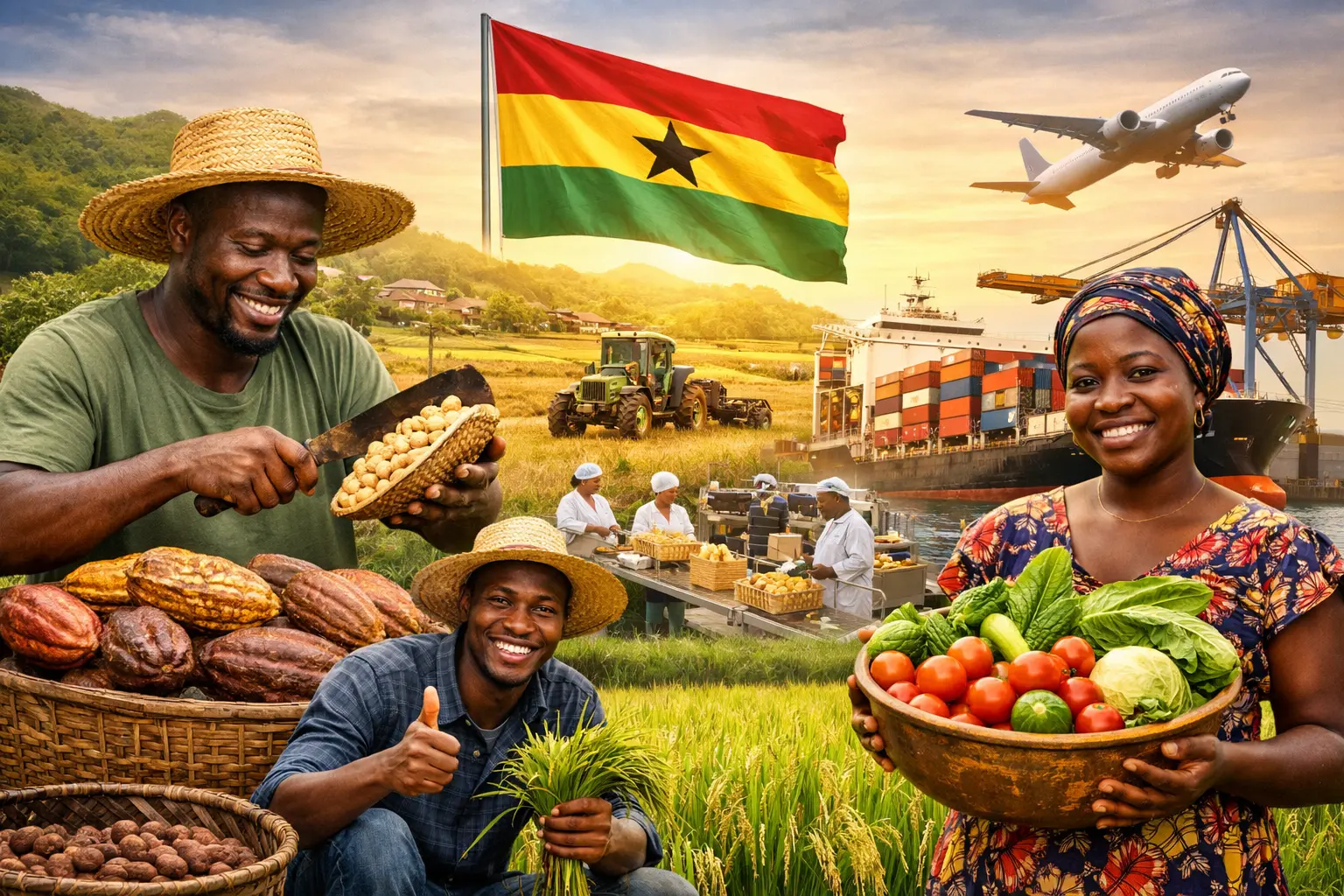
The heart of Ghana’s Economy heart lies in agriculture. It feeds the nation. It provides jobs. It promotes millions of families. The majority of the rural population uses farming as a means of daily earnings. Most of the households would fail to survive without agriculture.
People are also related to the global economy through agriculture. Ghana is a cocoa, shea butter, cashew nuts and vegetable exporter to other countries in the world. This introduces foreign cash that empowers Ghana’s Economy. It also generates employment in the countryside, in the markets, and in factories.
This article will discuss the effect of agriculture on Ghana’s Economy. Some of the areas we will examine include jobs, exports, small-scale farmers, technology, sustainable practices and the future of farming in the country. Planting crops is not the best thing about agriculture: it provides the foundation of the development and prosperity of Ghana.
The Role of Agriculture in Ghanas Economy
Farming is a big portion of the GDP of Ghana. It gives the majority of the population its food and income. There is a role for crops, livestock, fisheries and forestry.
Other industries are supported by agriculture. To take an example, chocolate depends on cocoa farming. Farming of livestock promotes meat processing. This renders agriculture as the core of Ghana’s Economy.
In the absence of agriculture, Ghana would experience food shortages. This would place the country on a high dependency on imports. This would damage local companies and make it more expensive. Good agriculture sustains the economy and provides for the population.
Agriculture Grows Millions of Jobs
Over half of the Ghanaians work in the sphere of agriculture. Fishing, livestock Care, transport, and marketing are some of these jobs. The agricultural sector provides both men and women with jobs.
Farming supports families. The sale of farm produce brings revenue. Farmers spend money on goods and services within the region. This contributes to the expansion of other businesses. Farming is one of the pillars of Ghana’s Economy System since it keeps millions of people in jobs and alleviates poverty.
Boosting Foreign Exchange Through Exports
Ghana’s Economy depends on agriculture as a great source of foreign exchange. Ghana is globally renowned for cocoa beans that are utilized in the production of chocolate. Cocoa is one of the leading export products in Ghana and it earns millions of dollars annually.
Ghana derives a significant amount of foreign money through agriculture. Good exports contribute to the growth of Ghana’s Economy.

Key Export Products
- Cocoa: Cocoa is widely produced by Ghana. It is used in making chocolate all around the world.
- Cashew Nuts: It is grown mainly in the north. Resold to foreign customers.
- Shea Butter: The ingredient that is applied in cosmetics and food in the world.
- Fruits and Vegetables: Pineapples, mangoes, and bananas are introduced in the world markets.
Ghana is earning billions as a result of exporting agricultural products. This would enable Ghana’s Economy and make the nation more competitive in the world.
Food Security and Price Stability
With a powerful agricultural sector, Ghana’s Economy enjoys food security. Food security refers to the situation when people have adequate access to sufficient cheap food. Maize, plantain, yams, rice and cassava are some of the staple crops that are produced by local farmers. These foods provide food to the millions of Ghanaians and lessen the reliance on imported grains.
The prices will not be affected in case there is a rise in the supply of the local food. Prices of foods are constant, thereby allowing the families to better their budgets. This minimizes the inflation and the cost of living is affordable to everybody.
Supporting Small‑Scale Farmers
The majority of Ghana farmers are small-scale farmers. Such farmers have small portions of land and farm produce that are largely consumed locally and sold in local markets. Small-scale farming contributes immensely to Ghana’s Economy since it serves the rural population and assists in alleviating urban migration.
These farmers are supported by governments and organizations by way of training, provision of seeds, fertilizers and better tools. Small farms produce more food when they grow, which increases their earnings, heightening the local economies and alleviating poverty.
Enhancing Value Through Agro‑Processing
Agriculture does not simply imply planting and picking of crops. When agricultural goods are processed into other goods of higher value, it further develops Ghana’s Economy. E.g., the transformation of cocoa beans into chocolate or shea nuts into butter.

Agro-processing generates additional employment, investment, and value addition of the export products. Ghana can make a lot of money by selling processed goods rather than selling the raw produce at low prices. This assists in the development of local businesses and will make the economy more diverse.
Attracting Investments and Technology
Current agriculture is attractive to both the local and foreign investors. Investments assist in the development and enhancement of productivity in farms. Good Ghana’s Economy is also a result of good agriculture.
The way Investments Contribute to Agriculture
- Finances tools, seeds and fertilizers.
- Favors irrigation systems and storage systems.
- Generates employment in agricultural, processing and distribution sectors.
Role of Technology
- Tractors and machinery: Less man labor, more production.
- Better seeds and manure: Gain more produce.
- Mobile applications and weather predictions: They enable farmers to organize the planting and reaping processes.
- Online markets: It supports reaching consumers both locally and internationally.
Agriculture is more profitable in investments and technology. Increased production is translated to increased food, increased income and improved Ghana’s Economy.
Improving Rural Infrastructure
Agricultural development in the rural areas is beneficial in the sense that the infrastructure is enhanced. The development of agriculture leads to the development of roads, markets, electricity and storage facilities. Farmers can move goods cheaper and at a higher rate due to the good roads. This implies that the fresh food will get to market in time, and the farmers will make more revenue.
Infrastructure investments are beneficial to Ghana’s Economy by linking the villages to the cities. The improved relationship facilitates easier trading, accessing schools and health services, and increasing the opportunities of the rural family in terms of economy.
Government Policies Supporting Agriculture
The government policies are important in enhancing agriculture. There are incentives, subsidies, marketing assistance, and favorable loans that assist farmers to invest in tools and inputs that enhance outputs. These policies render the Agriculture competitive and safe and contribute more to Ghana’s Economy.

The government is also collaborating with the business enterprises and global entities to increase the agricultural programs. Such partnerships introduce finance, research and international market connections that have a beneficial effect on local farmers and the national economy.
Conclusion
One of the key pillars of Ghana’s Economy is Agriculture. It feeds the country, gives employment, contributes to exports and increases food security. The industry enables the empowerment of rural communities, attracts investment and enables the involvement of men and women in the economic growth.
In case agriculture flourishes, the entire country flourishes at every level, from the village to the city. The lives of the people of Ghana will also be improved since agriculture will not only enhance economic growth.