
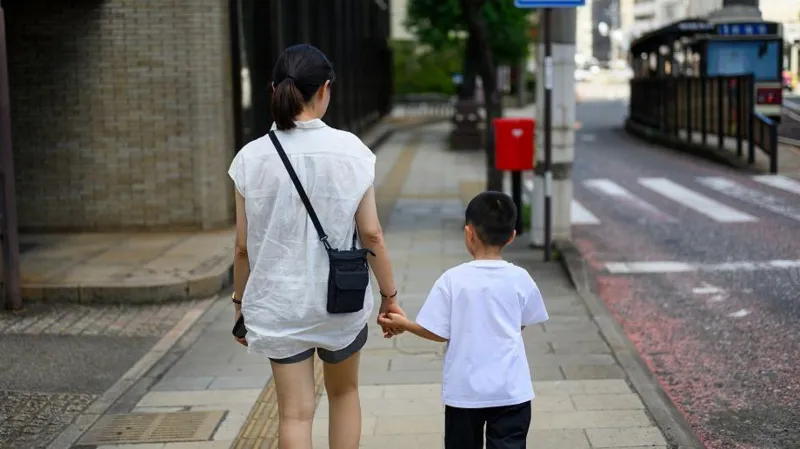
Divorced couples in Japan can now share custody of their children, following a major change to the country’s Civil Code that took effect on Wednesday.
Until now, Japan was the only G7 nation that did not allow joint custody after divorce. In most cases, courts awarded full custody to just one parent — usually the mother — who then had the legal power to decide whether the other parent could see the children at all.
This sole custody system had faced growing criticism both inside Japan and from abroad. Many divorced parents, especially fathers, ended up completely cut off from their kids, sometimes for years.Before the reform, couples could agree on custody and visitation arrangements themselves.
But if they couldn’t reach an agreement and took the case to court, the judge could only grant custody to one parent.Under the new law, family courts now have the option to award either sole custody or joint custody, depending on what’s best for the child.
Parents who divorced under the old rules can also ask the court to review and possibly update their custody arrangements.
The revision also introduces mandatory child support. The parent who lives with the child can now claim 20,000 yen (about £95 or $125) per month from their ex-partner.Many hope the change will help reduce painful cases of parental abduction, which have drawn international attention in recent years.
High-profile examples include Japanese table tennis star Ai Fukuhara, who was accused by her Taiwanese ex-husband of taking their son and cutting off contact (the couple later reached a settlement).
There was also a French father who staged a hunger strike during the 2021 Tokyo Olympics to protest what he called the “kidnapping” of his children by his Japanese ex-wife.While supporters see joint custody as a step toward fairer access for both parents, not everyone is happy with the reform.
Some critics, particularly women’s rights groups, worry that forcing joint custody could endanger mothers and children in cases involving domestic violence or abuse.To address those concerns, the new law states that courts must award sole custody if there is evidence of domestic violence or child abuse.
This long-awaited change marks a significant shift in how Japan handles family matters after divorce, aiming to better protect children’s rights to maintain relationships with both parents