
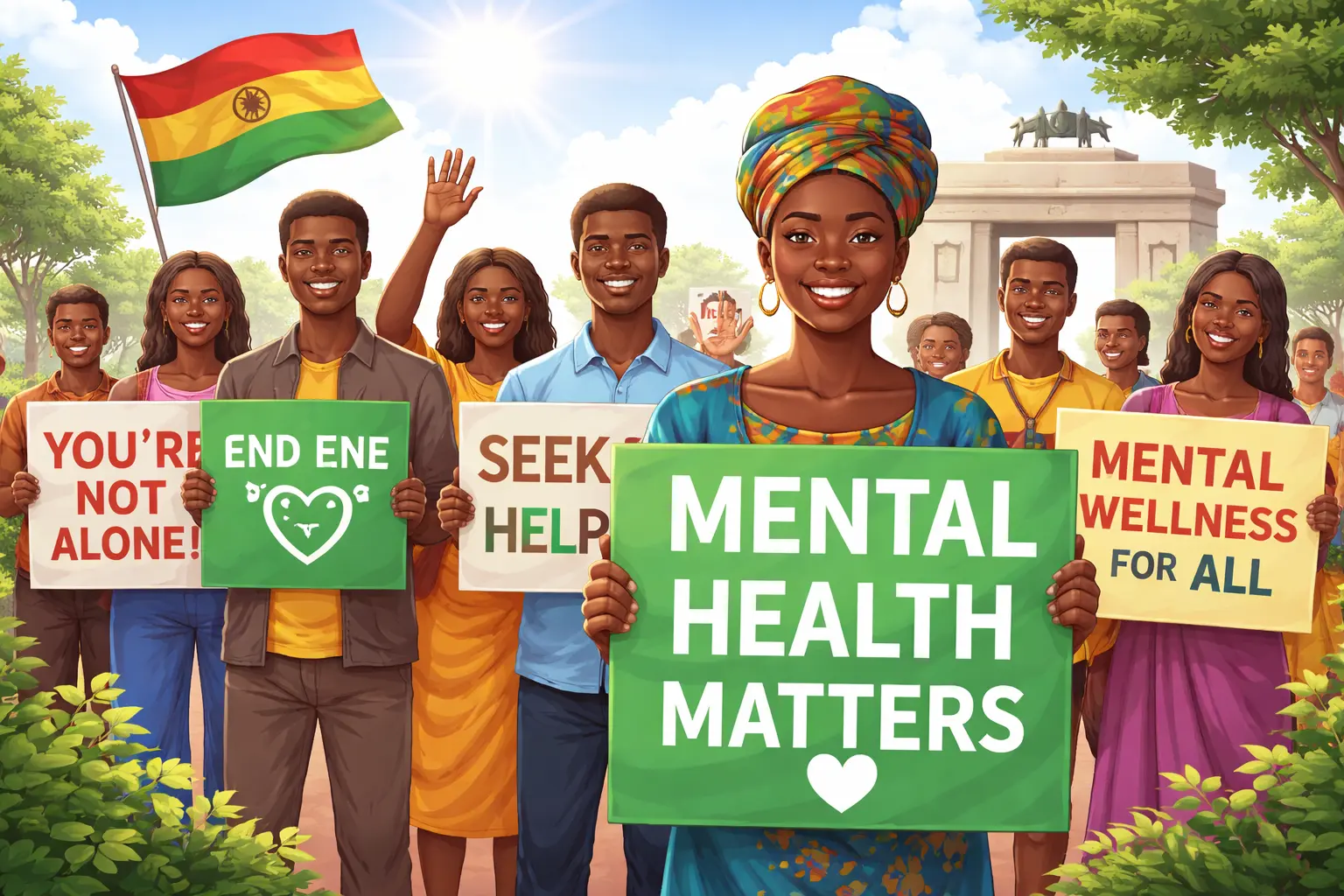
Mental health is an emerging issue in Ghana. In most cases, emotional and psychological issues have been a taboo topic for many years. Such problems were not understood well. Others were associated with superstition, disgrace or fear. This is gradually being altered today. The number of people talking openly has increased. Communities are learning. Institutions are retaliating.
Mental health is associated with the manner in which individuals think, feel and behave. It also influences the relationships, work and daily life. The awareness in Ghana is increasing and the people are being made to value that nothing is like physical health and the mind. This has not only been saving lives but also enhancing the well-being in the country.
Mental illness in Ghana: An emerging debate
Ghana is not as mentally ignorant as ever. The emergence of new openings is being created by radio shows, social media and community discussion. People are telling personal narratives. Survivors speak up. The medical workers educate the individuals.
The youths are spearheading this change. Many of them utilize Internet resources to talk about the stress, anxiety, and depression. Influencers and advocates bring about the stereotypes that are harmful to the individual. Such discussions make people find assistance.
Silence in the traditional sense is gradually dying. Families are coming to know that mental disease is not a curse. It is a health condition. This knowledge is generating additional sympathy and compassion.
Mental Health Challenges Still Facing Ghana
Even today, Ghana is struggling with major problems. There are limited mental health services. Professionally trained personnel are few. There are numerous rural locations without care.
Complications include:
- Depression
- Mental ailments
- Drug consumption
- psychological challenges
Stigma is a significant issue. There are those who are afraid of judgment. Others fear being jobless or being disrespected. This fear makes a number of individuals not get help early.
There are also financial obstacles. Mental health care is prohibitive. The coverage of insurance is narrow.
Government Intervention and Mental Health Policies.
The Ghanaian government has taken some significant actions. The Mental Health Act came about to safeguard the rights of individuals who lived with mental illness. It also tries to enhance the care and control services.
Of importance to the government are:
- The institution of the Mental Health Authority.
- Cultivating community mental health workers.
- Incorporating mental health in primary care

Basic mental health services are available in public hospitals today. Outreach activities are on the increase. These activities demonstrate an increased interest in national well-being.
Nevertheless, additional financing is required. It is important to implement it stronger. Policy should be translated into factual accessibility to the citizens.
Community and School Mental Health Education
Education is a highly effective means of communication. In Ghana, mental health is something that schools are introducing in their classes. Students are taught about feelings, pressure and self-care. The teachers are trained to assist struggling students.
There is also the improvement of community education. NGOs hold seminars and workshops. Awareness is created in churches and mosques. Conventional leaders are getting into the picture.
Such campaigns make individuals learn about the early warning signs. They also educate coping skills. Education eliminates fear and misinformation. Support is enhanced when communities are enlightened.
The Media and Mental Health in Ghana
The media can do a lot in the area of awareness. Radio is among the most influential tools in Ghana. The issue of mental health is discussed on popular stations. In call-in programs the people are able to ask questions anonymously.
Television documentaries are the experiences of reality. Newspapers present the views of professionals. Blogs online are effective in reaching the youth.
Benefits of positive media representation are that it facilitates the normalization of mental health discussions. It demonstrates that anyone is vulnerable. It is also hope promoting and recovery promoting.
It is necessary to have responsible reporting. Accuracy and sensitivity are important. Media comes in handy as a strong partner when properly done.
Access to Mental Health Services and Care
The accessibility of care is increasing, yet there are gaps. There are very limited psychiatric hospitals in Ghana. The majority of them are situated in big cities. The rural people usually depend on community health workers.
Available services include:
- Guidance and treatment
- Health control
- Critical support
- Rehabilitation programs
There are gaps that are filled with the aid of non-government organizations. They provide no or low-cost services. There are those that offer hotlines and mobile clinics.

There is also the emergence of telemedicine. Counseling online is getting popular. This is particularly useful to the youth and isolated populations.
Mental Health and Cultural Beliefs in Ghana
Mental perceptions are strongly shaped by culture. Mental illness used to be associated with some spiritual reasons in the past. Others thought it was either retribution or owning.
These ideologies are still in existence in certain regions. The traditional and faith healers are the first line of contact. Spiritual support would be beneficial, but medical treatment is also necessary.
The current world is one where there is increased cooperation. Health workers collaborate with civilians. Studying assists in closing the differences between science and tradition. Culture should be respected and evidence-based care promoted at the same time.
NGO and Advocacy Group Mental Health Support
Non Governmental Organizations are critical in the Ghanaian mental health movement. They raise awareness. They provide services. They are pro-policy change agents.
Others specialize in the mental health of the youth. Others are in favor of women, refugees, or people with disabilities. A lot of them are employed in underserved locations.
The stigma is also combated by advocacy groups. They arrange campaigns and events in the open. The world mental health day has become very common in Ghana. These groups give a voice to people that was not previously heard. They constantly multiply their influence.
Workplace Health and Fitness
It is a stressful situation at the workplace in Ghana. Many workers are experiencing economic tension and long working hours. Employers are now starting to become aware.
Some companies now offer:
- Counseling services to employees.
- Stress management training
- Independent work agreements
Good working environments can help in boosting worker efficiency. They also decrease burnout and absenteeism. Policies that are friendly towards mental health are beneficial to both the employees and the employers. This trend is likely to be followed by more organizations in the next couple of years.
Mental Health and the Youth Population
Youths have their own problems. There is academic pressure, unemployment, and stress on social media. Many struggle silently.
There is an increase in youth-oriented programs. Counseling centers are available in universities. Peer support takes place in youth groups.
Young people can be highly impacted using social media campaigns. They offer self-care and help-seeking. Investing in the future of Ghana is supporting youth mental health.

Mental Health and the Path Forward for Ghana
There is an increasing mental awareness in Ghana. The dialogue is no longer concealed. Development can be observed within the society.
However, more work is needed. Key priorities include:
- Increased funding
- More trained professionals
- Expanded rural services
- There should be stronger anti-stigma campaigns.
Mental health should be a national agenda. People feel supported and this makes society stronger.
Conclusion
The problem of mental health awareness in Ghana is not that quiet anymore. It is a growing movement. Change is being brought about by education, advocacy and compassion.
Every conversation matters. Every life matters. With further awareness, Ghana will be moved closer to a fairer and more positive future. Mental health is not a luxury. It is a basic human right.