
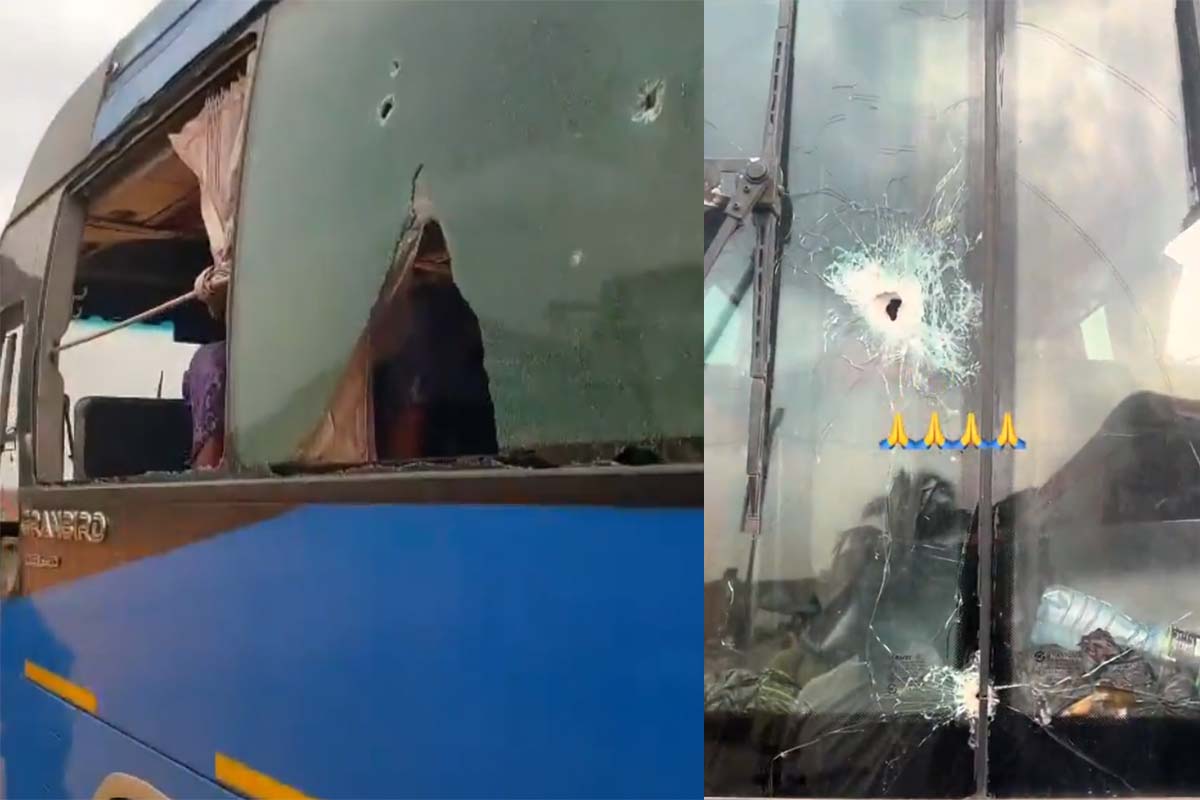
What should have been a quiet night journey turned into pure terror for several commuters traveling through Wulugu near Walewale, after their vehicle came under heavy gunfire.
Multiple shots were fired at the moving car in the dark, shattering windows and leaving visible bullet holes on the body of the vehicle. By sheer courage and presence of mind, the driver did not stop. He pushed through the chaos, maneuvered the damaged car out of danger, and managed to get everyone to safety.
By morning, one thing was clear: lives were saved because one man refused to panic.
Passengers have since hailed the driver as a hero, saying his quick thinking prevented what could have easily become another tragic headline from northern Ghana. The victims, believed to be traveling from the Bawku area, say the attack happened around Walewale, raising fresh questions about long-standing insecurity and unresolved tensions in the region.
What has angered many observers is the confusion and misreporting surrounding the incident. Some early accounts mentioned Bawku as the location, but those on the ground insist the shooting occurred around Walewale, not Bawku. That distinction matters. Residents say mixing up locations only deepens mistrust and fuels already fragile relations between communities.
The attack has reopened old wounds. For years, insecurity in parts of the North East and Upper East has lingered like a slow-burning fire. People travel in fear. Night journeys are avoided. Every gunshot story revives memories of past violence that never truly found closure.
On the streets and online, emotions are running high. Some voices are openly blaming specific groups, accusing them of deliberately sabotaging peace and development, especially in Bawku. Others are urging caution, warning that sweeping accusations will only worsen the situation and push communities further apart.
What most people agree on, however, is this: the state cannot continue to look on while law-abiding citizens dodge bullets on public roads.
There are growing calls for the Ghana Police Service and national security agencies to move swiftly, investigate the Walewale shooting thoroughly, and arrest those responsible—no matter where they come from. Many argue that allowing such attacks to go unresolved sends a dangerous signal and normalizes violence.
“This is how big crises start,” one commuter said. “It begins with small attacks, silence, no arrests. Then one day it explodes into something nobody can control.”
The fear is real. If insecurity along key routes like Walewale–Wulugu continues unchecked, it could spill beyond local disputes and become a national concern. Traders, students, families, and workers rely on these roads daily. Peace on paper means nothing if people cannot travel safely at night.
For now, one brave driver is being celebrated for standing between life and death. But heroism should not be the country’s security plan.
Ghanaians are demanding answers, action, and accountability—before fear becomes the new normal in places that have already endured too much.
Also Read: Military Overthrows Mamprusi Chief Seidu Abagre from Bawku After Otumfuo’s Intervention
Watch video