
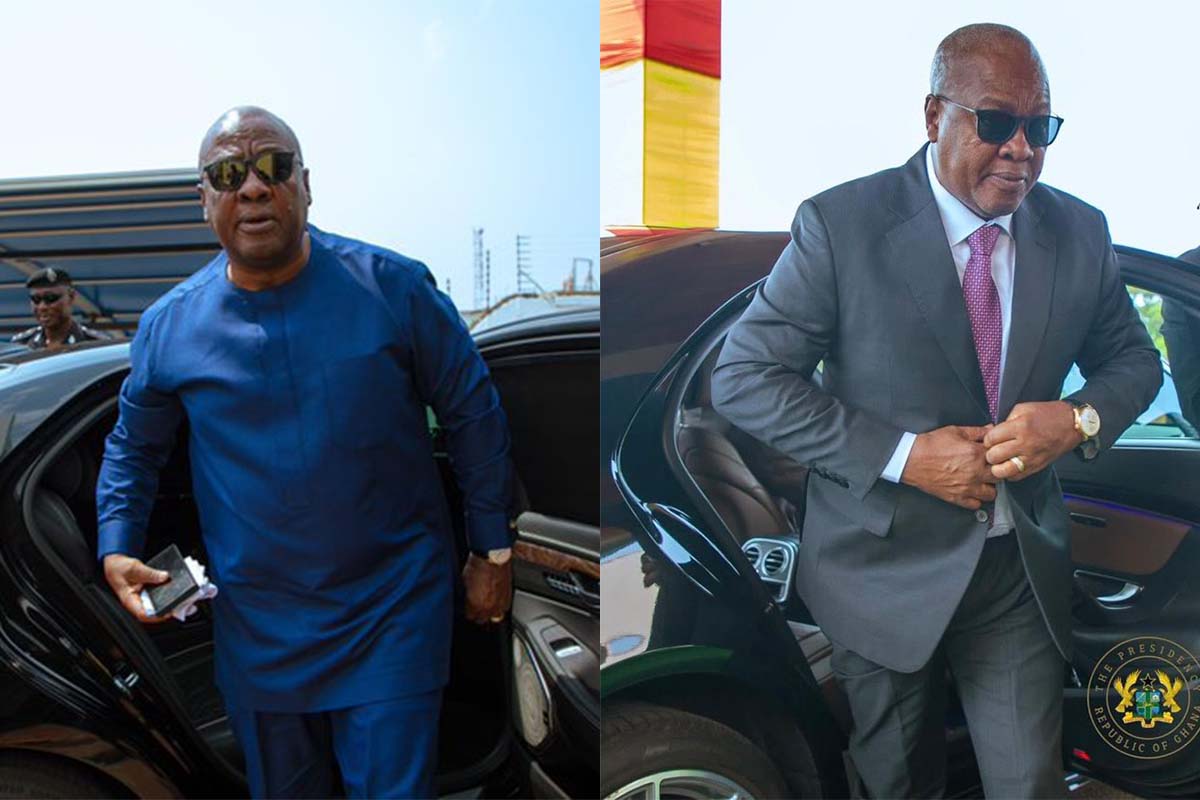
One year after returning to office, President John Dramani Mahama is once again at the center of Ghana’s economic conversation. This time, however, the noise is different. There are fewer campaign slogans and more difficult conversations. Less celebration, more scrutiny. And in many ways, that reflects the state of the Ghanaian economy itself.
When Mahama began his second term, Ghana was not in a comfortable place. The economy was fragile. Confidence was low. Households were stretched. Businesses were cautious. The pressure on the new administration was immediate, and expectations were high, even among those who did not vote for him.
Twelve months on, the picture is still mixed, but the direction is becoming clearer.
Unlike his first term, Mahama’s second coming has been marked by restraint. The government has avoided loud economic promises and instead focused on stabilising the fundamentals. That approach has not always been popular, but it has been deliberate. The presidency has repeatedly signalled that Ghana cannot grow its way out of trouble without first fixing its balance sheet.
This thinking has shaped much of the economic policy over the past year.
The focus on fiscal discipline has been one of the most defining features of this administration so far. Spending has been tightened. Priority has been placed on efficiency rather than expansion. While this has slowed the pace of visible projects in some areas, it has also helped restore a level of predictability to public finance that many analysts say was missing before.
For ordinary Ghanaians, economic recovery is often judged by prices at the market and the strength of the cedi. On these fronts, there has been gradual improvement. Inflationary pressure has eased compared to previous periods, and currency volatility has reduced. Life is still expensive, but the sense of constant freefall has slowed.
That psychological shift matters more than many realise.
Agriculture has re-emerged as a serious economic pillar under Mahama’s leadership. Beyond food security, the administration has framed agriculture as a growth engine tied directly to jobs, exports, and industrial inputs. This is a clear shift from treating farming as a social safety net to recognising it as a business sector with real economic weight.
Industrial policy has also seen renewed attention. Rather than spreading limited resources across too many initiatives, the government has focused on reviving stalled factories, supporting local manufacturing, and strengthening value chains. The goal is simple but ambitious: produce more locally, import less, and keep money circulating within the Ghanaian economy.
Infrastructure remains a sensitive topic. While critics argue that the pace of new projects is slow, supporters counter that the focus has been on completing and optimising existing investments. Roads, energy infrastructure, and housing projects that had been left in limbo are gradually being reactivated. The impact may not always make headlines, but it is being felt in communities and local economies.
One of the most political issues one year into Mahama’s second term is jobs. The government has been careful not to promise instant employment miracles. Instead, the emphasis has been on creating conditions for private sector-led growth. Small businesses, artisans, and local entrepreneurs are being positioned as the real drivers of job creation, not the public sector.
This approach has drawn both praise and criticism. Supporters say it is realistic. Critics argue it is slow. But the administration appears committed to staying the course.
Internationally, Ghana’s economic image has stabilised. Investors are watching closely, and while caution remains, the tone has shifted. Ghana is once again being discussed as a country attempting to fix its structural issues rather than postpone them. That perception is critical for long-term growth.
Politically, Mahama’s leadership style in this second term has matured. There is less confrontation and more consultation. Fewer dramatic speeches, more policy briefs. This has not won him universal praise, but it has signalled a presidency focused on legacy rather than survival.
As Ghana marks one year of Mahama’s second term, the economy is not booming. But it is also not collapsing. It is adjusting, recalibrating, and slowly rebuilding. For a country that has experienced repeated economic shocks, that alone is significant.
The bigger question now is sustainability. Can these early gains be protected? Can growth be accelerated without repeating past mistakes? And can the benefits reach ordinary Ghanaians fast enough to maintain public trust?
One year in, President Mahama has laid the groundwork. The real test lies ahead. But for now, the Ghanaian economy appears to have found its footing again, and that may be the most important achievement of his first year back in office.