
President John Dramani Mahama has stepped in quickly to tackle the pain Ghanaians are feeling at the pump.
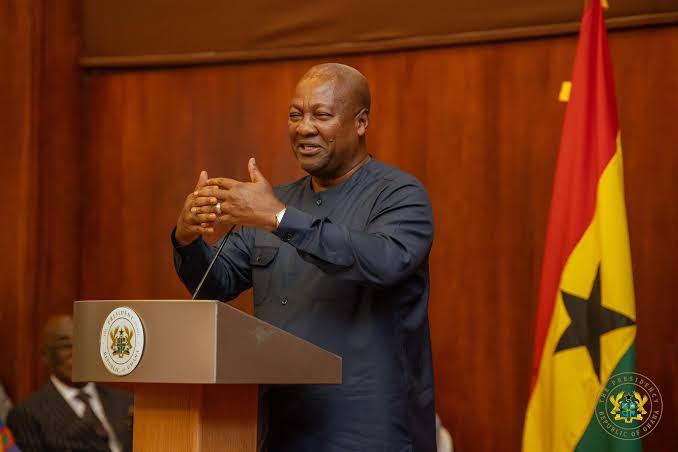
He has called an emergency Cabinet meeting to find immediate ways to soften the blow of sharply higher fuel prices caused by the ongoing war in Iran and the wider Middle East.Speaking on Saturday, April 4, 2026, during the second day of the Kwahu Business Forum, the President made it clear the government is not sitting idle.
“I have called for this emergency cabinet meeting to decide on specific measures we can take to cushion petroleum prices while we hope the conflict comes to an end,” he said.
“There are adjustments we can make, particularly in the margins, to help maintain relatively stable prices as we pray for the war to cease.” He assured the audience – and the entire nation – that the government remains fully committed to easing the burden on ordinary citizens. The Cabinet will look closely at every part of the fuel price build-up and consider practical interventions to bring relief as quickly as possible.
President Mahama also sent a strong message of confidence about the economy. “I can confidently tell you that the economy will not collapse because of the war in Iran,” he emphasised.
The government has already put measures in place to make the economy more resilient against external shocks like this one.In a special word of thanks, the President praised transport unions for showing remarkable restraint. Despite the sudden jump in fuel costs, they have so far held off on increasing lorry fares.
“I want to express my sincere gratitude to the transport unions for their patience and understanding,” he said. “We did not anticipate this situation, but they have held off on increasing fares. I am confident they will continue to exercise restraint as we work together to improve the situation.”
He urged all Ghanaians to remain patient while the government works round the clock to stabilise prices and support families through the difficult period.The price increases took effect on April 1, 2026, following the escalation of the Iran conflict that has pushed global crude oil prices much higher.
According to the National Petroleum Authority, petrol went up by about 15% to around GH¢13.30 per litre, while diesel rose by roughly 19% to GH¢17.10 per litre for the first half of April.
Although the relatively stable cedi has helped limit the damage, the hikes are still among the steepest in recent months and have raised worries about higher transport costs and possible inflation.
The government is already reviewing options such as cutting certain fuel margins and levies to make things easier for drivers, traders and ordinary households.For many Ghanaians who rely on fuel for daily commuting, business and farming, this latest spike feels heavy.
But President Mahama’s swift call for an emergency meeting and his reassuring words at the Kwahu Business Forum show the administration is treating the situation with urgency.
The hope is that practical steps can be announced soon to keep prices from climbing further while the international conflict continues.In the meantime, the President’s message is one of unity and calm: the government is on the case, transport unions are cooperating, and together the country will weather this external storm without letting it derail the economy.
Ghanaians will be watching closely for the outcome of Monday’s emergency Cabinet meeting. For now, the focus is on keeping essential prices as stable as possible and protecting everyday livelihoods until global oil markets settle.