
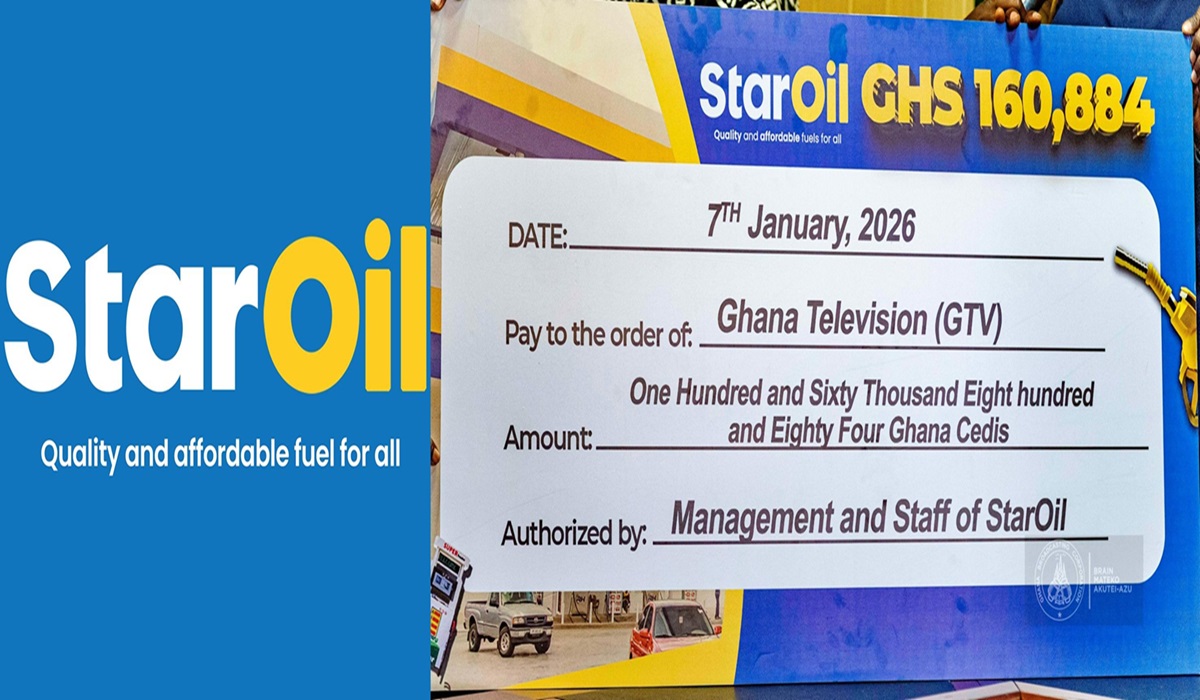
Something unusual happened quietly, without sirens or press conference drama, yet it has started shaking conversations in offices, fuel stations and WhatsApp groups across the country. StarOil Ghana has stepped in to settle TV licence obligations linked to GTV, and the figures involved are not small by any Ghanaian standard.
According to information shared from within the company, StarOil made an initial payment of GH¢50,000 to support the national TV licence drive. That alone would have passed as a symbolic gesture, but what followed later raised eyebrows even among seasoned industry observers. Management confirmed that an additional amount, pushing the total to over GH¢210,000, was committed to cover TV licence payments for the company’s entire workforce.
This decision affects more than 2,700 employees nationwide, spanning station attendants, depot workers, drivers, supervisors and office staff. In simple terms, StarOil paid GTV licence fees so its workers would not have to worry about it themselves.
In Ghana, TV licence payment is one of those topics people avoid, debate or ignore until enforcement knocks. For a private oil marketing company to voluntarily absorb such a cost is rare. That is why the move has triggered reactions beyond the energy sector.
Interestingly, the announcement did not come with loud marketing language. A senior official at StarOil described the move as “a civic responsibility,” stressing that public institutions like GTV need consistent support to function properly. He added that companies benefiting from national stability must sometimes go beyond profit margins.
Yet, not everyone heard about it the same way. On social media, the story took on a different tone. Phrases like “210,000 reasons to hype them” and “being number one is not in talk” began circulating, especially among young people who rarely praise fuel companies. The message was simple: actions speak louder than branding slogans.
Some media analysts believe the timing is important. Discussions around TV licence enforcement have resurfaced recently, and many households still struggle with compliance. StarOil’s move indirectly sends a message to other corporate bodies, especially those with large staff numbers, that supporting national systems does not always require government pressure.
What also stands out is that this was not framed as a donation to GTV, but as a direct payment of licence fees tied to employees. That distinction matters. It positions the act as compliance and responsibility, not charity.
From a corporate governance angle, experts say the gesture improves StarOil’s public trust profile. Fuel prices, customer service complaints and operational pressures often dominate public perception of oil companies. This action cuts through that narrative differently.
Some workers within the company have privately expressed appreciation, saying it lifted a burden they never expected their employer to carry. Others see it as a sign of management thinking beyond payroll and logistics.
In a country where many companies struggle with statutory obligations, this move will likely be cited in future debates about corporate citizenship in Ghana. It also raises a quiet question: if one private company can do this, why not others?
There is no trophy involved. No official ranking announced. But in the court of public opinion, StarOil has scored points that money alone usually cannot buy.
Whether this becomes a trend or remains a one-off gesture is yet to be seen. For now, the facts remain simple and solid: StarOil Ghana committed over GH¢210,000 to pay GTV TV licence fees linked to its workforce, and the country is talking.


Also Read: Shock and Confusion at Tetegu as Policewoman Shoots Taxi Driver Dead