
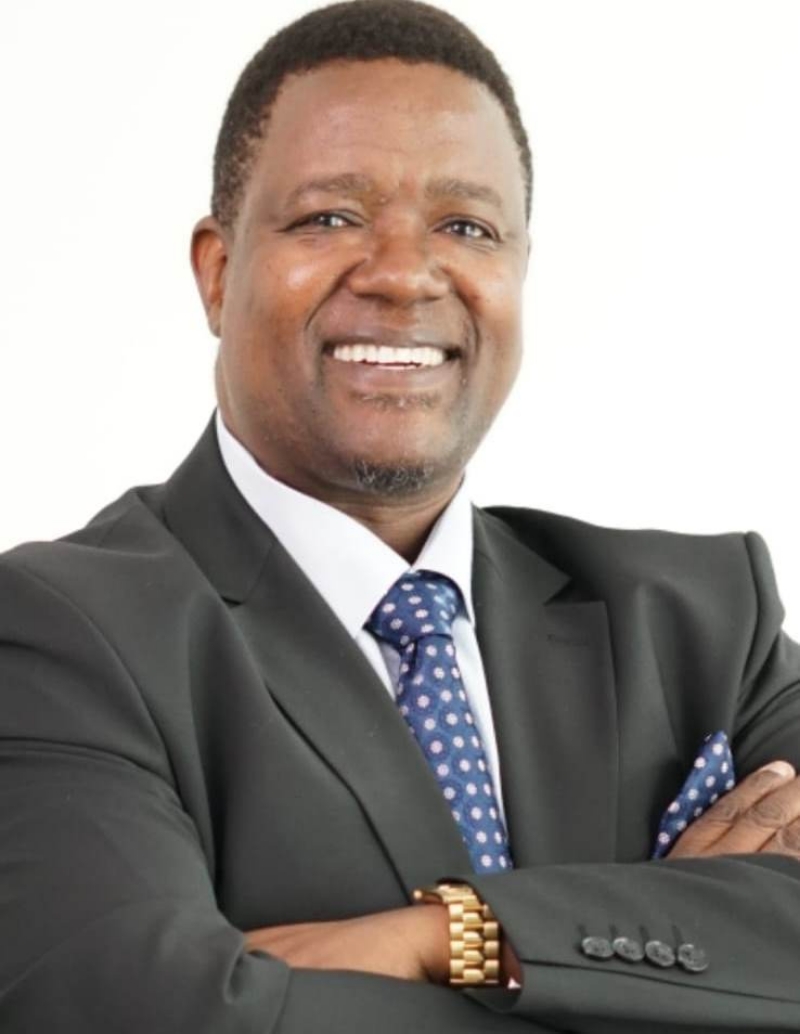
Welcoming for Every Child Prof. Tsediso Michael Makoelle has spent more than 30 years thinking deeply about one important question: How can schools truly include every student — especially those who don’t fit the “
differently, Makoelle’s work focuses on turning inclusion from nice-sounding policy words into real-life classroom reality.Right now, he serves as Dean of the Faculty of Education at the University of Fort Hare in South Africa. Before that, he was Vice Dean for Research and a Full Professor at Nazarbayev University in Kazakhstan. His career has taken him across continents
But his passion has stayed the same: making education systems fairer and more responsive
Makoelle earned a PhD in Inclus e Education from the University of Manchester (thanks to a prestigious Nelson Mandela Scholarship
and a Doctor of Education in Education Management and Leadership from the University of South Africa.
this combination gives him a rare blend of expertise — both in leadership and in the practical challenges of access and participation in schools.What his research covers
education policies, teacher leadership, and curriculum development, with a special focus on countries in the Global South. He’s also studied how post-Soviet countries like Kazakhstan handle inclusion during times of big political and institutional change.Some of his key work looks at
How teachers can lead inclusive practices right inside their own classroomsBetter ways to mentor and prepare new teachers for diverse classrooms
The gap between ambitious national policies and what actually happens on the ground — especially when schools have limited resource makoelle has been a visiting research fellow at the International Laboratory for Social Integration Research at Russia’s Higher School of Economics.
He reviews academic journals, serves on editorial boards, and helps evaluate research grants for South Africa’s National Research Foundation.His contributions haven’t gone unnoticed. He’s received a global education leadership award in Dubai, a service medal from Kazakhstan’s Ministry of Education and Science, and even a personal letter of recognition from Kazakhstan’s President.The heart of his message
Throughout his career, one theme keeps coming up: Inclusion doesn’t succeed just because a government writes a good policy. It succeeds (or fails) through the daily decisions made by teachers and school leaders — especially in under-resourced communities.Prof. Makoelle’s work reminds us that real inclusion happens one classroom, one teacher, and one thoughtful decision at a time.