
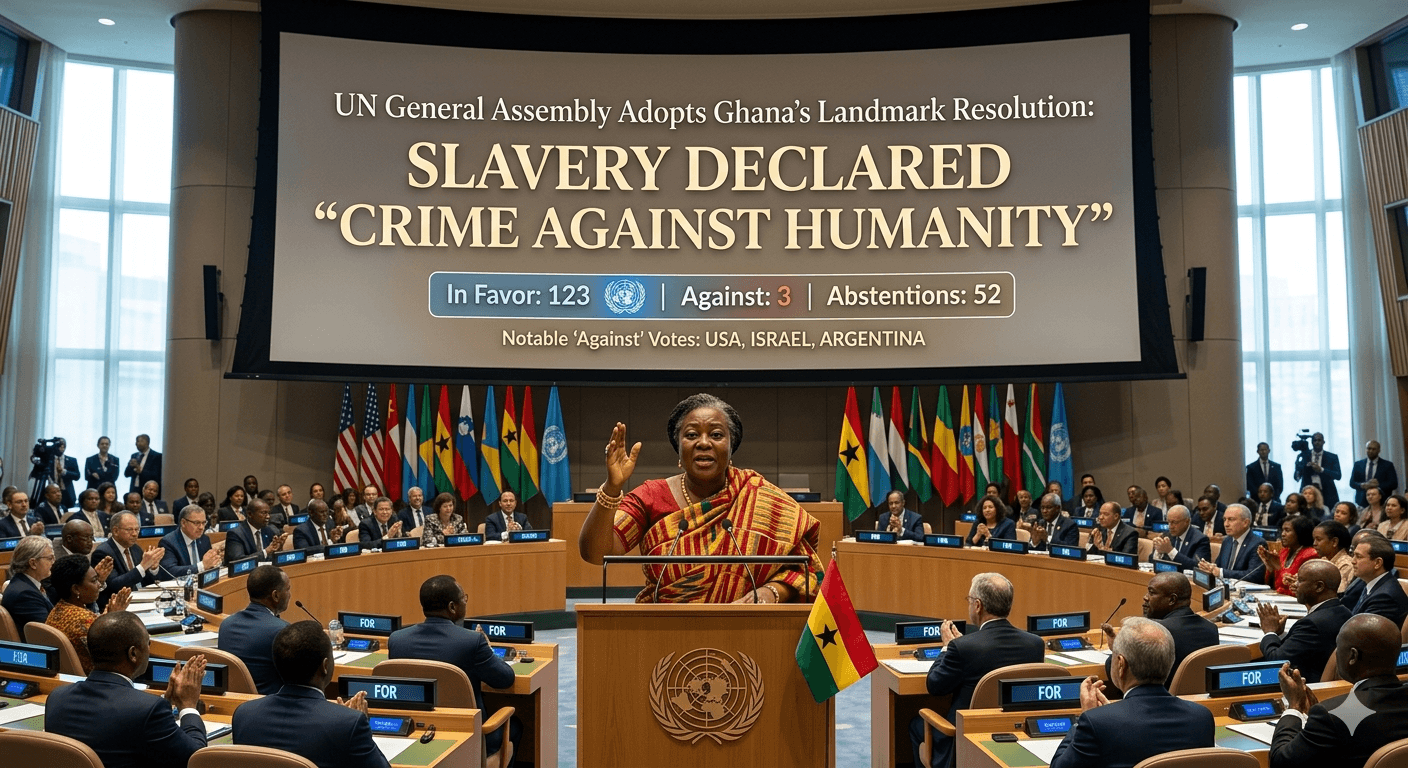
In a historic move today, the Ghana UN resolution on slavery was officially adopted by the General Assembly, marking the first time the United Nations has formally designated the transatlantic slave trade as the “gravest crime against humanity.”
Spearheaded by President John Dramani Mahama, the resolution received overwhelming support from the Global South but faced a sharp divide as world powers clashed over the issue of reparations. While the world celebrated this milestone, the United States, Israel, and Argentina made headlines by officially voting against the declaration.
The Push for Reparatory Justice
This wasn’t just a vote; it was a “legal claim” for accountability. The resolution, titled Declaration of the Trafficking of Enslaved Africans and Racialised Chattel Enslavement of Africans as the Gravest Crime Against Humanity, calls for a “Decade of Action on Reparations” (2026–2035).
President Mahama, addressing the assembly, noted that the timing of the International Day of Remembrance of the Victims of Slavery was intentional. “The truth cannot be buried. Today, we safeguard against forgetting,” he declared.
The Global Divide: Who Voted No?
While 123 countries stood with Ghana and the African Union, the opposition was significant and telling:
- United States: Voted NO. The U.S. delegation argued they do not recognize a legal right to reparations for historical acts that were not illegal under international law at the time they occurred. They also objected to creating a “hierarchy” of crimes.
- Israel: Voted NO.
- Argentina: Voted NO.
- The Abstentions: 52 countries, including the United Kingdom and the entire European Union, chose to abstain. The UK expressed “regret” but resisted the legal implications of a “crime against humanity” label, which could lead to massive financial claims.
Why the “Gravest Crime” Label Matters
By moving from “tragedy” to “crime,” the resolution changes the game for reparations. It demands:
- Formal Apologies: Not just “statements of regret,” but full state apologies.
- Restitution of Artifacts: The return of all looted African treasures, documents, and monuments without cost.
- Financial Compensation: A framework for addressing the $1.1 trillion debt and development gap that many argue is a direct result of resource extraction during the slave trade.
Ghana has once again proven its role as the “Black Star” of Africa, forcing the world to look at the scars of the past through a legal lens. Whether the West likes it or not, the conversation has moved from “if” to “how” the world will pay for its darkest chapter.
What is your take on the US and UK’s refusal to support the vote? Let’s discuss in the comments!
#GhanaNews #UNResolution2026 #SmartMinds #ReparationsNow #AfricanDignity