

 By Emmanuel Bamfo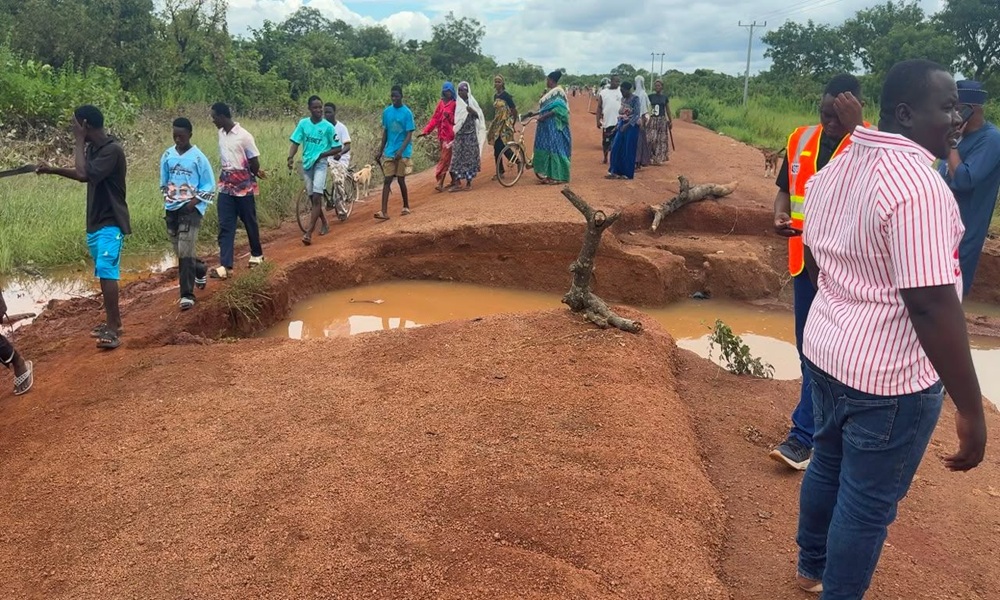
Torrential rains hitting the North East Gonja District in the Savannah Region have caused major heartbreak as severe flooding swept through communities. Days of downpours led to the sudden collapse of at least 93 houses, stranding families with nowhere to sleep.
Local emergency officials report that over 246 residents are now completely homeless after the rising waters washed away their property. Affected families are struggling to find shelter, food, and dry clothes as emergency teams race against time to bring relief.
The devastating flood waters did not stop at washing away clay and cement buildings. Entire farms filled with ready-to-harvest maize, soybean, and rice crops are now totally submerged underwater across the district.
Local farmers lost all their harvested grain stocks alongside valuable livestock like goats and sheep. The heavy downpour also washed away key access roads, cutting off small communities from trading centers and market days.
Desperate victims are crying out to government agencies and well-meaning Ghanaians to come to their aid. Farmers who invested all their life savings into their lands now watch helplessly as their livelihoods float away in dirty flood waters.
Community members are calling on the National Disaster Management Organisation (NADMO) to fast-track the delivery of food, mattresses, and temporary tents. Without quick help, children and aged residents face serious risks of waterborne diseases and malnutrition.
District authorities worry that the washed-away roads will prevent medical supplies from reaching rural clinics. Sick residents cannot easily travel to district hospitals, creating a major healthcare crisis on top of homelessness.
Local leaders want the Ministry of Roads and Highways to treat the damaged infrastructure as an urgent national emergency. Fixing destroyed culverts quickly will restore transport lines so medical workers can deliver essential aid.
This tragic disaster shows why rural housing standards and drainage networks need urgent upgrade programs. Mud-brick structures cannot stand up to continuous downpours, leading to frequent building failures every rainy season.
Engineering resilient housing and opening proper drainage channels remains the only long-term fix for vulnerable northern districts. Supporting affected Gonja families today with relief supplies will help them rebuild safely for the future.
Also Read: Ghanas new road rules what drivers must fix before october 1
Source: Ghana News Page