
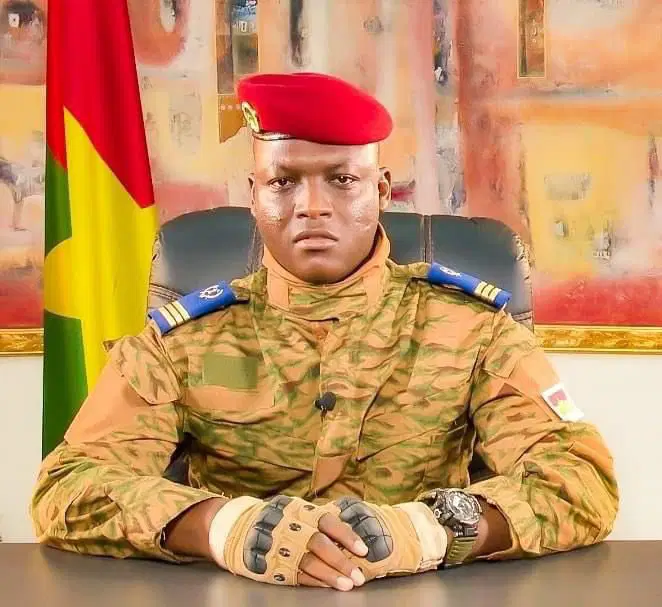
Burkina Faso’s military-led government has dissolved all political parties and political formations in the country, marking one of the most far-reaching political decisions since the junta seized power in 2022.
The move was announced in a statement issued by the presidency’s communications directorate after junta leader, Captain Ibrahim Traoré, presided over a meeting of the council of ministers.
According to the government, the decision forms part of a broader effort to “rebuild the state” and reset Burkina Faso’s political system, which officials say has become fragmented and dysfunctional over time.
Why the Government Took This Step
Speaking after the cabinet meeting, Minister of Territorial Administration and Mobility, Émile Zerbo, described the dissolution as a deliberate and strategic decision aimed at restoring national cohesion.
He said a government review found that the proliferation of political parties had led to political drift, deepened divisions among citizens, and weakened the country’s social fabric.
“The great and important decision is part of the re-founding of the state,” Zerbo said.
Before the military takeover, Burkina Faso had more than 100 registered political parties, with at least 15 represented in parliament following the 2020 general election.
Assets to Be Transferred to the State
Under the decree adopted by the council of ministers, all political parties and formations are officially disbanded. In addition, all assets belonging to the dissolved parties will be transferred to the state.
Zerbo said draft laws repealing existing statutes governing political parties, party financing, and the status of the opposition leader would be sent to the Transitional Legislative Assembly for consideration.
Political Activity Frozen Since 2022
Following Captain Traoré’s seizure of power in September 2022, political parties were already compelled to suspend their activities as the military government consolidated control.
The latest decision now formalizes that suspension and clears the way for a complete overhaul of Burkina Faso’s political governance framework.
Security Challenges and Regional Context
Burkina Faso, like its Sahel neighbours Mali and Niger, continues to battle violent Islamist insurgencies linked to al Qaeda and Islamic State. The decade-long conflict has killed thousands and displaced millions across the region.
Officials say the dissolution of political parties is intended to strengthen government coherence and focus national efforts on security, development, and state stability.
During the same cabinet meeting, the government also adopted a new state development roadmap known as the “Reliance Plan.” The plan, valued at FCFA 36 trillion (approximately $65 billion), is expected to run from 2026 to 2030.
A Defining Moment for Burkina Faso
The decision signals a major turning point in Burkina Faso’s political future, as the military government pushes ahead with its vision of restructuring the state amid ongoing security and economic pressures.
Whether the move will lead to long-term stability or further political tension remains to be seen.