
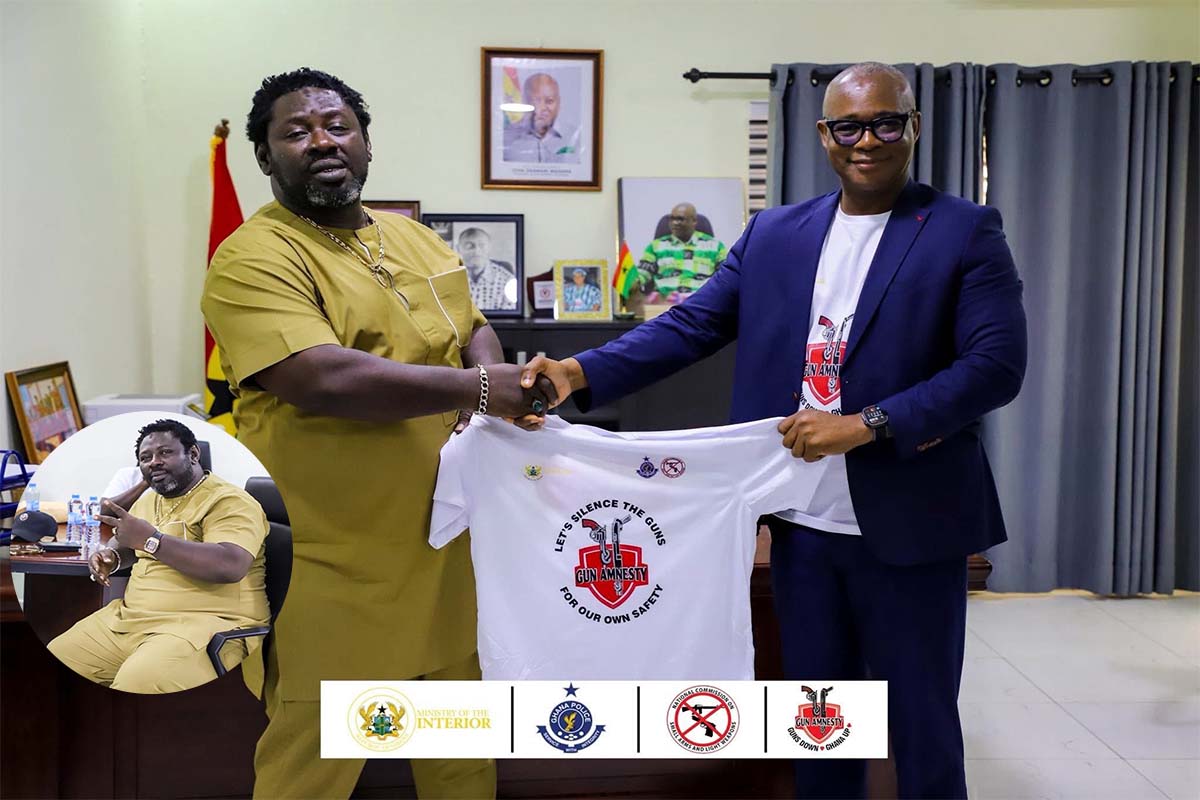
Not long ago, the name Paa Nii Cyborg was making headlines for the wrong reasons. He was arrested by the Ghana Police after the disorderly discharge of a firearm during the high-profile arrival of Nigerian music star Asake. The incident raised public concern, sparked debate about gun culture around celebrities, and once again highlighted how easily firearms can turn public excitement into danger.
Now, the story has taken an unexpected turn.
Paa Nii Cyborg has been appointed a Gun Amnesty Ambassador by the National Commission on Small Arms and Light Weapons (NACSA), a move that has surprised many and divided public opinion. For some, it feels ironic. For others, it is a calculated and strategic decision aimed at turning a negative moment into a learning opportunity.
At the heart of this appointment is Ghana’s ongoing struggle with illegal firearms and gun-related incidents. Small arms remain one of the biggest threats to public safety, especially when weapons are handled casually at social events, funerals, political gatherings, and celebrity movements. Too often, what starts as showmanship ends in injury or death.
NACSA’s gun amnesty campaign is built around a simple idea: reduce illegal gun use by encouraging education, responsibility, and voluntary surrender of weapons. Instead of focusing only on punishment, the approach also looks at prevention, awareness, and changing attitudes—especially among young people who often see firearms as symbols of power or status.
By appointing Paa Nii Cyborg as an ambassador, NACSA appears to be sending a clear message: mistakes can be transformed into lessons if the individual involved is willing to take responsibility and help others avoid the same path. His experience, controversial as it may be, gives him a firsthand understanding of how quickly reckless behavior can attract legal consequences and public backlash.
Supporters of the move argue that people are more likely to listen to someone who has “been there.” They believe his story can resonate with youths who glorify gun culture, making the message of gun safety more relatable and real. In this sense, the appointment is not a reward but a responsibility—to speak honestly about the dangers of illegal firearms and the cost of poor judgment.
Critics, however, are not convinced. Some question whether someone previously arrested for firearm misuse should be placed in such a visible role. They worry it may send mixed signals or weaken the seriousness of gun control efforts if not handled carefully.
Still, the conversation itself may be the point.
Ghana is at a stage where education around small arms is just as important as enforcement. Laws exist, but attitudes lag behind. Incidents like celebratory gunfire continue to remind us that regulation alone is not enough.
If Paa Nii Cyborg’s new role leads to even one person choosing not to pull a trigger, not to carry an illegal weapon, or to surrender a firearm through the amnesty process, then the controversy may serve a greater public good.
Ultimately, this development forces a national reflection: how do we reduce illegal gun use in Ghana and not just through arrests, but through accountability, education, and changed behavior?