
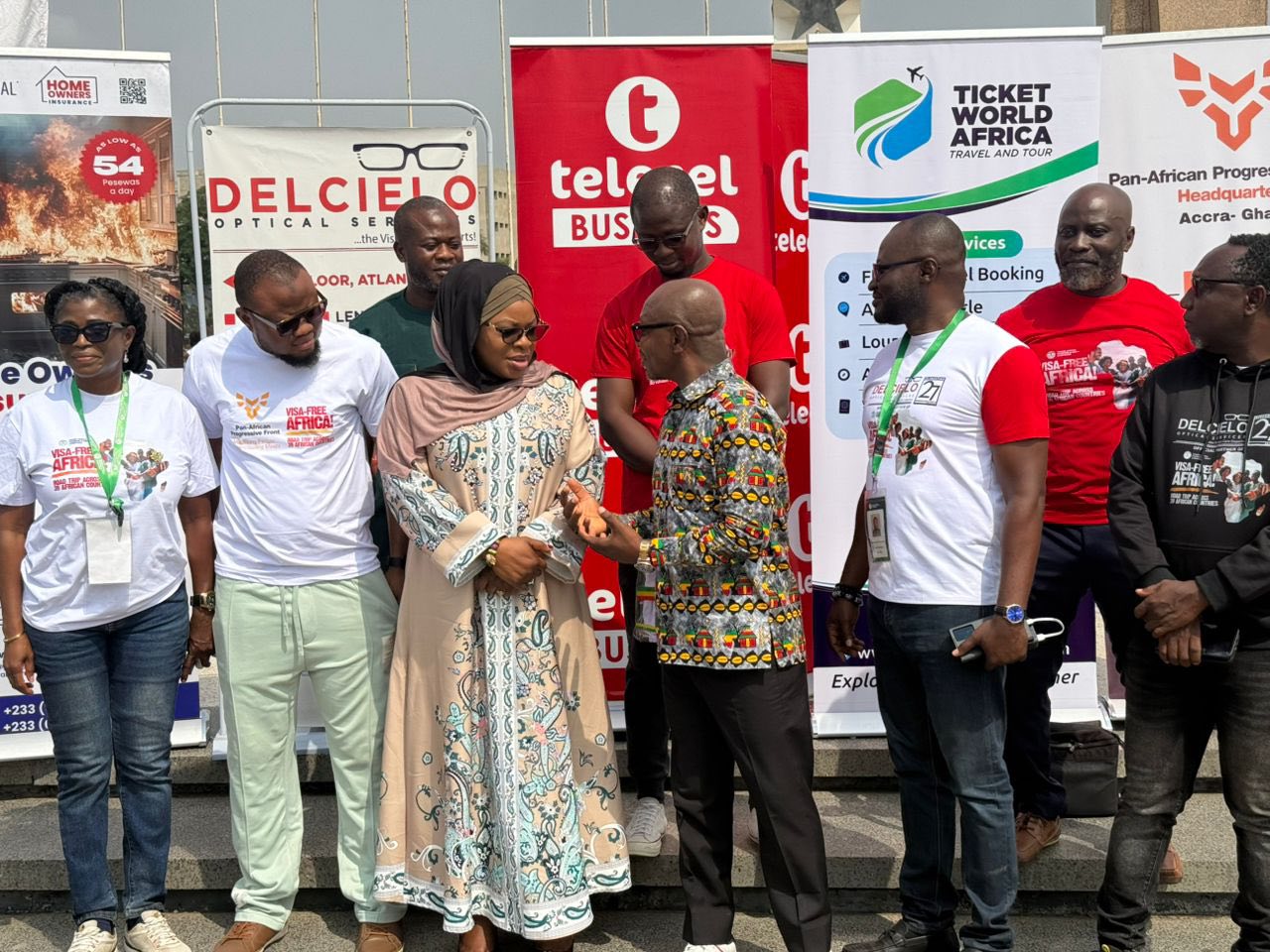
It did not end with a press conference or fireworks. It ended quietly, the way long journeys usually do. After 160 days of movement, conversations, border crossings and waiting rooms, campaigner Ras Mubarak and his team have brought their Visa-Free Africa tour to a close.
The campaign was simple in words but heavy in meaning: Africans should be able to move freely across Africa without being trapped by visas designed in colonial times. Over the last five months, the team travelled across several African countries, engaging policymakers, students, traders and everyday people who know the pain of borders too well.

Some days were about speeches. Other days were about queues. Ras Mubarak himself admitted that the irony of the journey was powerful. “You cannot campaign for free movement without feeling the restriction yourself,” he said during one of the final engagements.
The number—160 days—keeps coming up in discussions, but the story is not about counting time. It is about counting experiences. From airport interviews to roadside conversations, the campaign exposed how difficult African mobility still is, even among neighboring countries that share history, culture and markets.
At one stop, the team met young entrepreneurs who said visa delays had killed business deals. At another, artists spoke about missing continental festivals because paperwork arrived too late. These were not theories; they were lived realities repeated across borders.
Critics asked whether such campaigns change anything. Supporters answered differently. They say visibility matters. Africa’s free movement agenda exists on paper, but pressure is needed to move it from policy rooms to border posts.
Ras Mubarak described the journey as exhausting but necessary. “Africa cannot talk about unity while blocking its own people,” he said. According to him, the campaign was never about one individual but about starting uncomfortable conversations.
There were moments of frustration. Missed connections. Long immigration questioning. And there were moments of solidarity too, when officials quietly assisted, acknowledging the message even if the system could not bend.
The campaign also drew attention to the African Continental Free Trade Area and how limited mobility undermines its potential. Economists following the journey noted that trade agreements mean little if people cannot move as easily as goods.
Back home, reactions have been mixed. Some see the campaign as symbolic. Others see it as groundwork. History shows that major policy shifts often begin with people making noise before institutions move.
For the team, the end of the 160 days is not a conclusion. They insist it is a pause. Advocacy materials, documentation and policy engagements are expected to follow, aimed at keeping the conversation alive beyond the road.
In a continent rich in resources but divided by borders, the Visa-Free Africa campaign has left behind stories that numbers alone cannot capture. Whether governments listen or not, one thing is clear: the demand for African mobility is no longer whispered.
And for 160 days, it refused to be ignored.


Also Read: US Approves $413 Million to Support Security Operations in Nigeria and West Africa