
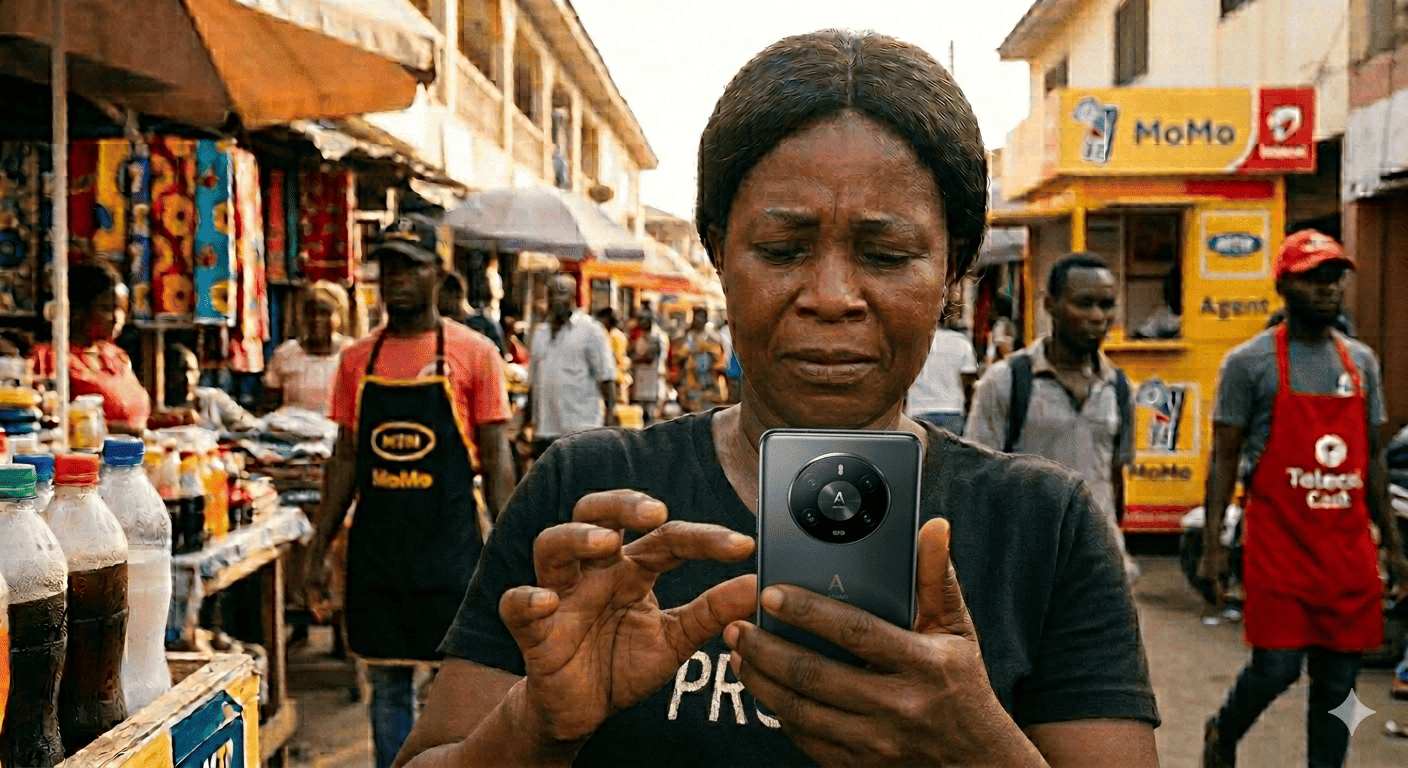
The digital landscape in Ghana has reached a tipping point where your phone is no longer just a communication tool but a primary bank branch.
As we move through 2026, the convenience of Mobile Money has unfortunately invited a more sophisticated breed of digital predators. These aren’t just technical hackers sitting behind lines of code; they are master manipulators who exploit human psychology to drain wallets in seconds. Understanding the anatomy of a “Double Your Cash” scam is no longer optional for the modern Ghanaian and its survival skill.
The Psychology of the Modern MoMo Predator
Scammers have shifted their strategy from technical attacks to social engineering. They understand that under pressure or excitement, the human brain tends to skip over red flags. This news matters because the financial loss isn’t just about the money; it erodes the trust necessary for our digital economy to flourish. When a mother loses her child’s school fees to a voice on the phone, the impact ripples through the entire community.
Experts at the Cyber Security Authority (CSA) now categorize these attacks as “Vishing” or voice phishing. The predator uses a friendly, authoritative, or urgent tone to bypass your natural defenses. They often pose as staff from major telecommunications companies or government agencies, using leaked data to mention your name or your National Identification Authority (NIA) registration details to gain instant credibility.
Deconstructing the “Wrong Transaction” and “Agent Code” Traps
The “Wrong Transaction” scam remains a favorite because it plays on your sense of honesty. You receive a fake SMS that looks identical to an official MTN or Telecel alert, followed immediately by a frantic call. The person on the line claims they sent money to your number by mistake, intended for a sick relative’s hospital bill. In your rush to be a “good Samaritan,” you might send your own money back before realizing the initial deposit was never real.
Also Read: Ghana Stock Exchange Q1 2026 Review: Market Cools After Record Breaking Run By MTN Ghana
A more technical variation is the “Agent Code” trick. Here, the scammer claims you have won a promotion or need to update your Ghana Card linkage to avoid a block. They ask you to dial a specific USSD string that looks like a harmless technical command. In reality, that code authorizes a third-party transfer or links your wallet to their device. By the time you realize what happened, the funds are gone, moved through a series of “mule” accounts to make them untraceable.
The Sacred Rule of the Four-Digit PIN
It cannot be stressed enough that your PIN is the master key to your financial life. No legitimate official from the NIA, any telecommunications company, or your bank will ever ask for your PIN over the phone or in person. Scammers often use a tactic called “Pretexting,” where they create a scenario where “verifying” your PIN is the only way to save your account from being deactivated under new government directives.
Internalizing this rule is your strongest defense. Treat your PIN with the same level of secrecy you would a physical vault key. Even if the person on the other end knows your Ghana Card number, your mother’s maiden name, or your last three transactions, the moment they ask for those four digits, you are talking to a criminal.
Immediate Actions for Fraud Victims
If you realize you have been compromised, every second counts. Your first move should be to call your service provider’s dedicated fraud line to freeze the account. However, simply notifying the telco is often not enough to recover funds. You must report the incident to the Cyber Security Authority (CSA) through their official e-crime reporting portal or by calling their 24/7 shortcode 292.
Filing an official report creates a digital paper trail that law enforcement can use to track the flow of funds. In 2026, inter-agency cooperation between the NIA, the banks, and the CSA has improved, and there is a higher chance of blocking the recipient’s wallet if the report is made within the first thirty minutes of the theft.
Future Implications for Digital Finance in Ghana
Looking ahead, we expect to see more biometric integration to replace the traditional PIN, leveraging the high-quality data held by the National Identification Authority. Fingerprint and facial recognition for high-value transactions will likely become the standard as telcos fight back against social engineering. Furthermore, AI-driven monitoring systems are beginning to flag “unusual” transaction patterns in real-time, potentially pausing a transfer before it hits a known fraudulent wallet.
However, as the tech gets smarter, so do the criminals. The “Double Your Cash” promise will evolve, perhaps using deepfake audio that sounds exactly like a trusted friend. The only permanent defense is a skeptical mind. If a deal feels too good to be true, or if a stranger is rushing you to perform a financial task, it is almost certainly a scam.

Also Read: New Sachet Water Prices in Ghana: GH¢8 from factory, GH¢15 retail