

 By Collins Sarkodieh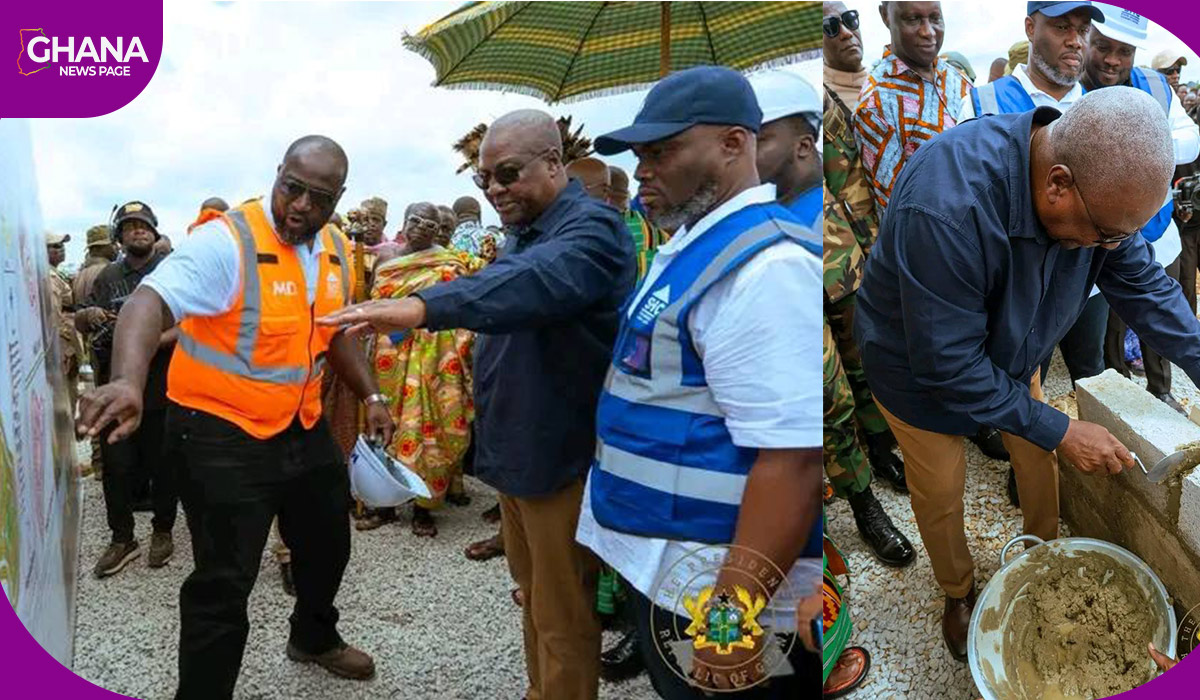
President John Dramani Mahama has officially broken ground for the Green City Housing project at Dedesua, a massive 1,000-unit development in the Bosomtwe District of the Ashanti Region. This 200-acre initiative aims to bridge Ghana’s housing deficit by providing affordable, modern, and environmentally sustainable homes for workers through long-term mortgage plans.
The project is a strategic partnership between the State Housing Company (SHC) and various financial institutions to ensure middle-to-low-income earners can transition from tenants to homeowners. By integrating eco-friendly architecture with flexible 15 to 20-year repayment structures, the government is tackling the high cost of urban living while promoting a greener footprint.
Located just 30 minutes from the heart of Kumasi, the Green City is designed as a self-sustaining community rather than just a residential block. It promises to blend executive residences with essential social amenities, creating a lifestyle hub that balances work, family, and nature in one of the country’s most rapidly developing regions.
What makes the Green City Housing project “Green”?
The Green City project is “green” because it utilizes eco-friendly architecture and sustainable town planning to minimize environmental impact while maximizing residents’ comfort. Spearheaded by the State Housing Company Limited, the 200-acre development incorporates expansive parks, playgrounds, and specialized green zones designed to lower the urban heat island effect.
Modern sustainable housing focuses on energy efficiency and waste reduction. By using modern architecture that allows for natural ventilation and lighting, these homes will likely reduce the electricity demand for cooling and lighting. This is a critical step in a tropical climate like Ghana’s, where energy costs can significantly burden a household budget.
Furthermore, the “Green” designation implies a commitment to preserving the local ecosystem. The inclusion of parks and fitness centers encourages an outdoor lifestyle, while the planned infrastructure aims to manage water and waste more effectively than traditional, unplanned urban settlements.
How can Ghanaian workers access these affordable homes?
Ghanaian workers can access these homes through a mortgage-backed financing model that allows for long-term repayment periods ranging from 15 to 20 years. Under this arrangement, the State Housing Company handles the construction, while partner banks provide the necessary financial facilities to ensure the homes remain affordable for salaried workers.
This model is a shift away from the traditional “cash-and-carry” system that has historically excluded many young professionals from the housing market. By spreading the cost over two decades, the monthly mortgage payments often mirror what a worker would otherwise pay in rent, making homeownership a realistic financial goal.
Eligibility usually depends on a steady income and a decent credit rating with participating banks. This structured approach helps stabilize the real estate market and gives banks more confidence to lend to the housing sector, which has traditionally been seen as high-risk due to land litigation issues.
What are the key features of Phase One at Dedesua?
Phase One of the Dedesua project covers 36.25 acres and will deliver 214 high-quality housing units, specifically 158 two-bedroom and 56 three-bedroom homes. This initial stage serves as the proof of concept for the wider 1,000-unit master plan, focusing on delivering essential housing for families and young professionals first.
In addition to the residential units, this phase lays the groundwork for the community’s infrastructure, including paved roads, drainage systems, and utility connections. The goal is to ensure that the first batch of residents has immediate access to a functional, secure, and modern living environment.
The variety of housing types from apartments to semi-detached executive residences ensures that the community remains diverse. By offering different price points within the same “Green City” framework, the State Housing Company is catering to a wide spectrum of the Ghanaian workforce.
Factual Insights into Ghana’s Housing Sector:
- The Deficit: Ghana currently faces a housing deficit estimated at over 1.8 million units, requiring the construction of roughly 170,000 homes annually to keep pace.
- Urban Growth: Kumasi is the fastest-growing metropolitan area in the Ashanti Region, making satellite towns like Dedesua critical for decongestion.
- SHC Mandate: The State Housing Company Limited is Ghana’s premier housing developer, established to increase the nation’s housing stock through planned estates.
- Mortgage Terms: Standard mortgage rates in Ghana vary, but the 15 to 20-year term provided in this project is among the most competitive for public sector workers.
- Land Use: The 200-acre site at Dedesua represents one of the largest single-site housing allocations in the Ashanti Region in recent years.
- Economic Impact: Construction projects of this scale typically create over 2,000 direct and indirect jobs, ranging from masonry to architectural consulting.
Why is the location of Dedesua strategic for Kumasi residents?
Dedesua is strategic because it offers the peace of a suburban environment while being only a 30-minute commute from the commercial energy of Kumasi. This makes it an ideal location for workers who want to escape the noise and congestion of the city center without sacrificing their proximity to major employment hubs.
The Bosomtwe District, where the project is located, is also famous for Lake Bosomtwe, providing a scenic and potentially cooler microclimate than the dense concrete areas of central Kumasi. As road infrastructure continues to improve in the Ashanti Region, the travel time to and from Dedesua is expected to become even more efficient.
By developing “Green Cities” outside of the main city center, the government is effectively decentralizing development. This creates new economic opportunities in the Dedesua area, such as shopping centers, restaurants, and schools, which will thrive as the population of the housing project grows.
Building a Sustainable Future for the Ashanti Region
The Green City Housing project at Dedesua is more than just a collection of bricks and mortar; it is a blueprint for the future of Ghanaian urbanism. By combining President Mahama’s vision for affordable housing with the State Housing Company’s expertise in planned developments, the project addresses both a social need and an environmental imperative.
As the first 214 units of Phase One begin to take shape, the dream of homeownership will become a reality for hundreds of families. If successful, this eco-friendly model could be replicated across other regions, finally providing a long-term solution to the housing challenges that have faced the nation for decades.
Also Read: Rwanda Introduces Rent-To-Own Housing Program To Help Low-income Families Achieve Homeownership