By Collins Sarkodieh
A routine food delivery has turned into a cautionary tale about accountability in Ghana’s fast growing gig economy, after an Uber rider found himself at the centre of a viral controversy over an undelivered order worth GH¢420.
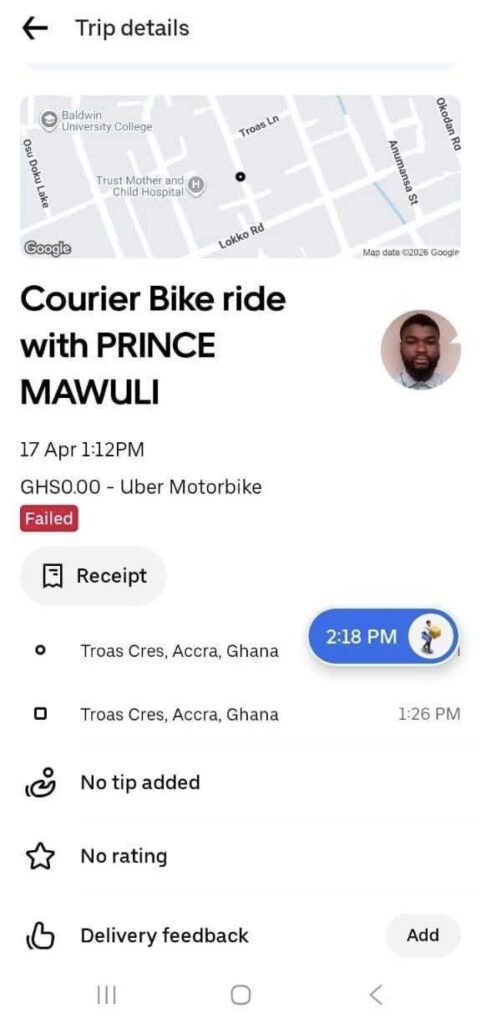
The rider, identified as Prince Mawuli, was accused of disappearing with a food package that was supposed to be delivered to the Ministry of Foreign Affairs and Regional Integration. The story gained traction online after questions emerged about what exactly happened to the order and why the restaurant was left in the dark.
According to Raymond Addai-Danquah, CEO of RAD Kitchen, the situation only began to make sense after the rider resurfaced the following morning. Prince, who is reportedly a student at the University of Ghana, reached out and later showed up in person to explain his side of the story.
His explanation points to a technical failure rather than deliberate misconduct. He claims the delivery process was interrupted by a system issue, which prevented the order from being completed properly. On arrival at the destination, he says he could not reach the customer because the contact number provided was unreachable. At that point, the situation became complicated.
What has raised eyebrows is what happened next. Instead of returning the food to the restaurant or immediately reporting the issue, the rider reportedly went silent until the incident started circulating online. That delay is what shifted public opinion, turning what could have been seen as a logistical problem into a question of trust and responsibility.
The most notable development is that the rider eventually paid for the undelivered food, an action that suggests acknowledgment of some level of fault, regardless of the technical explanation. In a digital service ecosystem where trust is everything, that step may have helped to calm tensions, but it does not erase the concerns raised by the incident.
This situation highlights a growing challenge within app based delivery services in Ghana. As platforms like Uber continue to expand into logistics and food delivery, the systems that support them must handle real world unpredictability. Failed calls, wrong addresses, and technical glitches are part of the terrain. What matters is how these issues are managed when they occur.
From an operational standpoint, the incident exposes a gap in communication protocols. In mature delivery systems, unresolved orders trigger immediate escalation processes that involve both the vendor and the platform. The absence of that quick response in this case left room for confusion, financial loss, and reputational damage.
There is also a human angle that cannot be ignored. Many riders in the gig economy operate under pressure, balancing academic work, financial responsibilities, and unpredictable job conditions. While that context does not excuse poor handling of deliveries, it adds a layer of complexity to how these incidents should be understood.
For businesses like RAD Kitchen, the stakes are high. Every failed delivery affects customer trust, operational cost, and brand reputation. For riders, a single incident going viral can have lasting consequences on their ability to continue working within the platform.
Looking ahead, this episode may push platforms and vendors to tighten their systems. Clearer escalation channels, better tracking, and stricter accountability measures are likely to become more important as the delivery ecosystem grows.
At its core, this is more than just a GH¢420 dispute. It is a reminder that the convenience of digital services still depends heavily on human decisions. When something goes wrong, speed, transparency, and responsibility are what separate a simple mistake from a full blown controversy.
Also Read: Tatale SHS Storekeeper Accused of Trying to Steal School Food