

 By Collins Sarkodieh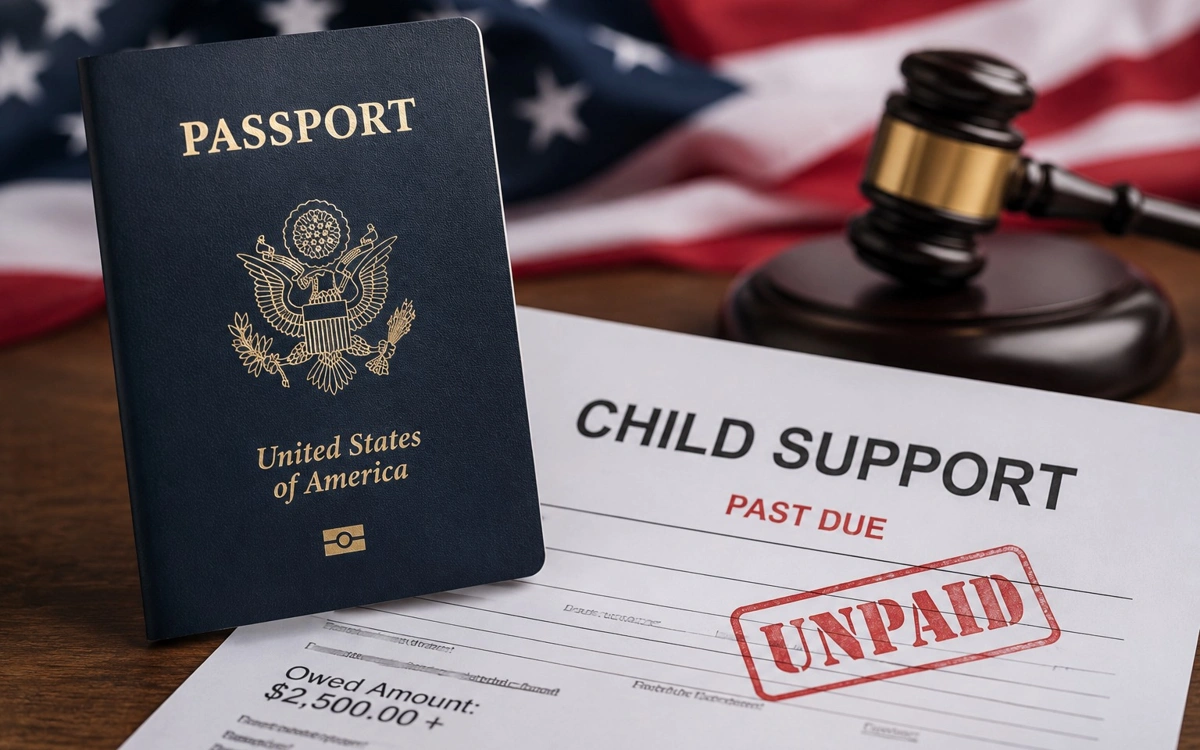
The United States government is now actively revoking existing passports of parents who owe significant child support debt, moving beyond the traditional practice of simply denying new applications. Under a strict enforcement shift of the 1996 Personal Responsibility and Work Opportunity Act, the State Department is coordinating with the Department of Health and Human Services (HHS) to cancel the travel documents of those in arrears.
While federal law allows for enforcement against anyone owing more than $2,500 (approx. GH₵28,150), the initial phase of this crackdown targets approximately 2,700 high-priority cases. These individuals owe more than $100,000 (approx. GH₵1,126,000) in unpaid child support. This move signals a “common sense” push to exact real consequences for those failing to meet their financial obligations to their children.
This policy shift is particularly relevant for the American diaspora and dual citizens living abroad, as travel privileges are now being used as a direct lever for domestic debt recovery. For those currently outside the U.S., a revoked passport means they can only obtain a “limited validity” document intended solely for a direct return to the United States to settle their legal and financial affairs.
What is the legal threshold for US passport revocation?
The legal trigger for passport-related penalties is currently set at $2,500 in child support arrears, a threshold lowered from $5,000 by legislative changes in 2005. Once a parent hits this debt limit, state agencies report the delinquency to the federal government, placing the individual on the Passport Denial Program list.
Historically, this list prevented people from renewing their passports or getting new ones. However, the 2026 policy shift activates the discretionary power of the Secretary of State to revoke passports already in a person’s possession. This means that a valid, 10-year passport can be cancelled remotely, rendering it useless at airport checkpoints or border crossings.
The State Department reports that it is currently tracking 4.3 million people with outstanding child support debt. While the initial focus is on the most egregious “six-figure” debtors, the agency has the legal authority to apply these rules to anyone over the $2,500 mark. This aggressive stance aims to bridge the massive gap between support owed and support actually received.
How will this affect Americans living in Ghana and Africa?
Americans and dual citizens residing in Africa, including the large diaspora in Ghana, Nigeria, and Kenya, face significant mobility risks under these new enforcement rules. If a U.S. passport is revoked while the holder is abroad, they will be notified by the State Department and must visit a U.S. Embassy or Consulate to resolve their status.
U.S. Embassies, such as the mission in Accra, cannot waive or negotiate child support debt, as these are state-level legal matters. Instead, consular officers will only be authorized to issue an emergency, limited-validity passport. This document is strictly for one-way travel back to the U.S., forcing the individual to return home to address their arrears with state authorities.
For dual citizens, while their second nationality remains valid for local travel, they will be unable to enter the United States as a citizen until the debt is cleared. This could disrupt business operations, family visits, and residency status for thousands of Americans who move frequently between the U.S. and the African continent.
Does this violate the constitutional right to travel?
The U.S. courts have historically upheld the government’s right to restrict international travel for those who fail to pay child support. In the landmark 2002 case Eunique v. Powell, the Ninth Circuit Court of Appeals ruled that the government has a “compelling interest” in ensuring parents support their children, which outweighs a debtor’s Fifth Amendment right to travel abroad.
The court argued that international travel is a privilege that can be limited when a citizen has failed to comply with fundamental legal and social obligations. Since that ruling, the State Department has successfully used passport-related enforcement to collect over $382 million in arrears.
Critics sometimes argue that revoking a passport makes it harder for a parent to work internationally to earn the money needed to pay the debt. However, the federal government maintains that the threat of losing global mobility is one of the most effective tools for compelling high-income debtors to prioritize their children over their travel plans.
Factual Insights into US Child Support and Passport Debt:
- Total Unpaid Debt: In 2022, custodial parents in the U.S. were owed approximately $29.9 billion, but only $19.2 billion was actually paid.
- Enforcement Success: The Passport Denial Program has spurred the repayment of $657 million in total arrears since its inception in 1998.
- Daily Denials: On average, nearly 100 passport applications are denied every day in the U.S. due to child support delinquency.
- Incubation of Policy: The 1996 statute signed by President Bill Clinton originally set the enforcement bar at $5,000 before it was halved in 2005.
- Gender Statistics: In 2022, mothers were owed $25.2 billion and received $16.2 billion, while fathers were owed $4.8 billion and received $3 billion.
- Recent Collections: Over $156 million has been collected through passport-related enforcement in just the last five years.
What is the new Trump commemorative passport design?
In a separate development, the State Department is releasing a limited run of 25,000 to 30,000 specialized passports to commemorate the 250th anniversary of U.S. independence. These books will feature a portrait of President Donald Trump on the inside cover, alongside customized artwork and enhanced security imagery.
These commemorative passports will be available starting in July 2026 and are intended to celebrate the “Semiquincentennial” of the nation. Applicants must apply in person at the Washington Passport Agency to receive these specific editions. Despite the aesthetic changes, these documents maintain the same high-security features as the standard “Next Generation” U.S. passport.
It is important to note that even these commemorative documents are subject to the same revocation rules. Whether you have a standard book or a limited-edition anniversary passport, the law remains blind to the design if the holder owes more than $2,500 in child support.
Balancing Family Welfare and Global Mobility
The 2026 activation of passport revocation powers marks a new era of accountability for American parents. By transforming the U.S. passport from a simple travel document into a tool for domestic debt recovery, the federal government is prioritizing the financial welfare of children over the international freedom of delinquent parents.
As coordination between the State Department and HHS intensifies, the message to the 4.3 million people in debt is clear: pay up or stay home. For those in the diaspora, this is a critical time to check arrears status and coordinate with state agencies before a routine trip to the airport turns into a legal nightmare.
Also Read: Japan Now Allows Divorced Parents to Share Custody of Their Children
With nearly $30 billion in child support still unpaid across the United States, will revoking the passports of the top 2,700 debtors be enough to scare the other 4 million into compliance?