

 By Zobia Zulfqar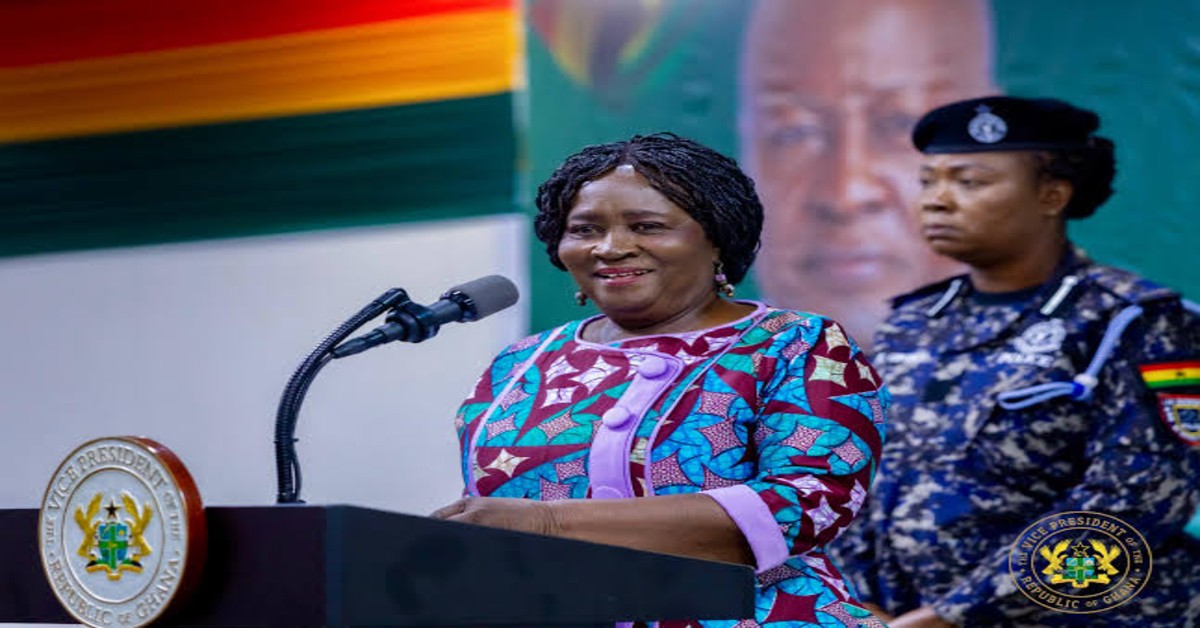
Vice President Professor Naana Jane Opoku-Agyemang has urged organised labour to embrace a renewed sense of patriotism by promoting productivity, innovation and a stronger work ethic to support Ghana’s economic transformation.
Speaking at the opening of the 2026 National Labour Conference in Ho, the Vice President said Ghana’s workforce must take a leading role in addressing workplace challenges such as absenteeism, lateness, indifference and corruption. She stressed that improving labour attitudes would be essential to sustaining economic growth and national development.
The two-day conference brought together more than 200 representatives from labour unions, employers, members of the National Tripartite Committee, government institutions and private organisations. This year’s event was held under the theme, Strengthening Industrial Harmony as Catalyst for Accelerated Economic Growth and National Development.
Professor Opoku-Agyemang said the relationship between organised labour and government should move beyond recurring strikes, rushed wage negotiations and temporary solutions. Instead, she called for stronger dialogue mechanisms capable of resolving disputes before they escalate into national crises.
According to her, Ghana requires a more trusted and effective labour relations system that promotes cooperation between workers, employers and government while ensuring disagreements are handled through constructive engagement.
She acknowledged that the country had faced significant economic challenges in recent years but said the government had introduced measures aimed at restoring economic stability and resilience. She noted that these policies were beginning to produce encouraging results and would create more opportunities for workers if supported by improved productivity.
The Vice President also reaffirmed the government’s commitment to protecting workers’ welfare, particularly through the provision of decent pension schemes and continued support for the country’s social security system.
She highlighted several government initiatives designed to strengthen the economy, including the 24 Hour Economy programme, investments in reliable energy supply and transport infrastructure, and efforts to transform Ghana into an export-driven economy.
Professor Opoku-Agyemang explained that these initiatives were intended to create sustainable jobs, improve business competitiveness and raise living standards across the country.
She encouraged labour unions, employers and other stakeholders to adopt modern workplace practices, including flexible working arrangements where appropriate. She said stronger collaboration between businesses and organised labour would help improve efficiency while creating a healthier working environment for employees.
Earlier, the Minister for Labour, Jobs and Employment, Dr Abdul-Rashid Pelpuo, described economic transformation as a shared national responsibility rather than the sole duty of government.
He said sustainable development could only be achieved through close cooperation between the state, employers, organised labour and citizens. Dr Pelpuo assured participants that the government remained committed to strengthening dialogue with workers and ensuring their concerns were addressed promptly through established labour relations mechanisms.
The Volta Regional Minister, James Gunu, also urged all stakeholders to place Ghana’s national interest above sectional concerns during labour negotiations. He said discussions between employers and workers should always be conducted with mutual respect and a commitment to finding practical solutions that benefit the country.
Chairman of the opening ceremony, the Agbogbomefia of Asogli, Togbe Afede XIV, stressed the importance of maintaining industrial harmony as a foundation for economic growth and national progress.
He noted that productive relationships between government, employers and organised labour create a stable environment that encourages investment, business expansion and job creation.
According to Togbe Afede, cooperation rather than confrontation should guide labour relations if Ghana is to achieve its long-term development goals. He urged all parties to continue building trust through regular dialogue and shared commitment to national development.
The conference is expected to provide participants with an opportunity to discuss strategies for strengthening industrial relations, improving workplace productivity and supporting policies that contribute to sustainable economic growth across Ghana.