

 By Emmanuel Bamfo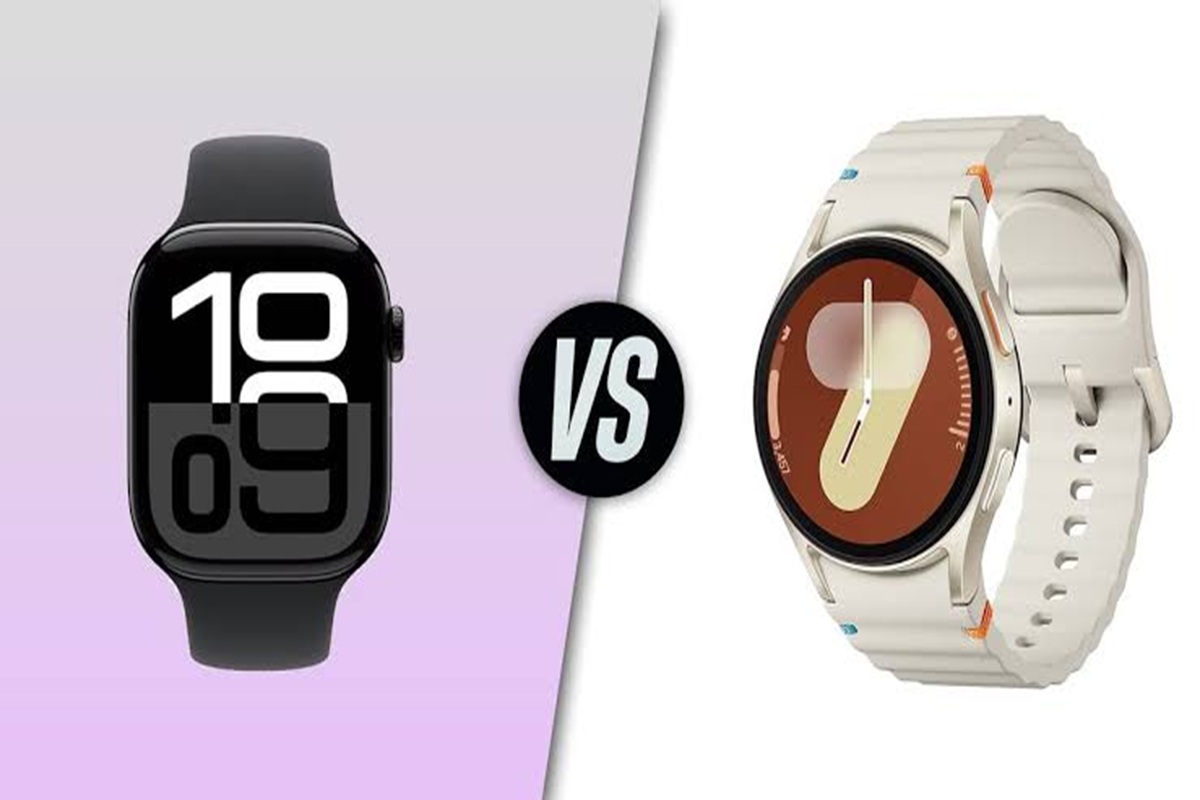
Which wrist companion deserves your hard-earned cedes? Smartwatches have shifted from simple notification display screens into lifesaver health hubs, personal digital assistants, and remote workspace tools. Picking between Apple Watch Series 11 and Samsung Galaxy Watch 8 determines your daily tech lifestyle, health monitoring, and long-term convenience.
Is Apple Watch Series 11 or Galaxy Watch 8 better?
Your smartphone brand makes the final decision for you. If you carry an iPhone, the Apple Watch Series 11 gives you seamless software integration and medical-grade tracking, while Samsung Galaxy Watch 8 unlocks advanced Android health metrics and deep Google Gemini AI features.
Choosing a smartwatch is no longer about picking the prettiest screen or coolest strap. Modern wearables track blood pressure trends, calculate metabolic waste through skin scans, and deliver real-time AI assistance. According to Counterpoint Research, Apple and Samsung hold over 30% of the global smartwatch market share combined, proving that these two tech giants dictate the entire industry standard.
Apple Watch Series 11 built upon the ultra-thin 9.7mm aluminum chassis introduced in previous generations. It packs an upgraded S11 processor, native 5G connectivity, and enhanced LTPO3 wide-angle display technology. Meanwhile, Samsung responded with its Galaxy Watch 8, featuring a thin 8.6mm “squircle” frame, the new Dynamic Lug System for band swapping, a 3,000-nit AMOLED screen, and an upgraded BioActive sensor array.
| Feature Comparison | Apple Watch Series 11 | Samsung Galaxy Watch 8 |
| Case Thickness | 9.7 mm | 8.6 mm |
| Peak Display Brightness | 2,000 nits | 3,000 nits |
| Battery Life Expectancy | Up to 24 Hours | Up to 30–40 Hours |
| AI Virtual Assistant | Apple Intelligence / Siri | Google Gemini AI |
| Standout Health Tools | Hypertension Alerts, ECG, Sleep Apnea | Vascular Load, Antioxidant Index, BMI |
Which device offers better health tracking for your daily life?
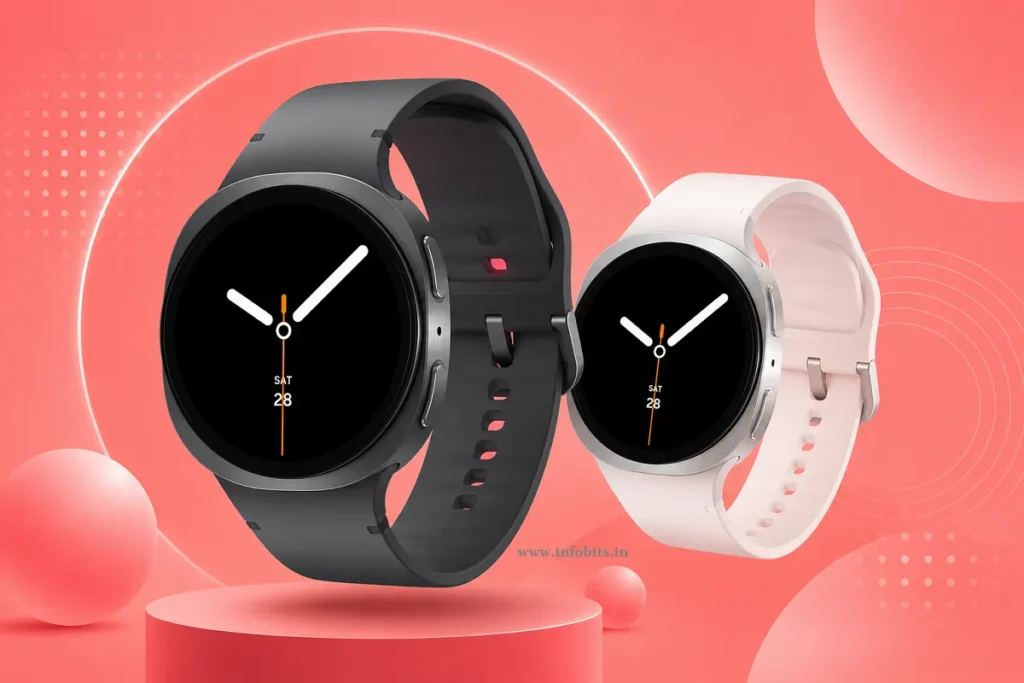
Samsung Galaxy Watch 8 takes the lead for granular wellness metrics, while Apple Watch Series 11 excels at clinical heart and hypertension warnings. Your specific body monitoring needs dictate which wearable offers better value.
Health tracking is the real reason most people wear these devices every single day. Apple Watch Series 11 features passive hypertension alert systems that notify you when signs of persistent high blood pressure appear. Combined with FDA-cleared Sleep Apnea detection, single-lead Electrocardiograms (ECG), and emergency Fall Detection, Apple built a digital safety net for your wrist.
Samsung Galaxy Watch 8 strikes back with the enhanced BioActive sensor suite. It offers unique physical tracking tools such as Vascular Load measurement (to monitor circulatory stress during sleep) and an Antioxidant Index scan (to evaluate cellular aging). Medical studies published in the Journal of Medical Internet Research highlight that continuous wrist-worn optical sensors achieve over 90% accuracy in detecting abnormal cardiac rhythms, making both devices legitimate health allies.
How do display and design specs compare in real daily usage?
Samsung Galaxy Watch 8 dominates outdoor visibility with a blinding 3,000-nit panel, whereas Apple Watch Series 11 offers a wider viewing angle on its rectangular screen. Selecting the ideal layout depends on whether you prefer classic circular aesthetics or text-friendly rectangular layouts.
When you walk through bright morning sunshine in Accra, display brightness is everything. Samsung equipped the Galaxy Watch 8 with a 3,000-nit Super AMOLED panel protected by scratch-resistant Sapphire Crystal across all base models. It uses a fresh “squircle” case styling that blends traditional circular watch heritage with modern rectangular edges.
Apple retains its signature rectangular form factor with the Series 11, available in 42mm and 46mm configurations. The LTPO3 wide-angle OLED display allows you to read notifications at steep wrist angles without raising your hand completely. While the aluminum Apple Watch Series 11 uses strengthened Ion-X glass, you must upgrade to the pricier titanium variant to get Sapphire Crystal protection.
Which smartwatch wins the battery life and charging battle?
Samsung Galaxy Watch 8 beats the Apple Watch Series 11 in endurance, offering up to 30 to 40 hours of use per charge. However, Apple narrow the gap by introducing faster magnetic charging speeds and an extended 24-hour baseline runtime.
Nobody likes a smartwatch that dies halfway through an active day or during critical sleep tracking. Apple engineered the S11 chip and display drivers to bump the Series 11 battery life up to 24 hours under standard usage. Low Power Mode stretches that mark to 38 hours, while fast magnetic charging gives you 8 hours of sleep tracking from just a 5-minute charge top-up.
Samsung Galaxy Watch 8 houses a high-density battery alongside the efficient 3nm Exynos W1000 processor. You can reliably get 30 hours with the Always-On Display enabled, and up to 40 hours with it turned off. According to battery testing data from Statista, low battery anxiety remains the number one consumer complaint regarding wearables, giving Samsung a distinct advantage for weekend travelers.
Can AI on your wrist change how you manage daily productivity?
Google Gemini on Galaxy Watch 8 offers proactive conversational assistance, while Apple Watch Series 11 relies on fast, localized Apple Intelligence routines. Both platforms turn voice interactions into fast productivity workflows on your wrist.
Artificial intelligence is changing how we talk to our wrist gadgets. The Galaxy Watch 8 runs Wear OS paired with One UI Watch, bringing Google Gemini AI directly into your daily routine. You can summarize unread messages, draft context-aware emails, or ask complex natural questions without pulling your phone out of your pocket.
Apple Watch Series 11 uses its S11 dual-core chip and Neural Engine to process Siri requests directly on the device. Smart Stacks dynamically present widgets based on your time, location, and routine—such as displaying your airline boarding pass when you arrive at the airport. Industry data from Gartner projects that over 60% of premium smartwatch interactions will be voice-driven by AI by the end of 2026.
How much do these smartwatches cost and which gives maximum value?
Samsung Galaxy Watch 8 offers a lower entry price starting around $299, whereas Apple Watch Series 11 begins at $399 for standard aluminum variants. Value depends entirely on the smartphone ecosystem you already own.
Price points play a massive role when upgrading personal electronics. Samsung keeps base pricing accessible for the 40mm Galaxy Watch 8, offering cellular LTE upgrades for a modest premium. Every Galaxy Watch model includes Sapphire Crystal glass, delivering durable build quality out of the box.
Apple sets the entry barrier higher for the 42mm Series 11, with cellular 5G models and titanium builds commanding premium prices. However, Apple Watch models consistently retain up to 15% higher resale value after two years compared to Android equivalents, based on trade-in data from Counterpoint Research.
Final Verdict: Which flagship wearable should you buy?
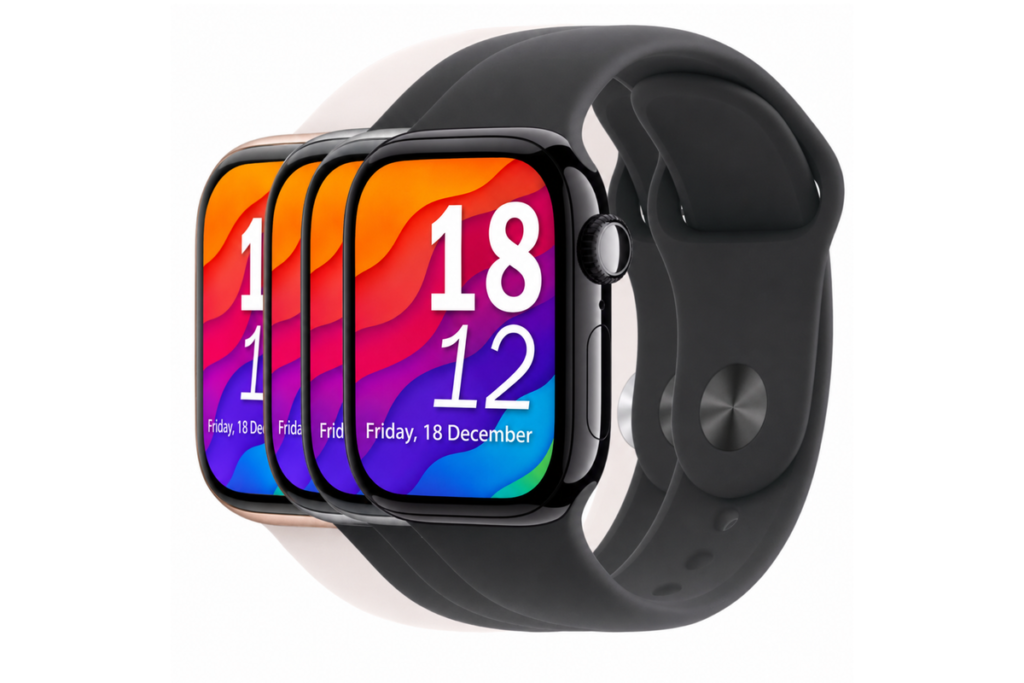
If you use an iPhone, buy the Apple Watch Series 11 for its seamless watchOS integration and proven health ecosystem. If you use an Android or Samsung Galaxy device, buy the Galaxy Watch 8 for superior battery life, Gemini AI features, and unmatched display brightness.
Neither watch will convert loyalists from the opposing smartphone operating system. Apple Watch Series 11 remains locked tight within iOS, delivering a refined user experience, slick LTPO3 wide-angle viewing, and vital hypertension alerts. Samsung Galaxy Watch 8 stands tall as the champion for Android power users, delivering advanced biometrics, longer battery life, and a bright 3,000-nit screen.
Also Read: the best budget smartphones in ghana