

 By Aaron Hammond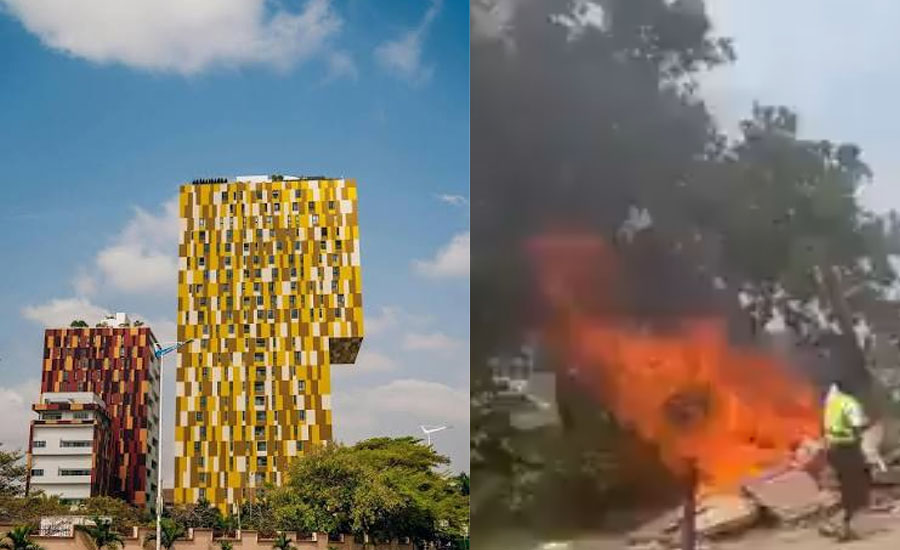
The Ayawaso West Municipal Assembly taskforce recently stormed Spanner Junction and the Villaggio area near Tetteh Quashie to clear out stubborn traders.
These unauthorized vendors had completely taken over pavements and even the footbridge, making life difficult for pedestrians. Just a day after an initial eviction, the traders defiantly moved back to the same spot. To stop this stubborn cycle, the frustrated municipal authorities took a drastic step and set fire to the wooden racks. It is a tough scene to witness, but city authorities insist that keeping our public walkways safe and clear is non-negotiable.
This dramatic clash highlights a massive struggle between municipal survival and urban planning in our bustling capital. On one side, market women and youth are just trying to make a daily living in a tough economy. On the other side, city leaders want to prevent chaotic gridlocks and stop footbridges from turning into illegal market stalls. When traders ignore official warnings and sneak back overnight, assemblies feel pushed to the wall. Burning the wooden structures sends an aggressive signal that the local government means business this time. Nobody enjoys seeing goods and property go up in smoke, but law enforcement argues that voluntary compliance simply failed.
Moving forward, both the assembly and market leaders need a permanent solution rather than an endless game of cat and mouse. Clearance exercises alone cannot fix urban congestion if displaced vendors have nowhere else legally affordable to sell their items. City planners must provide structured trading hubs while enforcing strict zoning laws to protect pedestrians. Until a better system arrives, traders occupying dangerous highway shoulders and footbridges will keep risking their investments. At the end of the day, a clean and safe Accra benefits everyone, but it requires genuine cooperation instead of burnt wooden shacks.
Also Read: Hawa Koomson Wants Pepper Spray Legalized in Ghana