

 By Ishmeal
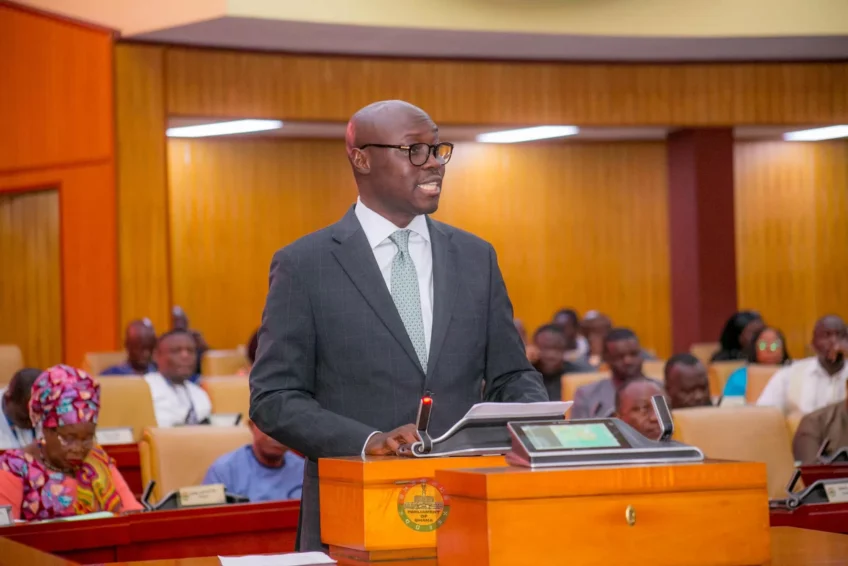
Finance Minister Dr Cassiel Ato Forson has announced major infrastructure, energy and industrial development plans under the 2027 Budget, including a new National Theatre in Kumasi, a railway line linking Takoradi to Nyinahin and measures to increase local gold refining.
The announcements form part of the government’s four-year US$10 billion New Economy Programme, which is expected to run from 2027 to 2030.
Presenting the 2027 Budget Statement and Economic Policy to Parliament on Thursday, November 12, Dr Forson said the government intends to invest in infrastructure and local industries to create jobs, increase exports and retain more value from Ghana’s natural resources.
Kumasi to Get a New National Theatre
The government plans to complete a new National Theatre in Kumasi as part of its US$1 billion investment programme for tourism, culture and the creative arts.
According to Dr Forson, the facility will serve as a centre for cultural performances, conferences and activities within the creative industry.
The project is expected to strengthen Kumasi’s position as a destination for cultural events, business gatherings and other major activities.
The wider tourism programme also includes plans to develop hotels in different parts of the country and establish a professional convention bureau in 2027 to attract international and regional conferences.
US$1.5 Billion for Industrial Minerals and Railway Development
The government has earmarked US$1.5 billion under its critical minerals value-addition programme to develop an industrial mineral economy around manganese, bauxite, lithium and gold.
A major part of the plan is the construction of a railway line linking Takoradi Harbour to Nyinahin in the Ashanti Region, passing through major mineral towns including Nsuta and Awaso.
Dr Forson said construction would begin in 2027, with petroleum revenues and mineral royalties expected to finance the project.
The railway will transport manganese and bauxite to a proposed minerals processing enclave in the Western Region, where the government intends to expand local processing and value addition.
The government also plans to extend the railway from Nyinahin to Hamile in the Upper West Region from 2030.
The broader mineral development programme targets local processing of at least 50 per cent of Ghana’s manganese and bauxite by the end of 2028, with the aim of processing all of them locally by 2030.
Emergency Power Plants to Be Phased Out by 2030
Dr Forson also announced plans to end Ghana’s dependence on emergency power plants by 2030.
He said the government intends to rely on new electricity generation infrastructure, including a 1,450-megawatt state-owned thermal power plant and a 600-megawatt solar power plant supported by 2,000 megawatt-hours of battery storage.
The thermal power project is expected to be completed in two phases, with the first 600 megawatts scheduled for December 2028 and the remaining 850 megawatts expected by December 2030.
The government says the additional generation capacity and battery storage will help provide reliable electricity for households and industries while reducing the cost of emergency power arrangements.
It also plans to invest US$500 million between 2027 and 2030 to modernise the electricity transmission system and reduce power losses.
Local Gold Refining to Reach 100 Per Cent by 2028
The Finance Minister announced an ambitious target to increase local gold refining, particularly within the artisanal and small-scale mining sector.
Under the plan, at least 70 per cent of artisanal and small-scale gold is expected to be refined locally by December 2027.
The government wants local refining to reach 100 per cent by December 2028, when exports of raw artisanal and small-scale gold will be prohibited.
The policy is intended to ensure that more value from Ghana’s gold industry remains within the country through local refining, processing and related industrial activities.
A Broader Push for Jobs and Local Production
The announcements reflect the government’s wider ambition to move Ghana away from exporting raw materials and towards greater domestic processing and industrial production.
The planned National Theatre is expected to support the creative economy, while the railway and minerals processing investments aim to strengthen the country’s industrial and export capacity.
The energy programme is also intended to provide the reliable electricity needed to support these industries.
However, the success of the plans will depend on financing, project implementation, infrastructure development and effective oversight as the government works towards its 2030 targets.
Also Read:Ghana To Invest Us1bn In Pharmaceutical Industry