

 By Collins Sarkodieh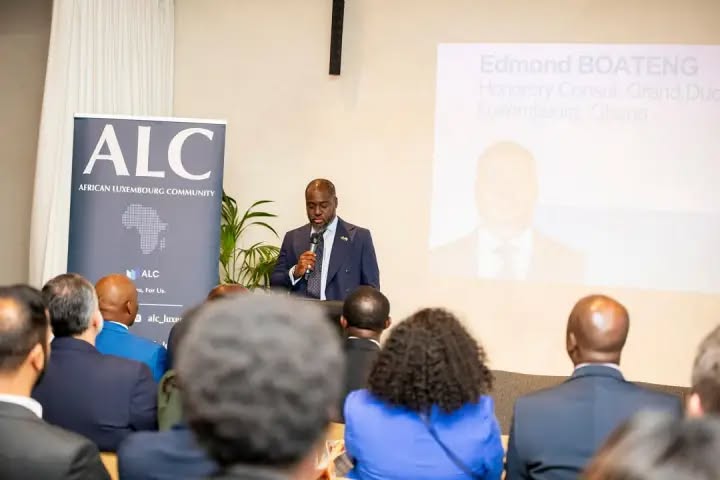
At a time when global capital is becoming more selective and competitive, Ghana is being urged to rethink how it presents itself to international investors. That message came into sharp focus during a high level engagement in Luxembourg, where Edmond Boateng called for a more disciplined and outcomes driven model of economic diplomacy.
Speaking in his capacity as Honorary Consul of the Grand Duchy of Luxembourg to Ghana and Secretary of the Honorary Consular Corps of Ghana, Boateng’s argument goes beyond traditional diplomatic engagement. He is essentially advocating for a shift from relationship building alone to measurable economic outcomes such as investment inflows, trade partnerships, and financial sector integration.
Luxembourg is not a random setting for this conversation. The country is one of Europe’s most influential financial centres, managing trillions of dollars in cross border assets. For Ghana, engaging effectively with such a market represents an opportunity to tap into global capital pools that can support infrastructure, fintech, green energy, and industrial development.
The core issue Boateng raises is structural. Ghana’s economic diplomacy, like that of many emerging economies, has often been fragmented, with multiple institutions pursuing investment promotion without a unified execution framework. This can lead to missed opportunities, duplication of efforts, and weak follow through after high level meetings.
A results driven approach would change that dynamic. It implies setting clear investment targets, aligning diplomatic missions with sector priorities, and tracking outcomes in terms of deals closed rather than meetings held. In practical terms, it means embassies and consulates functioning not just as political outposts but as strategic investment hubs.
This shift matters because the global investment landscape has evolved. Investors are no longer just looking for resource rich markets. They are prioritising regulatory clarity, digital infrastructure, financial stability, and ease of doing business. Countries that can package these strengths into coherent investment narratives tend to attract more sustained capital flows.
From an expert perspective, Ghana’s positioning could benefit significantly from this recalibration. The country already has strong fundamentals in areas such as financial services, mobile money penetration, and a growing digital economy. However, translating these advantages into large scale foreign direct investment requires consistency in messaging and execution across all diplomatic channels.
There is also a competitive dimension. African countries are increasingly competing among themselves for the same pool of global capital. Nations like Rwanda, Kenya, and Morocco have invested heavily in structured investment promotion strategies, often backed by dedicated agencies with clear mandates and performance metrics. Ghana risks falling behind if its approach remains loosely coordinated.
Boateng’s intervention also touches on accountability. A structured model of economic diplomacy would require measurable indicators of success, including investment volumes, partnership agreements, and sector specific outcomes. This introduces a performance culture into diplomatic engagements, which traditionally have been harder to quantify.
Looking ahead, the implications are significant. If Ghana adopts a more coordinated and results focused approach, it could strengthen its credibility among institutional investors, unlock new financing channels, and accelerate key sectors such as infrastructure and technology. It could also deepen ties with financial centres like Luxembourg, creating pathways for Ghanaian businesses to access international capital markets.
On the other hand, failure to adapt could mean continued underperformance in attracting high value investments, particularly in a global environment where capital is increasingly cautious and data driven.
Ultimately, the conversation in Luxembourg reflects a broader shift in how diplomacy is being redefined. It is no longer just about representation. It is about execution, delivery, and measurable economic impact. For Ghana, embracing this shift could be the difference between being part of global investment conversations and actually benefiting from them.
Also Read: Top 5 Software and Web Design Companies in Ghana Leading Innovation Across Africa