

 By Collins Sarkodieh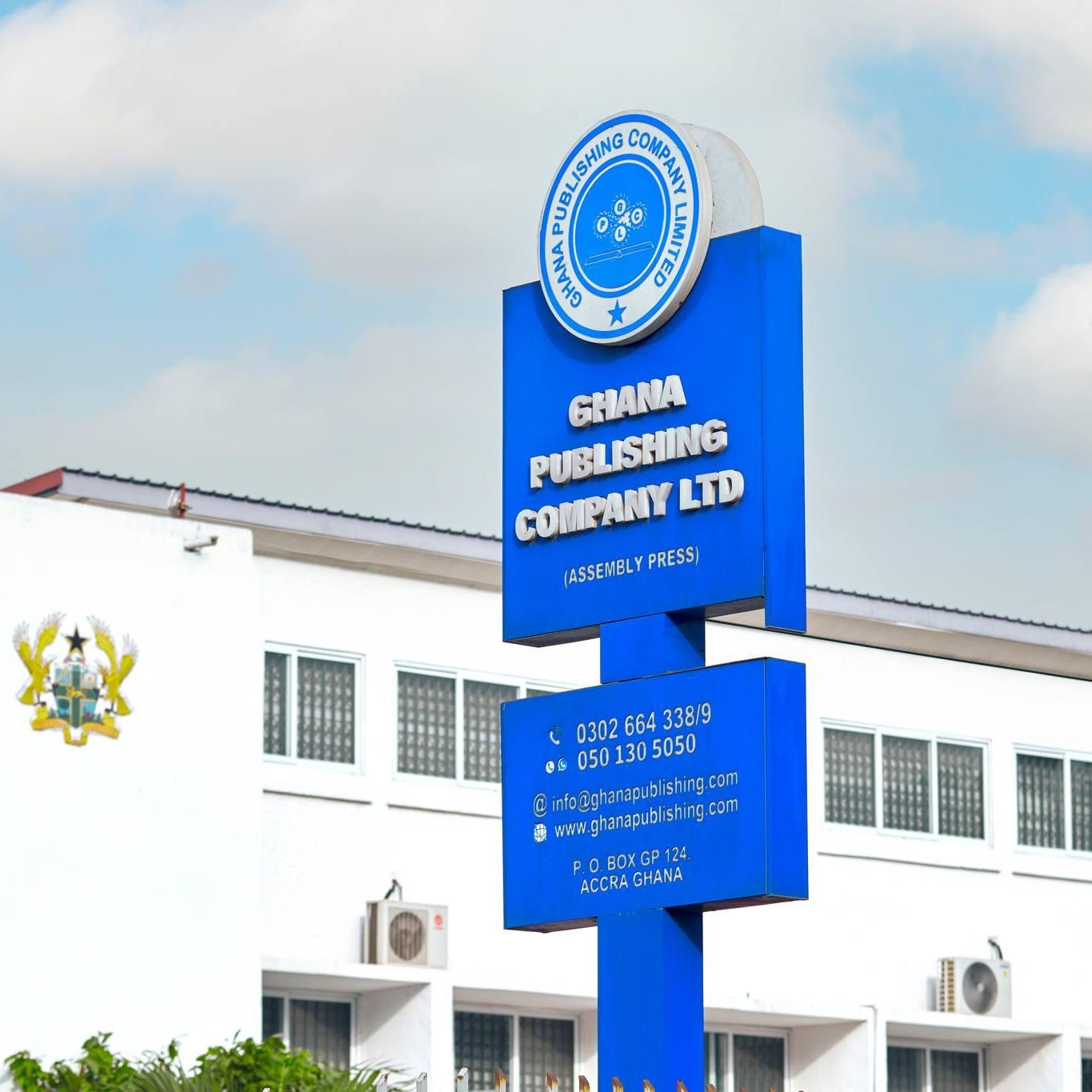
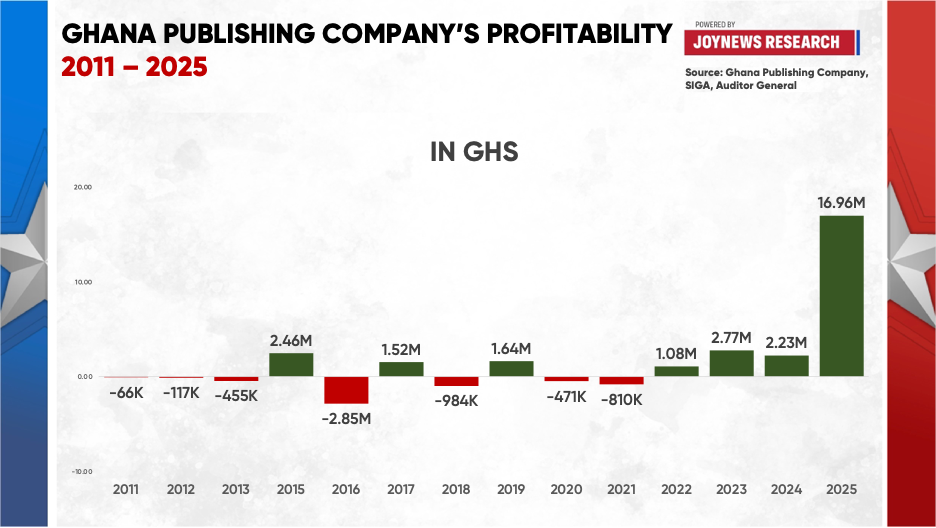
The Ghana Publishing Company Limited (GPCL) achieved a staggering GH¢16.9 million profit after tax in 2025, marking a massive recovery from the GH¢2.2 million recorded in 2024. This performance represents a growth of over 600%, transforming the firm into one of the most profitable state-owned enterprises (SOEs) in Ghana’s current fiscal landscape.
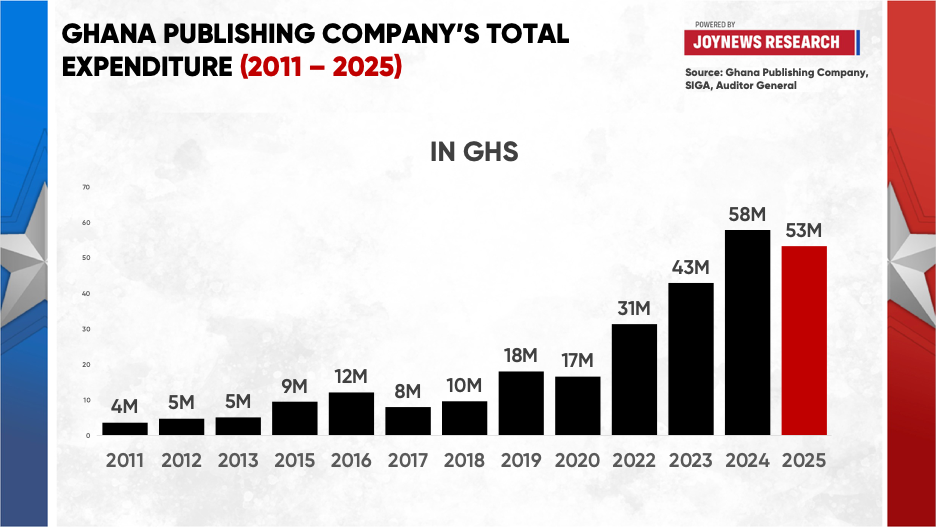
This financial “glow-up” wasn’t just a stroke of luck; it was the result of a dual-action strategy involving aggressive revenue growth and a rare decline in total expenditure. While many state firms struggle with rising costs, Ghana Publishing managed to slash its spending by 8%, proving that tightening the belt can actually lead to a fatter wallet.
For a company that typically operates under the radar, these figures have turned heads across the Ministry of Finance and the general public. However, the real story lies in how they moved from a negative cash flow position to holding millions in the bank, signaling a newfound operational stability that few saw coming.
How did Ghana Publishing Company achieve a 600% profit increase?
The company achieved its GH¢16.9 million profit by increasing core revenue to GH¢72 million while simultaneously reducing total expenditure to GH¢53 million. This unusual combination of higher earnings and lower costs allowed the firm to outperform its previous record of GH¢2.7 million set in 2023 by a significant margin.
Historically, SOEs in Ghana are known for “revenue leakage,” but GPCL’s management appears to have plugged those holes. By focusing on core publishing and printing services, the company grew its top-line revenue by GH¢12 million in a single year. This growth occurred despite a challenging economic environment, suggesting that the company secured high-value contracts or improved its service delivery efficiency.
The most impressive part of this feat is that it breaks a long-term trend of stagnant growth. Since 2020, expenses had been climbing steadily, but 2025 saw the first spending decline in half a decade. In the world of government-owned businesses, seeing an expenditure graph go down while the profit graph goes up is about as rare as a quiet day in Accra’s central market.
What specific costs were slashed to drive this profitability?
The turnaround was largely driven by a sharp reduction in administrative expenses, which fell from GH¢11 million in 2024 to just GH¢7.1 million in 2025. Management targeted “soft” spending areas, significantly cutting budgets for seminars, travel, board-related expenses, and staff motivation costs.
One of the most notable and perhaps controversial adjustments was a nearly 50% reduction in staff allowances. While the financial statements don’t dive into the “why” behind this specific cut, the impact on the bottom line is undeniable. By reducing the frequency of expensive off-site meetings and international travel, the company was able to keep more of its earned revenue as profit.
Interestingly, while administrative costs dropped, operational expenses actually increased. This suggests that the company is shifting its resources away from the “office” and toward the “factory floor,” prioritizing the actual work of publishing over the perks of management. It’s a classic case of cutting the fat to strengthen the muscle.
How did the company’s liquidity and cash flow position change?
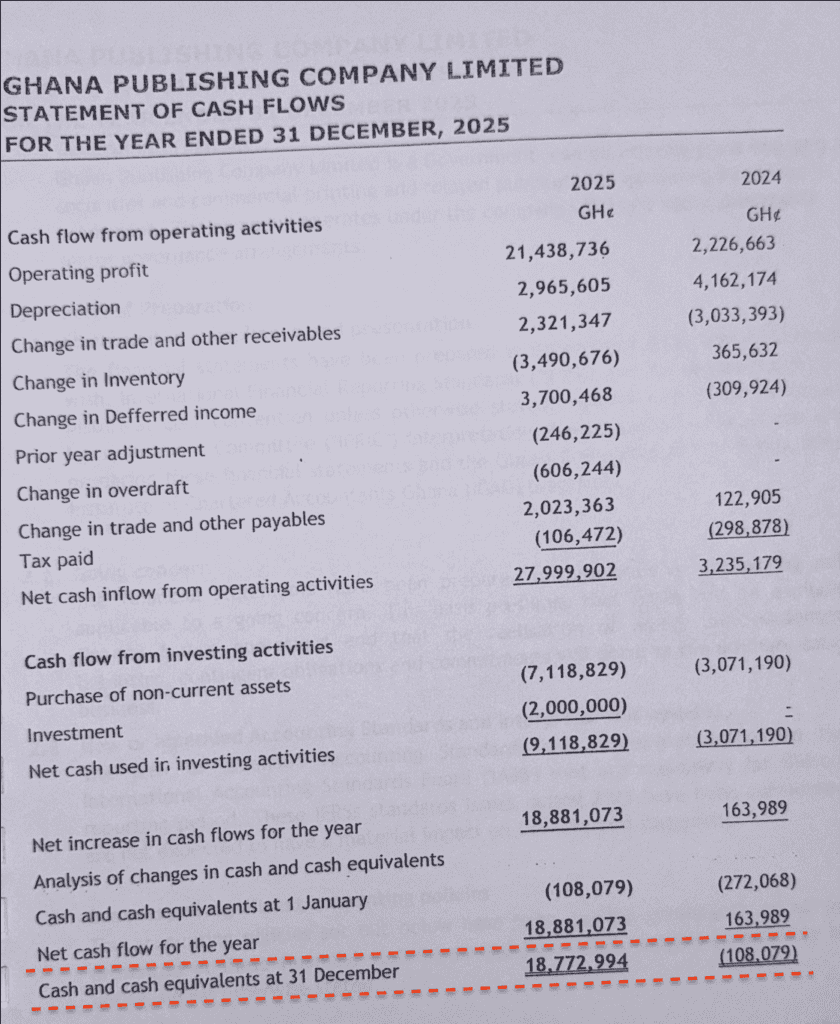
Ghana Publishing moved from a negative operating cash flow of GH¢108,000 in 2024 to a robust positive position of GH¢18.7 million in 2025. This shift means the company is finally generating more cash from its daily operations than it is spending, ending years of reliance on overdrafts and external support.
Liquidity is the lifeblood of any business, and for years, GPCL was essentially on financial life support. The 2025 report shows that the company now holds GH¢16 million in cash at the bank. This provides a massive safety net, allowing the firm to fund its own projects, maintain machinery, and pay suppliers without begging for credit or government bailouts.
This transition from “broke” to “banked” is the clearest indicator of a successful operational turnaround. Having cash on hand changes the power dynamic for a state agency; they are no longer just survivors but are now players capable of investing in modern printing technology to stay competitive in a digital age.
Is this 2025 profit spike sustainable for the long term?
Whether this performance is a permanent turnaround or a temporary spike remains the biggest question, as historical data shows GPCL has struggled with consistent multi-year profitability. Sustaining this level of growth will require management to maintain their strict cost controls even as the pressure to increase “administrative perks” inevitably returns.
The 2025 results are a high-water mark, but they also set a very high bar for 2026. If the sharp reduction in staff allowances leads to low morale or brain drain, the productivity gains could evaporate. Furthermore, the company must prove that its revenue growth wasn’t just due to a one-off government contract but is instead rooted in a sustainable market demand.
State-owned enterprises often see “spikes” during specific leadership cycles or election years, so analysts will be watching closely to see if the 2026 figures hold steady. For now, the management has proven they can fix a leaking ship; the next challenge is to see if they can sail it through a multi-year voyage without taking on water again.
Factual Insights into Ghana’s State-Owned Enterprises:
- Profit Growth: The GH¢16.9 million profit is more than six times the 2024 figure, a 668% increase to be precise.
- Revenue Milestone: Crossing the GH¢70 million revenue mark places GPCL in a higher tier of productive SOEs.
- Expenditure Trend: The 8% decline in total expenditure is the first recorded decrease for the company since 2020.
- Cash Reserves: Holding GH¢16 million in liquid cash is a 15,000% improvement over the negative cash position of 2024.
- Administrative Savings: Cutting administrative costs by nearly GH¢4 million represents a 35% reduction in non-core spending.
- Previous Records: Before this year, the company’s highest recent profit was GH¢2.7 million in 2023, making 2025 an outlier by over GH¢14 million.
What does this mean for the future of Ghana Publishing Company?
The massive profit in 2025 likely means that Ghana Publishing will see increased investment and possibly a wider mandate from the government. With a healthy balance sheet, the firm is now in a position to modernize its equipment, potentially taking on more specialized high-security printing jobs that are currently outsourced.
Success also brings scrutiny. The State Interests and Governance Authority (SIGA) will likely use GPCL as a “poster child” for how other struggling SOEs should be managed. If you can turn a printing press into a multi-million cedi profit machine by simply cutting back on board meetings and travel, it sends a powerful message to other state directors.
The future of the firm now depends on technology. In an era where digital publishing is king, GPCL must use its GH¢16 million “war chest” to pivot toward digital services while maintaining its traditional stronghold on government gazettes and official documents. If they spend this money wisely, they could become the dominant publishing force in West Africa.
A Masterclass in SOE Management?
Ghana Publishing Company’s 2025 financial statement is more than just a list of numbers; it’s a blueprint for institutional recovery. By focusing on the fundamentals growing revenue while aggressively attacking wasteful administrative spending they have achieved what many thought was impossible for a small state firm.
The jump from GH¢2.2 million to GH¢16.9 million is the kind of math that makes investors smile and critics quiet. As long as the company keeps its focus on operational efficiency and resists the urge to return to the high-spending habits of the past, the “2025 spike” might just be the first chapter of a very long and profitable book.
Also Read: BoG Loss 2025: Why a GH¢15.6 Billion Deficit is Saving the Cedi
Source – myjoyonline