

 By Collins Sarkodieh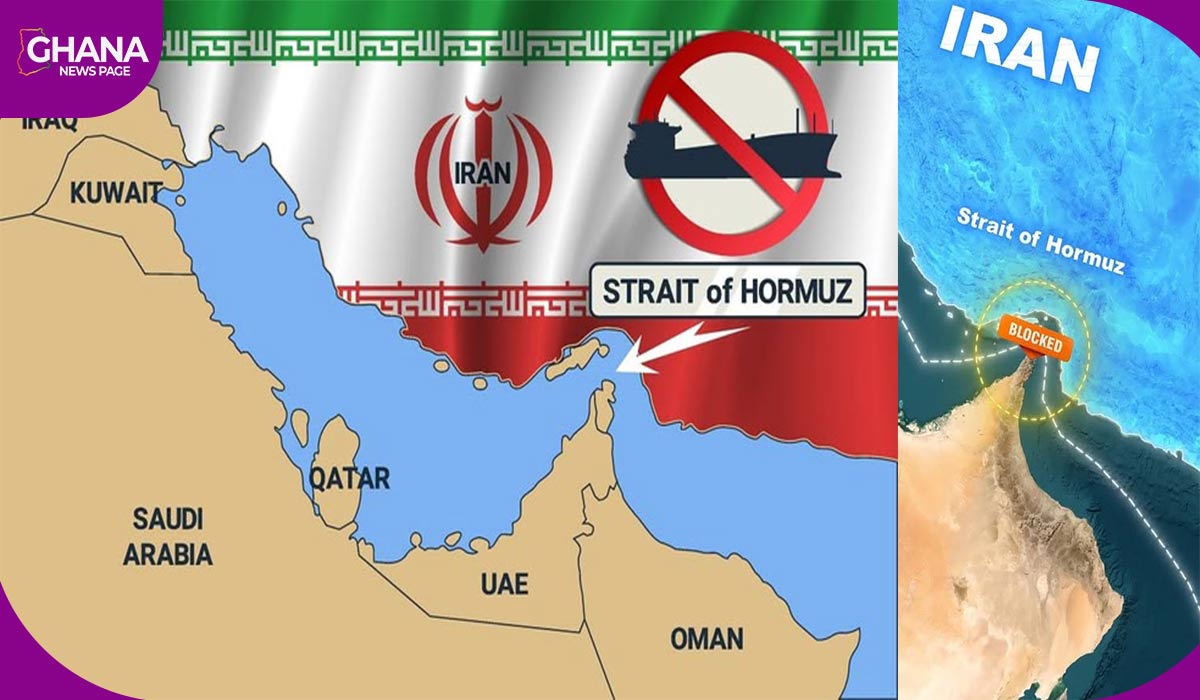
The renewed Iranian rhetoric around the Strait of Hormuz is being read in strategic circles as more than political posturing. It reflects an intentional escalation in messaging around one of the most critical chokepoints in global energy logistics, where even statements alone can trigger measurable reactions in oil pricing, shipping insurance, and military readiness levels.
The Strait of Hormuz sits at the heart of global energy flow, linking the Persian Gulf with open international waters. A significant share of global crude oil exports passes through this corridor, making it one of the most sensitive pressure points in the international economy. Any perceived risk in its stability immediately feeds into global supply chain uncertainty, particularly in energy dependent economies.
The recent remarks attributed to the Speaker of the Iranian Parliament framing control over the Strait as full dominance are being interpreted as part of a broader deterrence strategy. In geopolitical terms, this is not simply about physical control of a maritime route but about signaling capability. The message is directed at external actors that influence over global energy transit can be used as leverage in broader diplomatic and security disputes.
What makes this development important is the shift from abstract warning to explicit framing of the Strait as an active instrument of power. In international relations theory, this falls under coercive diplomacy, where states attempt to shape the behavior of others through credible threats tied to systemic vulnerabilities. In this case, the vulnerability is the dependence of global energy markets on uninterrupted maritime flow through a single narrow passage.
From an economic perspective, even rhetorical escalation has immediate consequences. Oil markets are highly sensitive to geopolitical risk premiums. Traders do not wait for physical disruption before adjusting prices. Instead, they price in probability of disruption, which means statements alone can add volatility to global benchmarks such as Brent crude.
Security analysts also point out that the Strait of Hormuz has historically been one of the most closely monitored maritime regions in the world. Naval presence from multiple global powers is already a feature of the area, reflecting its importance to international trade security. Any increase in perceived threat level often translates into heightened patrol activity, convoy considerations, and expanded intelligence surveillance.
The Iranian position reflects a long standing strategic doctrine that emphasizes asymmetric leverage. Rather than competing directly in conventional military terms, the focus is on controlling or influencing critical nodes in global systems. Maritime chokepoints such as Hormuz function as such nodes because they cannot easily be bypassed without significant economic cost.
Experts in energy security note that the real risk is not necessarily full closure of the Strait, which would have severe consequences for all parties involved, but incremental disruption. Even partial interference, delays, or elevated insurance costs can ripple through global markets. This is why such statements are treated with seriousness even when no immediate action follows.
The broader implication of this escalation is the continued integration of energy infrastructure into geopolitical bargaining. Oil and gas flows are no longer just commercial transactions. They are embedded in strategic calculations where infrastructure becomes part of statecraft.
Looking ahead, the international response is likely to focus on deterrence and de-escalation rather than confrontation. However, repeated cycles of rhetoric increase the baseline level of tension, which over time normalizes higher risk pricing in global markets. This can have long term implications for energy costs, investment planning, and regional security architecture.
Ultimately, the significance of this development lies in how fragile global energy stability becomes when concentrated through a single strategic corridor. The Strait of Hormuz is not just a geographic passage. It is a structural dependency in the global economy, and any narrative that places it at the center of political leverage has consequences far beyond the region itself.