

 By Zobia Zulfqar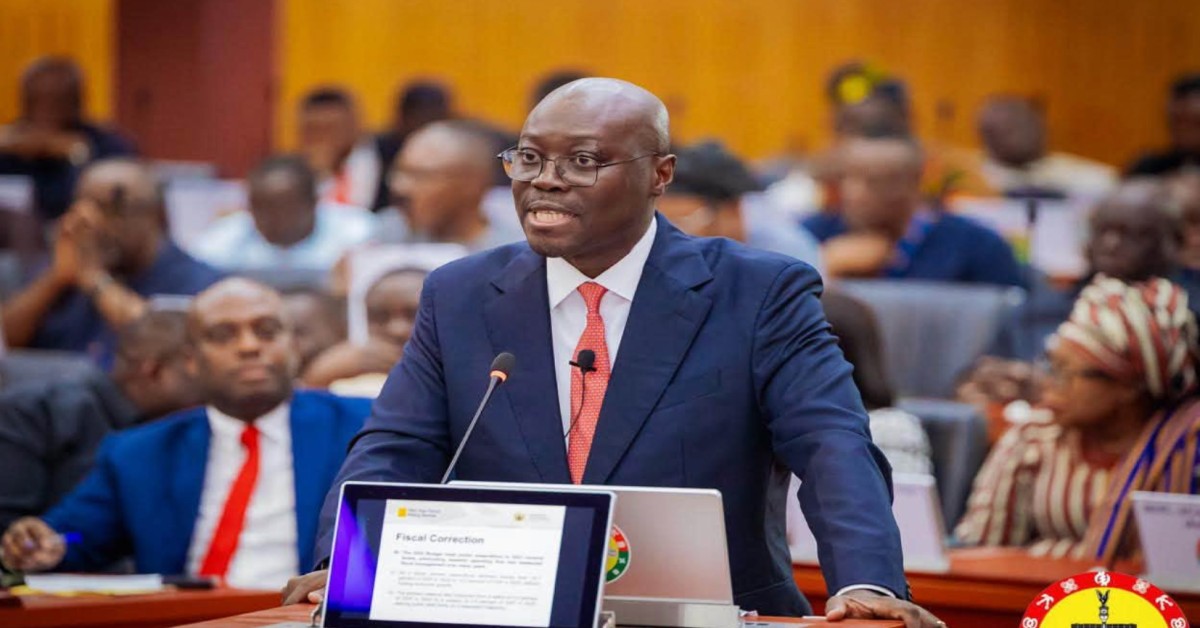
The Government of Ghana has announced plans to provide annual financial support to recapitalise the Bank of Ghana (BoG) until the central bank’s equity is fully restored. The move forms part of a long-term strategy to strengthen the country’s financial system after the significant impact of the 2023 Domestic Debt Exchange Programme (DDEP) on the Bank’s balance sheet.
Finance Minister Dr. Cassiel Ato Baah Forson made the announcement while presenting the 2026 Mid-Year Budget Review in Parliament. He revealed that the government and the Bank of Ghana had signed a Memorandum of Understanding outlining the framework for restoring the central bank’s financial position through regular annual allocations.
According to the Finance Minister, the recapitalisation programme will continue until the Bank of Ghana returns to a healthy equity position, ensuring that the institution remains financially strong and capable of carrying out its responsibilities effectively.
Dr. Forson explained that the government’s commitment is backed by the Bank of Ghana (Amendment) Act, 2025 (Act 1158), which provides the legal framework for restoring the central bank’s capital over time.
He stated that the government would make annual budgetary provisions to recapitalise the Bank until its equity is fully restored, emphasizing that the initiative reflects a long-term commitment to maintaining financial stability and confidence in Ghana’s monetary system.
The need for recapitalisation arose largely because of the Domestic Debt Exchange Programme introduced in 2023. The programme was implemented as part of Ghana’s broader economic recovery efforts but significantly affected the value of assets held by the Bank of Ghana.
As a result, the central bank recorded a negative net equity position, reducing its financial capacity and making recapitalisation necessary to strengthen its balance sheet.
To begin the recovery process, the government issued a recapitalisation bond worth GHS5 billion in March 2026. The bond was designed to improve the Bank’s capital base and provide the initial support required to restore its financial strength.
Officials believe the annual recapitalisation programme will complement this earlier intervention by providing a steady and predictable source of financial support until the recovery process is complete.
Beyond financial injections, the Bank of Ghana is also expected to implement operational reforms aimed at improving efficiency and strengthening long-term sustainability.
Dr. Forson noted that the central bank will undertake a comprehensive operational efficiency review to identify opportunities for reducing costs, improving financial management practices, and enhancing overall institutional performance.
The review is expected to examine operational structures, expenditure management, and internal processes to ensure the Bank operates more efficiently while maintaining its regulatory responsibilities.
The recapitalisation plan aligns with the Bank of Ghana’s broader Phased Capital Restoration Programme covering the period from 2026 to 2032. Bank of Ghana Governor Dr. Johnson Pandit Asiama recently indicated during the 131st Monetary Policy Committee briefing that the restoration programme is already underway.
The phased approach is intended to rebuild the central bank’s capital gradually while minimizing disruptions to government finances and preserving macroeconomic stability.
A well-capitalised central bank plays a critical role in maintaining confidence in the country’s financial system. It supports effective monetary policy implementation, safeguards financial sector stability, manages foreign exchange reserves, and serves as the lender of last resort to commercial banks when necessary.
Although central banks can continue operating with negative equity under certain circumstances, many economists agree that restoring a strong capital position enhances institutional credibility and strengthens public confidence.
The government’s decision also signals its intention to reinforce the independence and operational effectiveness of the Bank of Ghana while supporting broader economic recovery efforts.
The recapitalisation programme comes as Ghana continues implementing reforms aimed at restoring fiscal stability, strengthening public finances, and rebuilding investor confidence following recent economic challenges.
By combining annual financial support with operational improvements, the government expects the Bank of Ghana to gradually restore its financial position while continuing to perform its core responsibilities effectively.
Officials believe the long-term recapitalisation strategy will contribute to a stronger and more resilient financial system, supporting sustainable economic growth and reinforcing confidence among investors, financial institutions, and the wider public.
As Ghana advances its economic recovery agenda, the annual recapitalisation of the Bank of Ghana is expected to remain a central component of efforts to strengthen financial stability, improve institutional resilience, and ensure the country’s central bank is well positioned to meet future economic challenges.
Also Read: Thomas Partey Denied Canada Entry and Will Miss World Cup Opener Against Panama