

 By Collins Sarkodieh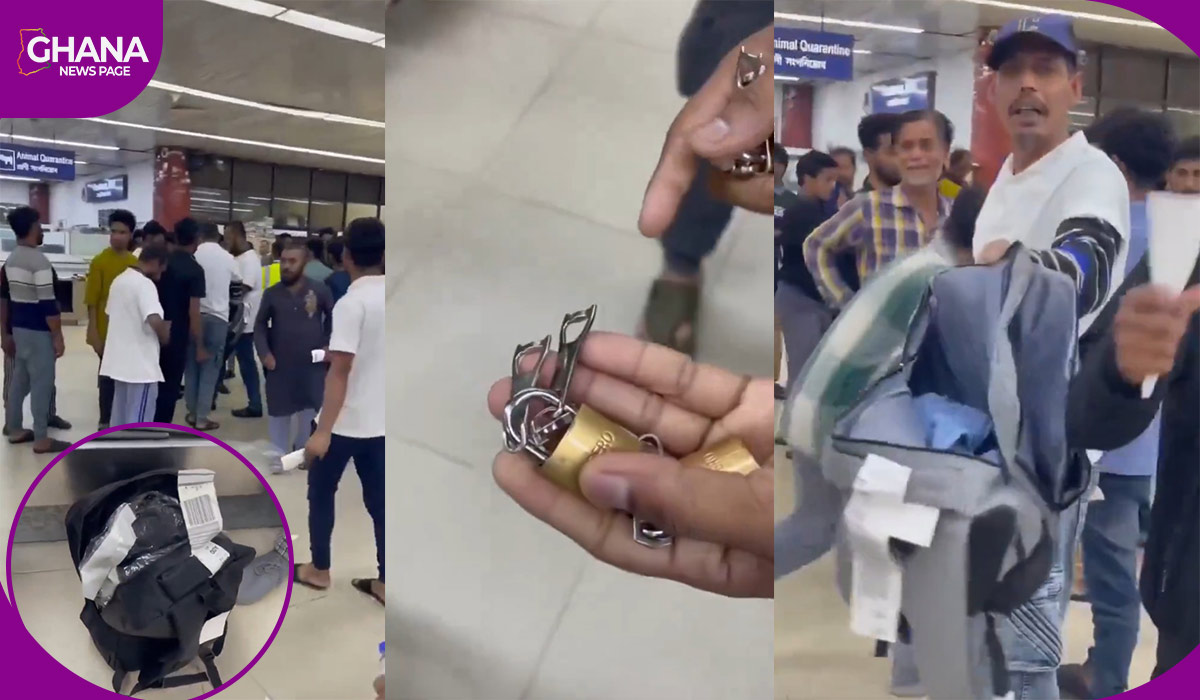
A journey that should have marked a hopeful return home has instead left 78 Bangladeshi migrant workers dealing with loss and frustration after their belongings were allegedly tampered with in transit.
A group of 78 Bangladeshi workers travelling back from Saudi Arabia arrived in Dhaka on a flight operated by Ethiopian Airlines, with a stopover in Ethiopia. But what awaited them at Hazrat Shahjalal International Airport quickly turned relief into distress.
Several of the passengers reported that their luggage had been interfered with during the journey. Broken locks, opened bags, and missing personal items became a common complaint among the group. For many, those bags carried more than just clothes. They contained savings, valuables, and items accumulated over years of work abroad.
Witnesses described emotional scenes at the airport as some of the workers struggled to process the loss. According to the @Global_Folder post, witnesses at the airport described passengers as visibly distressed, overwhelmed by the realization that what they had brought back from years of labor was no longer intact.
The returning workers have directed their anger at the airline, arguing that their baggage remained under its custody throughout the trip. In international travel, responsibility for checked luggage typically lies with the carrier from departure to final destination, especially when the journey is handled under a single ticket or arrangement.
Beyond the immediate loss, the incident highlights a deeper issue faced by migrant workers. For many, working abroad is not just employment but a long term sacrifice aimed at improving life back home. The items they carry back often represent years of effort, financial discipline, and personal compromise. Losing them in transit is not just inconvenient, it is deeply personal.
From an aviation and logistics standpoint, cases like this raise questions about baggage handling security across multi leg international routes. Each transit point introduces additional handling layers, increasing the risk of mishandling or, in worst cases, interference.
The situation also underscores the vulnerability of migrant workers within global travel systems. Unlike frequent travelers, many rely heavily on physical luggage to transport their savings and assets, making them more exposed when things go wrong.
As calls for accountability grow, attention will likely shift toward investigation procedures and compensation frameworks. Airlines operating international routes are expected to adhere to strict baggage handling protocols, and any breach can have reputational and legal consequences.
For the affected workers, however, the priority is more immediate. What was meant to be a moment of return and reunion has instead become a reminder of how fragile those hard earned gains can be once they leave their hands.
Also Read: