

 By Collins Sarkodieh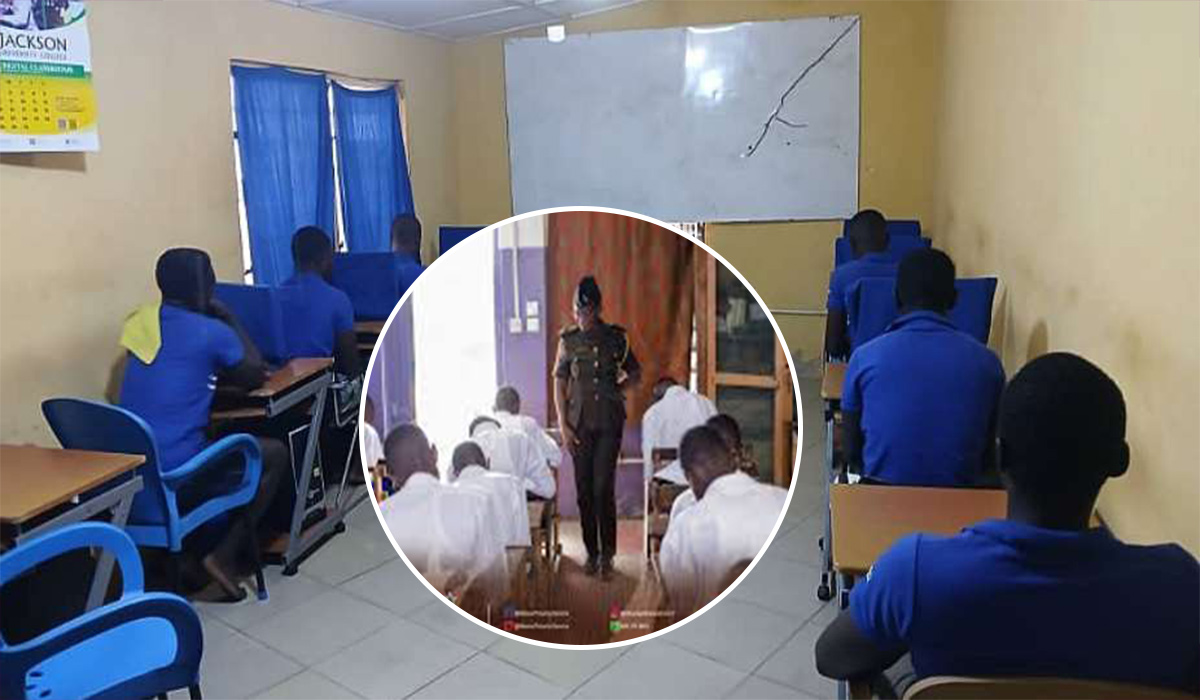
The absence of purpose-built educational infrastructure in Ghanaian prisons is currently undermining the constitutional right of inmates to formal education. While the law mandates reformation and rehabilitation, the lack of dedicated classrooms and learning materials at facilities like the Kumasi Central Prison is stalling the progress of young learners behind bars.
Education is widely recognized as the most effective tool for reducing recidivism and ensuring successful reintegration into society. However, when prison officers are forced to improvise learning spaces in overcrowded cells or corridors, the quality of instruction drops significantly. For many inmates, the dream of earning a certificate and starting a new life is being deferred by the sheer lack of a desk, a book, and a proper school building.
Is formal education a constitutional right for prisoners in Ghana?
Yes, Article 25(1) of the 1992 Constitution of Ghana guarantees equal access to educational opportunities for all persons, including those in state custody. Furthermore, Article 25(1b) specifies that basic education must be free, compulsory, and accessible to every citizen, regardless of their legal status.
The law does not stop at the school gates of the free world; it extends behind prison walls. The Ghana Prisons Service is mandated under Article 205(2) to ensure the welfare, reformation, and rehabilitation of inmates. Without formal education, this mandate is nearly impossible to fulfill efficiently. Formal schooling provides the intellectual and psychological tools necessary for an inmate to shift from a criminal mindset to a productive, civic-minded one.
Also Read: Mother Arrested for Attempting to Smuggle Mobile Phone Into Bengaluru Prison
Why did Kumasi Central Prison fail to register students for the BECE and WASSCE?
The Kumasi Central Prison Reformation School was unable to register candidates for this year’s BECE and WASSCE exams primarily due to inadequate preparation linked to poor infrastructure. Chief Superintendent of Prisons (CSP) Richard Bukari noted that the lack of a conducive learning environment made it impossible to meet the rigorous academic standards required for national examinations.
Currently, the prison manages a small cohort of 44 inmate students, consisting of 21 Junior High School (JHS) learners and 23 Senior High School (SHS) students. When infrastructure is crumbling or non-existent, the focus shifts from academic excellence to mere survival. Inadequate learning materials and the absence of science laboratories mean that students cannot practice what they read, leading to a lack of confidence and eventual withdrawal from the examination process.
How does limited course selection affect inmate rehabilitation?
Inmates are often restricted to a narrow set of courses that may not align with their career goals or natural interests, which significantly discourages enrollment. While JHS students are able to study all 11 subjects, SHS inmates at Kumasi Central are limited to just eight specific courses, mostly in the General Arts category.
The available electives—Economics, Christian Religious Studies, Geography, and Government—are valuable, but they leave out students interested in Technical, Vocational, or Science-based fields. When a person is forced to study subjects they have no passion for, education feels like another form of punishment rather than a path to freedom. This mismatch between interest and curriculum is a major reason why many inmates choose not to pursue formal schooling during their sentence.
What are the main challenges facing prison education in the Ashanti Region?
The primary challenges include a lack of purpose-built classrooms, a shortage of modern learning materials, and the inability of inmates to progress to higher tertiary levels. These constraints make formal education unattractive and difficult to sell to an inmate population that is already dealing with the psychological weight of incarceration.
According to CSP Richard Bukari, the “little strides” being made are often overshadowed by the overwhelming need for proper infrastructure. If a student knows they cannot progress to a university degree because there is no system in place to support it, they lose the motivation to finish their secondary education. Education in prison should be a continuous ladder, not a dead-end street.
Can educational facilities be built near prisons to solve the crisis?
One proposed solution by prison authorities is to build purpose-built educational facilities in close proximity to prisons to enhance access and security. By creating dedicated zones for learning that are separate from the main housing blocks, the prison service can create a “school-like” atmosphere that encourages academic discipline.
Proximity matters in a high-security environment. Moving inmates to distant schools is a security risk and a logistical nightmare. However, a dedicated facility within the prison perimeter or immediately adjacent to it would allow for better resource management. It would also make it easier for volunteer teachers and NGOs to provide support without navigating the complex entry protocols of a maximum-security block.
Why should the government extend free tertiary education to inmates?
Extending free tertiary education to prisoners would fulfill their constitutional rights and drastically reduce recidivism by providing them with high-level professional skills. When an inmate leaves prison with a degree or a professional diploma, their chances of finding employment increase by over 43% compared to those who do not participate in correctional education.
Recidivism—the tendency of a convicted criminal to reoffend—is one of the biggest costs to the Ghanaian taxpayer. It costs significantly less to educate an inmate than it does to house, feed, and guard them for a second or third prison term. By encouraging universities to design special distance-learning programs for long-term prisoners, the state can transform “warehouses of people” into “houses of reformation.”
What is the role of the public in supporting prison education?
The public and corporate organizations can play a vital role by donating books, computers, and building materials to help set up the necessary infrastructure. While the government has the primary responsibility, the reformation of an inmate is a social good that benefits the entire community.
A rehabilitated inmate is a neighbor who contributes to the economy rather than a threat who steals from it. Public-private partnerships could lead to the establishment of “ICT Centers of Excellence” within prisons, giving inmates the digital skills required in the 2026 job market. Every textbook donated is a brick in the wall of a new life for someone who is ready to change.
How does prison education improve successful reintegration into society?
Education reduces illiteracy, which is often a root cause of criminal behavior, and provides the social skills necessary for peaceful co-existence after release. A person who has spent their prison term studying is more likely to have developed the patience, critical thinking, and self-esteem needed to navigate the challenges of life outside.
Successful reintegration is about more than just finding a job; it is about changing one’s identity. In the classroom, an inmate is a “student” rather than a “prisoner.” This shift in self-perception is the most powerful deterrent against returning to a life of crime. Investing in prison infrastructure is, quite literally, an investment in the safety of the Ghanaian public.