How Fraudsters Are Using Fake GhanaWeb Stories and Late Nana Konadu Agyeman-Rawlings’ Name to Rob Ghanaians Online
In recent weeks, Ghana News Page has uncovered a disturbing and fast-growing trend of online fraud and deceptive digital business practices targeting ordinary Ghanaians on social media, especially Facebook. What makes this latest scam more dangerous is not just the money involved, but the emotional manipulation, identity theft of respected national figures, and the cloning of trusted media brands like GhanaWeb.
This is not just internet trickery anymore. It is a coordinated criminal operation, and many Ghanaians are falling victim daily.
How the Scam Works: Lies Wrapped in Familiar Names
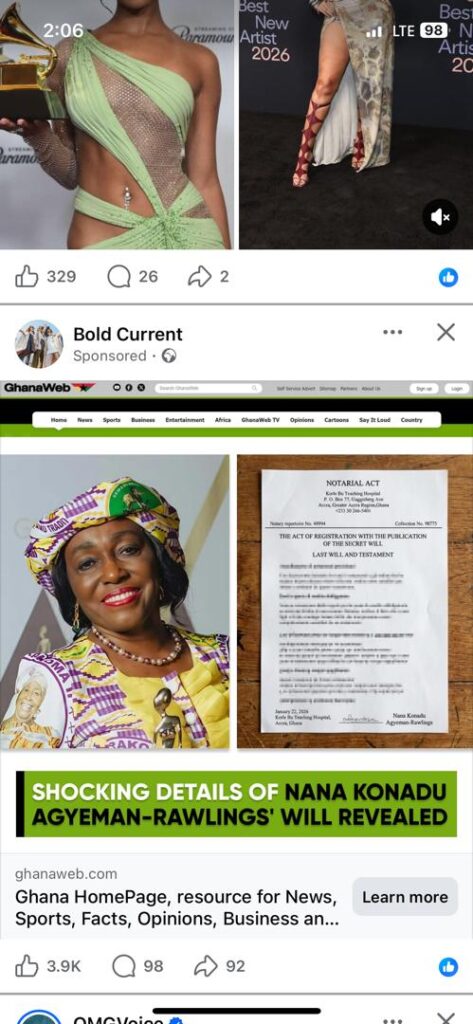
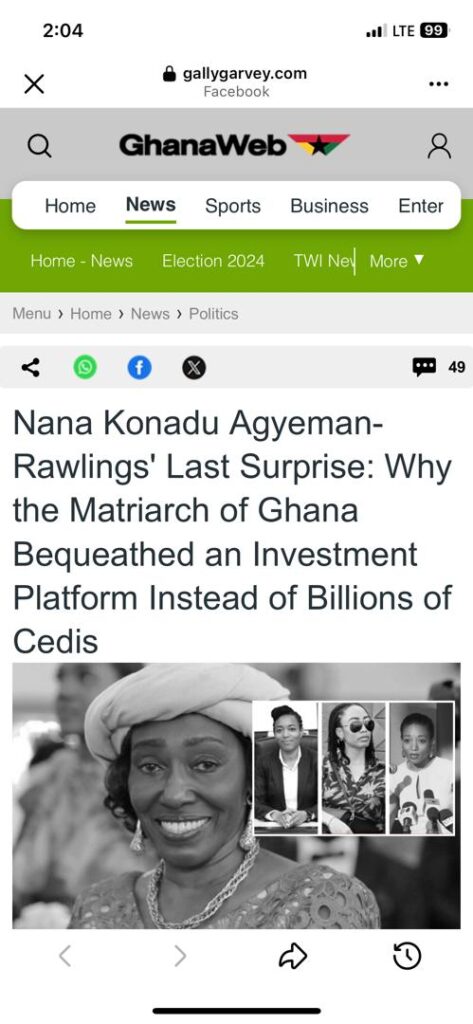
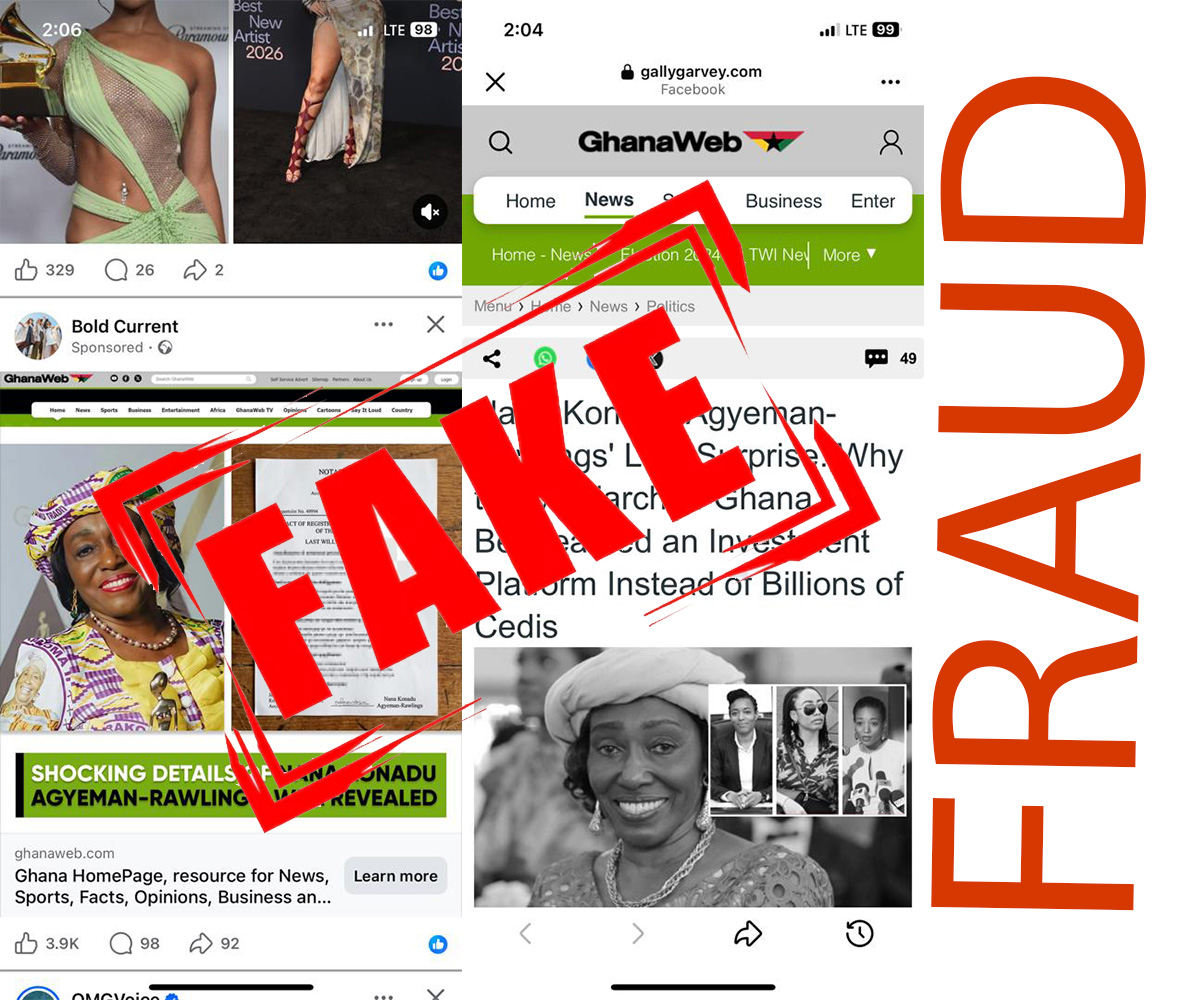
Our investigations show that fraudsters are now using fake Facebook pages designed to look like popular online media platforms, particularly ghanaweb.com, to run sponsored adverts. These fake pages copy GhanaWeb’s logo, colour style, layout, and even writing tone, making it extremely difficult for the average social media user to tell the difference. One of the most disturbing examples we identified carried the headline: “SHOCKING DETAILS OF NANA KONADU AGYEMAN-RAWLINGS’ WILL REVEALED”
The post claims to expose a so-called secret financial source allegedly left behind by the late Nana Konadu Agyeman-Rawlings, a respected national figure whose name still carries weight in Ghanaian society.
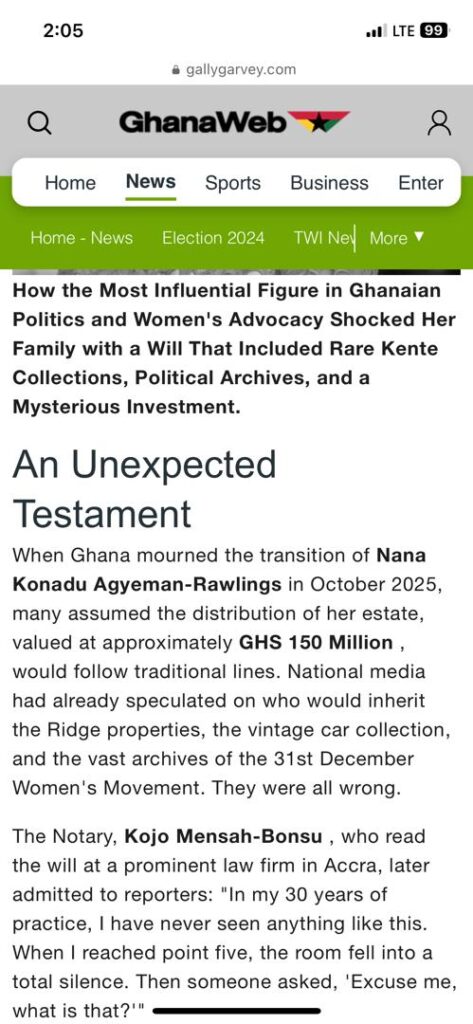
The article is written in a very convincing way. Emotional. Dramatic. Carefully crafted to look like breaking news from GhanaWeb. But it is all fake.
The Deceptive Story That Hooks Victims
Within the fake article, the fraudsters boldly claim that Nana Konadu Agyeman-Rawlings had access to a powerful but hidden money-making system which they now “know about.” They then subtly invite readers to contact them privately to be shown how they too can benefit from this so-called opportunity.
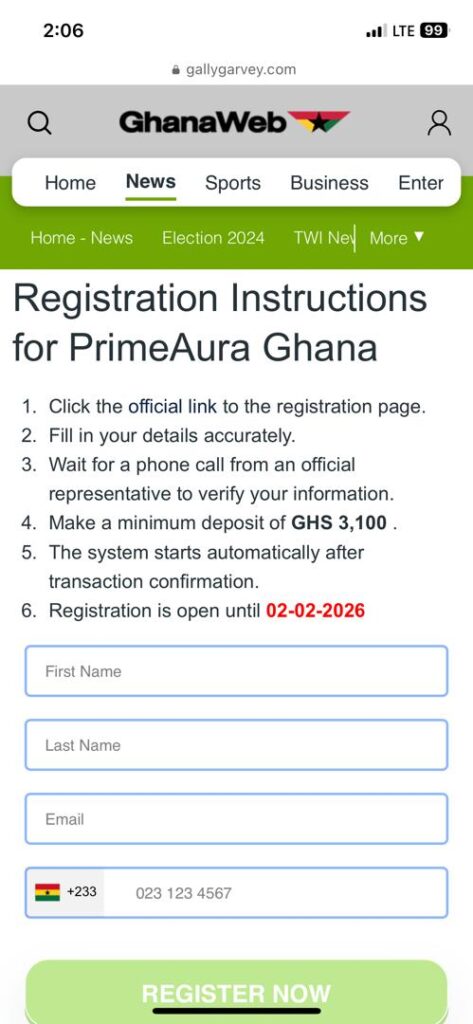
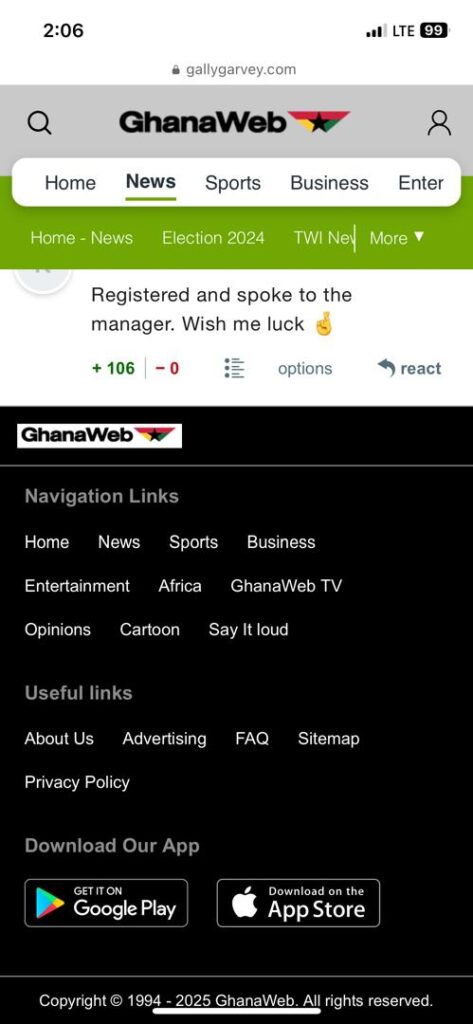
Once contact is made, the victims are encouraged to register and later asked to pay GHS 3,100 under the guise of “activation,” “training,” or “unlocking access.” This is where many Ghanaians lose their hard-earned money.
After payments are made, communication slows down or stops completely. In many cases, the Facebook page used to run the ad disappears entirely, making it almost impossible for victims to trace the criminals.
Why Many Ghanaians Believe It
What makes this fraud extremely dangerous is trust.
Victims believe the story because they genuinely think they are reading an article from ghanaweb.com, one of the most trusted online news platforms in the country. To the average Ghanaian scrolling through Facebook after a long day, there is little reason to doubt it.
Some victims only realize the truth days or weeks later after the money is gone, the page is deleted, and phone numbers stop going through. By then, the damage is already done.
A Growing Threat to the Average Ghanaian
The impact of this fraud goes beyond individual losses. For many victims, GHS 3,100 is not small money. It may represent years of savings, business capital, school fees, rent, or borrowed funds.
We have received reports of:
- Traders losing business capital
- Youth borrowing money to “invest” and ending up in debt
- Families arguing and breaking down after financial loss
- Victims falling into depression and shame
Some victims don’t even report the case out of embarrassment, allowing the fraudsters to continue operating freely.
The Economic Cost to Ghana
These scams have a direct negative impact on the Ghanaian economy. Money that could be invested in small businesses, education, or local trade is instead siphoned into criminal networks, some of which may be operating outside the country.
Additionally:
- Trust in legitimate online businesses is eroded
- Confidence in digital media platforms like GhanaWeb is unfairly damaged
- Young entrepreneurs face suspicion because of widespread scams
- Cybercrime perception discourages digital growth
This is not just a social issue. It is an economic threat.
A Call to Action: Authorities Must Act Now
Ghana News Page is strongly calling on:
- Ghana Police Service
- National Security
- Cyber Security Authority of Ghana
to urgently investigate this growing wave of fake GhanaWeb impersonation scams and online financial fraud. Facebook and other social media platforms must also be pressured to tighten ad verification, especially for pages impersonating established Ghanaian media houses. This trend is becoming rampant, and silence will only empower the criminals further.
Advice to Ghanaians: Stay Alert, Stay Safe
We urge the public to:
- Always verify the actual website URL (ghanaweb.com, not copies)
- Be suspicious of sensational headlines involving dead or famous people
- Never send money to unknown online “investment” contacts
- Report suspicious ads immediately
- Cross-check stories on official GhanaWeb platforms
Fraudsters are now mixing technology, psychology, and deception to rob Ghanaians in broad daylight. They are abusing the names of respected leaders, cloning trusted platforms like ghanaweb, and disappearing without a trace. This is a fight we must all take seriously. If today it’s Ghanaweb, tomorrow who knows it might be us.
Ghana News Page will continue to expose these scams, speak for victims, and demand accountability because the cost of inaction is simply too high.
Also Read: Empowering Africa’s Youth: Building a Brighter Future Without Leaving Home