

 By Collins Sarkodieh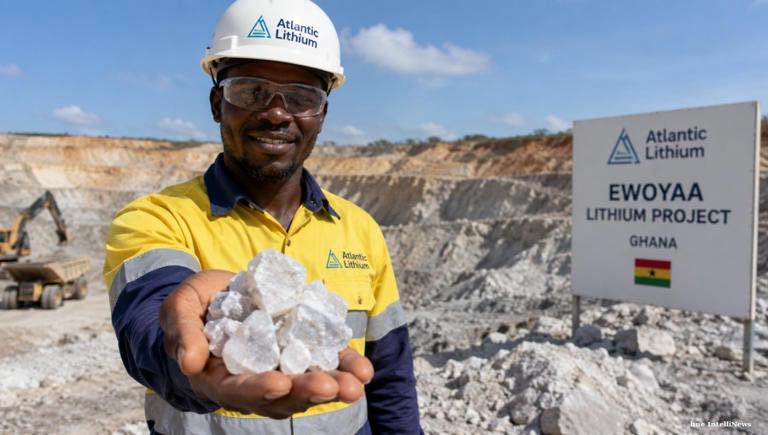
The Ewoyaa lithium project remains in a pre-construction phase because the developer, Atlantic Lithium, must first complete a revised Definitive Feasibility Study (DFS) and secure major funding following years of regulatory delays. Although Parliament ratified the mining lease in early 2026, the company cannot trigger a Final Investment Decision (FID) or begin large-scale construction until current lithium prices and Ghana’s new fiscal terms are factored into a fresh economic model.
While many expected excavators to begin moving dirt immediately after the celebratory news from Accra, the reality of international mining finance is far more cautious. Atlantic Lithium is a relatively young company that lacks the massive balance sheet needed to build a mine alone. Without the “green light” from an updated feasibility study, institutional lenders and strategic partners are keeping their checkbooks closed.
Furthermore, the project is currently navigating a maze of expired permits and community resettlement negotiations. These administrative and social hurdles must be cleared before the site in the Central Region transforms from a quiet exploration camp into a bustling industrial zone.
Why hasn’t construction started after Parliamentary ratification?
Construction hasn’t started because Atlantic Lithium needs to update its Definitive Feasibility Study (DFS) to prove the project is still profitable under today’s lower global lithium prices and Ghana’s higher royalty rates. The 2023 study is now outdated, and until a new one is released, the project cannot secure the hundreds of millions of dollars required for development.
Mine development is a high-stakes game of math and timing. Since the original lease was signed, lithium prices have retreated from their historic highs, and the Ghanaian government successfully renegotiated for higher state participation and royalties. These changes materially alter the “profitability map” of the mine.
The nearly three-year delay in ratification also caused several critical environmental and operational permits to expire. The company is currently in the unglamorous process of renewing this paperwork, which is a legal prerequisite for any heavy machinery to enter the site.
How do global lithium prices and fiscal terms affect the project?
Lower global lithium prices and Ghana’s revised royalty regime mean the project’s profit margins are tighter than they were in 2023, requiring a more efficient operational plan. Investors use the DFS to calculate the “Internal Rate of Return,” and if the numbers don’t reflect current market realities, they view the project as too risky to finance.
In 2023, the lithium market was in a “gold rush” phase, but the market has since matured and stabilized. Additionally, Ghana’s shift to a sliding scale royalty regime means the government will take a larger share of the revenue. While this is great for national coffers, it means the mining company has to prove to lenders that there is still enough left over to pay back loans and reward shareholders.
Atlantic Lithium is also dealing with a weakened relationship with its former offtake partner, Elevra. This internal dispute adds another layer of complexity to the search for capital. Without a solid partner to buy the lithium “off the shelf,” securing a loan to build the “shelf” becomes much harder.
What is the role of the proposed US$210 million Huayou Cobalt acquisition?
The proposed US$210 million acquisition by Zhejiang Huayou Cobalt could fast-track the project because the Chinese giant has the deep pockets and operational experience that Atlantic Lithium currently lacks. Huayou already operates major lithium and cobalt mines across Africa, meaning they wouldn’t need to wait for external bank loans to start construction.
If the acquisition is approved by regulators and the courts, the “stalled” appearance of Ewoyaa could vanish overnight. Huayou brings an established supply chain and the ability to self-finance development. However, this potential takeover introduces new challenges for Ghana, specifically regarding “transfer pricing” and how the government will monitor the value of lithium sold within Huayou’s own massive ecosystem.
Regulators will need to be vigilant to ensure that the lithium is priced fairly at the “pit head” so that Ghana’s royalties aren’t diluted. The entry of a global titan changes the game from “Will the mine be built?” to “How much of the value will stay in Ghana?”
Factual Insights into Ghana’s Lithium Ambitions:
- First of its Kind: Ewoyaa is the first lithium mining lease ever granted in Ghana, signaling a shift toward “green minerals.”
- Community Impact: The company has tentatively earmarked US$20 million for community compensation and resettlement.
- Ratification Lag: The project faced a nearly three-year gap between the initial agreement and parliamentary ratification.
- Market Volatility: Lithium prices at the start of 2026 are significantly lower than the peak prices seen in early 2023.
- Strategic Interest: China’s Huayou Cobalt is offering US$210 million to take full control of the project.
- Economic Foundation: The upcoming updated DFS will be the ultimate “go or no-go” document for investors.
What are Atlantic Lithium’s current priorities on the ground?
According to General Manager Ahmed-Salim Adam, the company is currently focused on finalizing the updated DFS, concluding community resettlement negotiations, and renewing all necessary permits. These “invisible” tasks are the essential foundation for the visible construction work everyone is waiting for.
Resettlement is particularly sensitive. Moving families and providing fair compensation is a delicate process that, if rushed, can lead to years of legal battles and social unrest. The US$20 million compensation figure under consideration shows the scale of the commitment required to maintain a “social license” to operate in Mankessim and surrounding areas.
While the site looks quiet, the “war room” in the Mankessim office is reportedly busy. The team is racing to align the technical, social, and legal pieces of the puzzle so that when the Final Investment Decision is made, there are no further interruptions.
Waiting for the “Final Investment Decision”
The Ewoyaa lithium project isn’t necessarily “stalled” in the sense of being dead; it is currently in a state of “re-calibration.” The transition from an exploration firm to a producing miner is the hardest jump for any company to make, especially when the global market and local laws shift mid-jump.
The release of the updated Definitive Feasibility Study in the coming months will be the true turning point. If the math holds up, and especially if a partner like Huayou Cobalt steps in, the quiet hills of Ewoyaa will soon become the epicenter of Ghana’s new energy economy. For now, patience is the required mineral.
Also Read: Damang Gold Mine Historic Sale: Boosting Ghana’s Foreign Reserves Through Local Ownership