

 By Collins Sarkodieh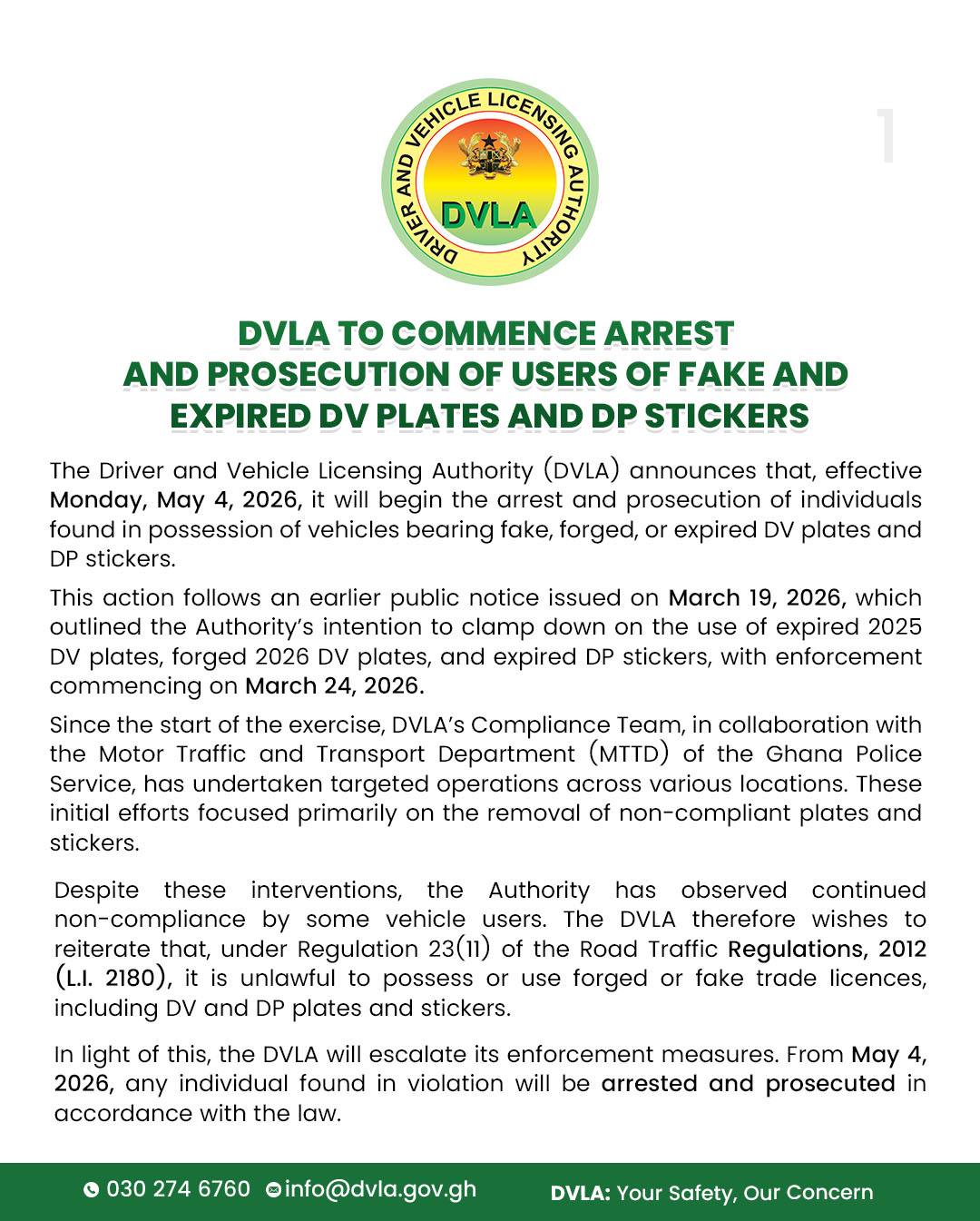
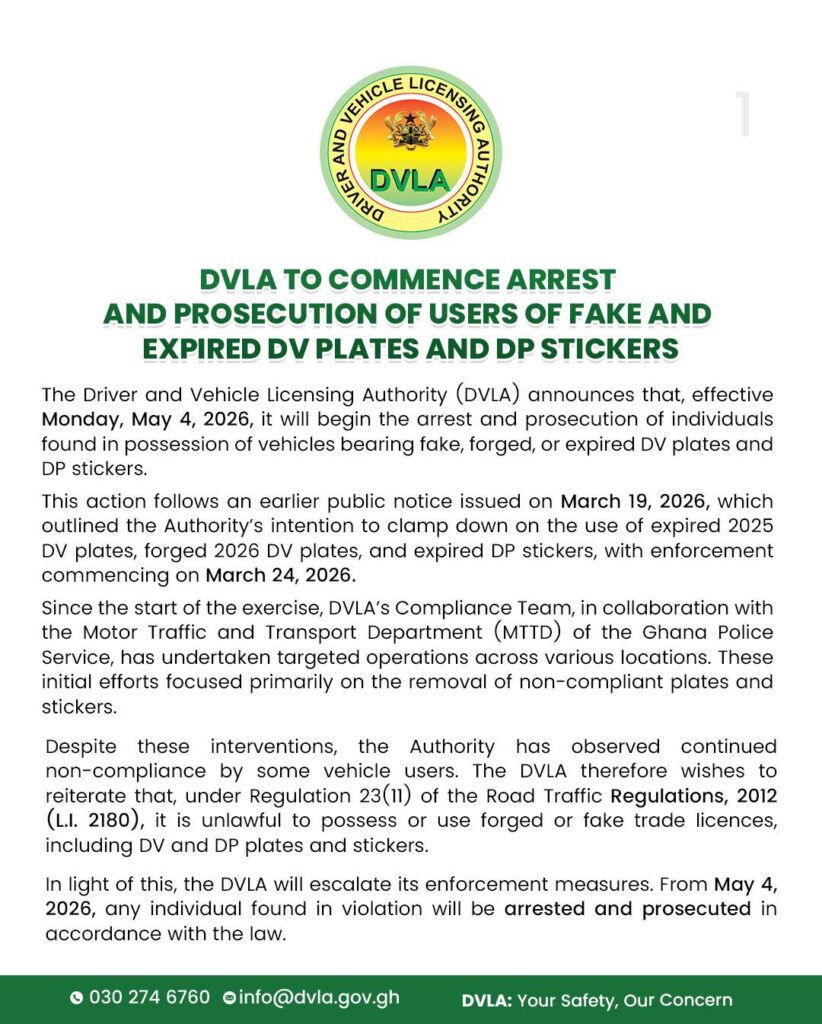
A quiet but significant shift is about to hit Ghana’s roads, and many drivers may not be prepared for it. The Driver and Vehicle Licensing Authority is moving beyond warnings and partial enforcement into full legal action against the misuse of DV number plates and DP stickers, a space that has long operated with loopholes, shortcuts, and, in some cases, outright fraud.
For years, DV plates, typically issued to car dealers and importers for temporary use, have been widely abused. Vehicles that should have gone through full registration processes continue to circulate with expired or forged identifiers. What may seem like a minor administrative issue is, in reality, a serious breakdown in regulatory discipline. This is the gap the DVLA now appears determined to close.
The involvement of the Ghana Police Service, particularly its Motor Traffic and Transport Department, signals that enforcement is no longer symbolic. It is operational, coordinated, and increasingly data-driven. The earlier phase of simply removing illegal plates has now evolved into a prosecutorial phase, where offenders will face legal consequences rather than just warnings.
This development matters because DV plates are not just about identification. They sit at the core of vehicle traceability. When a car is involved in a hit-and-run, armed robbery, or any criminal activity, the ability to trace ownership becomes critical. Fake or expired plates effectively create anonymity on the road, and anonymity in such contexts is a security risk.
From a policy standpoint, this move aligns with a broader attempt to formalize Ghana’s transport ecosystem. Informality has long been a defining feature of vehicle ownership and usage, especially in urban centers like Accra and Kumasi. Tightening control over licensing systems is one of the fastest ways to introduce accountability into that ecosystem.
There is also a financial dimension that often goes unspoken. Proper vehicle registration feeds into government revenue through licensing fees, roadworthiness certification, and taxes. When large numbers of vehicles operate outside this system using unauthorized plates, the state loses revenue that could otherwise be invested in infrastructure, road maintenance, and traffic management systems.
Legal experts point to Regulation 23(11) of LI 2180 as a clear framework that has always existed but was inconsistently enforced. What is changing now is not the law itself, but the willingness to apply it rigorously. This distinction is important. It suggests that Ghana is entering a phase where regulatory enforcement may become more predictable and less discretionary.
For vehicle owners, especially dealers and importers, the implications are immediate. Compliance is no longer optional or something that can be delayed. The cost of ignoring these directives is shifting from inconvenience to potential criminal liability. That changes behavior quickly.
There is also a reputational angle for institutions. The DVLA has often faced criticism over inefficiencies and perceived gaps in enforcement. A successful crackdown could reposition the Authority as a more credible regulator, capable of maintaining standards in a sector that directly affects public safety.
Looking ahead, this could be the beginning of a broader digital transformation in vehicle registration and monitoring. Many countries are integrating automated number plate recognition systems, centralized databases, and real-time enforcement tools. Ghana’s current push could lay the groundwork for similar systems, especially if authorities invest in technology to complement physical enforcement.
For everyday road users, the message is straightforward but urgent. Regularize your documentation. Verify the validity of your plates and stickers. What used to pass as a minor oversight is now being treated as a legal offence with tangible consequences.
In the bigger picture, this is less about number plates and more about restoring order to a system that affects millions of people daily. Roads are shared spaces, and the integrity of how vehicles are identified plays a direct role in how safe and accountable those spaces are.
Also Read: Tatale SHS Storekeeper Accused of Trying to Steal School Food