

 By Collins Sarkodieh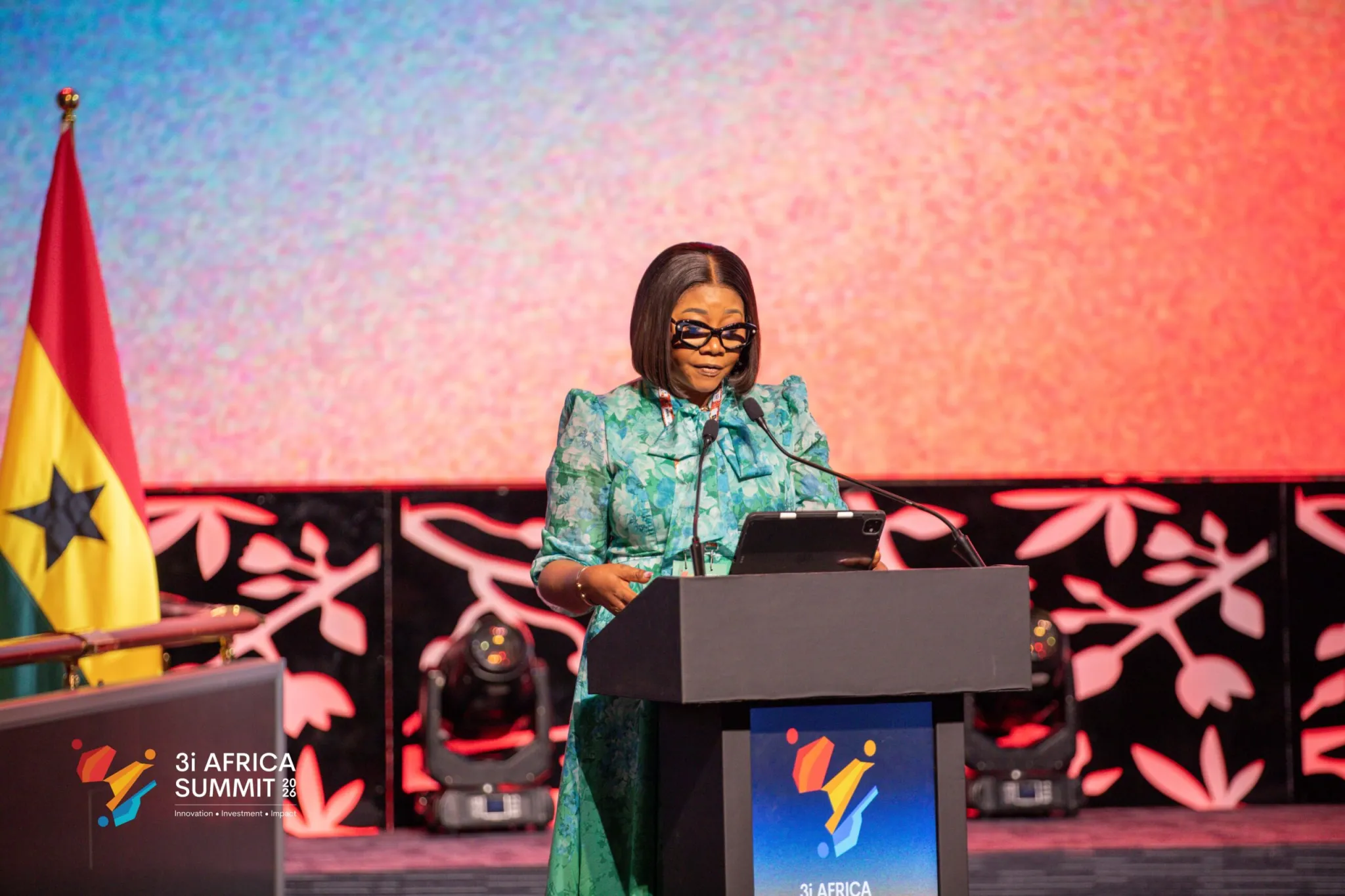
The Second Deputy Governor of the Bank of Ghana (BoG), Matilda Asante-Asiedu, has asserted that Africa’s capacity to attract long-term digital investment depends on building trusted, harmonized, and interoperable financial systems. While innovation is reshaping the continent, capital ultimately flows to markets where payment rules are reliable, regulatory frameworks are clear, and digital architecture is robust enough to support innovation at scale.
Addressing the 3i Africa Summit 2026 in Accra, Mrs. Asante-Asiedu emphasized that policy ambition alone is insufficient to drive digital transformation. To translate innovation into inclusion, African nations must develop secure digital identity frameworks and strong consumer protection regimes. Without these foundational systems, the continent risks deepening financial exclusion rather than bridging the gap for ordinary citizens.
The challenge for policymakers today is moving beyond rhetoric to create practical systems that support everyday transactions. The success of Africa’s digital economy will not be measured by the number of high-tech apps, but by how effectively these systems serve market women, small businesses, farmers, and rural communities.
Why is trust the most critical factor for digital investment in Africa?
Investment capital is inherently cautious and seeks environments where systems work reliably and payment rules are predictable. According to the Bank of Ghana, trust is the fundamental bridge that allows digital innovation to attract the long-term funding necessary for continental expansion.
Investors are drawn to markets where they can rely on the regulatory environment and the stability of the payment architecture. If a system is prone to failure or lacks clear rules for transaction completion, capital will naturally flow elsewhere. Building trust involves creating a secure environment where both the investor and the consumer feel protected from systemic risks.
Furthermore, trust is established through the development of robust digital public infrastructure and secure digital identity frameworks. When these “invisible” systems are strong, it creates a fertile ground for businesses to scale, knowing that the foundation of the financial sector is not built on sand.
What role does interoperability play in Africa’s cross-border trade?
Interoperability is essential for seamless financial transactions and trade across African borders, as it eliminates the frustration of incomplete transactions between different systems. Harmonizing these systems ensures that innovation leads to actual economic inclusion rather than fragmented digital “islands”.
Mrs. Asante-Asiedu noted that nothing is more frustrating for a user than starting a transaction and being unable to complete it because systems do not “speak” to each other. Interoperable systems allow for a unified market where a small business in Accra can transact with a supplier in Nairobi as easily as if they were in the same city.
By prioritizing harmonized payment rules, African governments can support the goals of the African Continental Free Trade Area (AfCFTA). A lack of coordination in regulatory systems acts as a barrier to growth, preventing digital solutions from reaching the scale required to attract global venture capital.
How should the success of digital transformation be measured?
The true measure of digital transformation success is its impact on the unbanked and underbanked, specifically market women, small businesses, farmers, and women-led enterprises. Digitization that only serves those already within the formal financial system is merely “digitizing advantage” rather than achieving true inclusion.
Policymakers are urged to keep the needs of the “ordinary citizen” at the center of all digital efforts. This means moving away from complex policy designs that look good on paper but fail to solve the daily financial challenges of a rural farmer or an urban trader. Practical, functioning systems are the only way to close the gap of financial exclusion.
Success should be gauged by measurable inclusion outcomes. If digital tools make it easier for a woman-led enterprise to access credit or for a farmer to receive payments securely, then the digital economy is fulfilling its promise. If it doesn’t reach these groups, the system has failed to translate innovation into societal progress.
Factual Insights into Africa’s Digital Financial Landscape:
- Investment Flow: Capital flows specifically where payment rules are reliable and regulatory frameworks are transparently established.
- Interoperability Need: The frustration of incomplete transactions across different systems is a major hurdle for cross-border digital trade.
- Inclusion Gap: Digitizing only the already-served leads to “digitizing advantage” instead of expanding financial inclusion.
- Infrastructure Priority: Building real digital public infrastructure is more vital than developing policy frameworks without measurable outcomes.
- Target Demographics: The most critical beneficiaries of digital transformation are farmers, small businesses, and women-led enterprises.
- Policy Failure: The “distance between policy design and a functioning system” is identified as the primary point of failure for digital initiatives.
- Consumer Protection: Robust consumer protection regimes are cited as essential for building trust in the digital economy.
What are the major priorities for strengthening the digital ecosystem?
Governments must shift their focus toward building real, functioning digital infrastructure rather than just drafting policy frameworks. This includes developing secure digital identity frameworks and coordinated regulatory systems that support innovation at scale.
One of the biggest challenges for African policymakers is bridging the gap between designing a policy and creating a system that actually works for the public. Failure to close this gap will likely deepen the divide between those with financial access and those without. Real infrastructure produces measurable outcomes, whereas static policies often produce only rhetoric.
The Bank of Ghana emphasizes that without the “right architecture,” even the most brilliant innovation cannot translate into widespread inclusion or attract long-term investment. Coordinated regulation ensures that as new players enter the market, they operate within a framework that protects consumers and maintains systemic integrity.
Bridging the Gap from Policy to Practice
The 3i Africa Summit 2026 has sent a clear message: Africa’s digital future is not built on apps, but on trust and infrastructure. As Matilda Asante-Asiedu noted, capital follows systems that work. By focusing on interoperability and keeping inclusion at the heart of digitization, African nations can turn the continent into a global magnet for digital investment.
The path forward requires a move away from “digitizing advantage” and a return to serving the market women and farmers who drive the local economy. When a financial system is trusted, harmonized, and reliable, it stops being a barrier and becomes a powerful engine for national and continental development.