

 By Collins Sarkodieh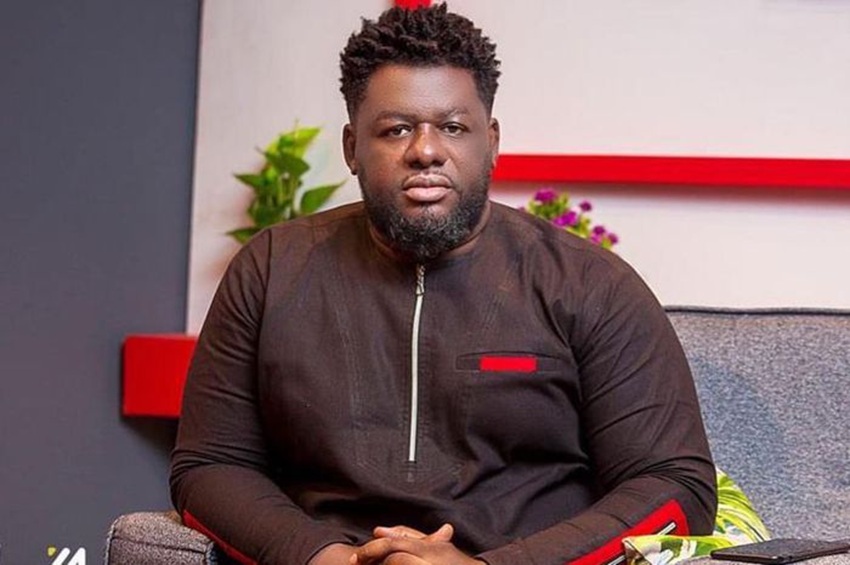
Bulldog was arrested by National Intelligence Bureau (NIB) for making comments that threatened the President on UTV’s United Showbiz. The Menzgold saga reached a new peak of public intensity when artiste manager Nana Asiamah Hanson, popularly known as Bulldog, cautioned that President Nana Akufo-Addo might not complete his term if locked-up funds are not returned to customers. Speaking on UTV’s United Showbiz, Bulldog argued that the government’s decision to shut down the gold dealership firm in its first term was mishandled, leading to the current financial distress of thousands of Ghanaians.
This controversial statement highlights the deep-seated frustration among aggrieved Menzgold customers who have waited years for their investments to be refunded. Bulldog, who admits to being an investor himself, suggested that the pressure from these frustrated citizens could create a political environment so unstable that the presidency would be under threat. His comments sparked a heated debate with fellow panelist Afia Schwarzenegger, who took a different stance on the responsibility of the firm’s CEO, Nana Appiah Mensah (NAM1).
While Bulldog’s words were emotionally charged, they reflect a broader national conversation regarding the role of the state in protecting citizens from failed investment schemes versus the responsibility of individuals in high-risk ventures. The government maintains that Menzgold operated without the necessary licenses from the Securities and Exchange Commission (SEC), leading to its inevitable collapse.
Why did Bulldog caution President Akufo-Addo over Menzgold?
Bulldog cautioned the President because he believes the government’s intervention in shutting down Menzgold was premature and failed to protect the capital of the investors. He argued that the state should have ensured a repayment plan was in place before freezing the company’s operations, which he claims would have prevented the current “locked-up” status of billions of Ghana Cedis.
During the discussion on United Showbiz, Bulldog insisted that the money “must come,” implying that the responsibility for the refund now lies with the newly sworn-in administration. His warning that the President would “run from this country” if the funds weren’t paid was a rhetorical expression of the potential for mass civil unrest driven by financial desperation.
Bulldog’s defense of NAM1 suggests a belief among some investors that the company was a viable business interrupted by “unnecessary” regulatory interference. However, financial experts often point out that Menzgold’s promised returns of 7% to 10% per month were mathematically unsustainable and mirrored the classic characteristics of a Ponzi scheme, which regulators are legally bound to halt.
What was the government’s role in the Menzgold shutdown?
The Ghanaian government, through the Securities and Exchange Commission (SEC) and the Bank of Ghana, ordered Menzgold to shut down in 2018 for operating without a valid license to trade in gold or take deposits. The regulators acted to prevent further public exposure to what they deemed a high-risk and illegal financial operation that lacked the necessary capital reserves.
When the SEC issued its directive, it effectively cut off the cash flow that Menzgold used to pay out “dividends” to older investors. This led to an immediate liquidity crisis. Critics of the government, like Bulldog, argue that the suddenness of the shutdown prevented NAM1 from liquidating assets to pay back his clients. In contrast, the state argues that the shutdown was a necessary “surgical” move to stop a larger financial contagion.
The legal battle following the shutdown has been long and complex. Nana Appiah Mensah was charged with various counts of defrauding by false pretenses and money laundering. As the court cases drag on, the government has consistently maintained that it cannot use taxpayers’ money to bail out investors of an unlicensed private entity, a stance that remains a major point of friction for Bulldog and other aggrieved customers.
How did Nana Ama McBrown and Afia Schwar react to Bulldog’s claims?
Host Nana Ama McBrown attempted to moderate the heated discussion by noting that arguments on TV would likely not bring the money back, a remark that inadvertently triggered Bulldog’s sternest warnings. Afia Schwarzenegger, meanwhile, challenged Bulldog’s defense of NAM1, suggesting that the CEO, rather than the President, should be the primary target of the customers’ anger.
The clash between Bulldog and Afia Schwar represented the two dominant views in Ghana regarding the scandal. One side blames the government’s “heavy-handed” regulation for the loss of funds, while the other side blames the greed of investors and the alleged deception by the company’s management. McBrown’s attempt to cool tempers was aimed at shifting the focus from blame to the reality of the situation, but for investors like Bulldog, the emotional and financial stakes are too high for passive conversation.
This television moment went viral, not just because of the warning to the President, but because it encapsulated the raw emotion felt by thousands of households. When Bulldog spoke of the President “running,” he was channeling the anger of people who have lost life savings, pensions, and business capital, making the Menzgold issue a permanent fixture in Ghana’s political discourse.
Factual Insights into the Menzgold Ghana Scandal:
- Total Estimated Debt: While official figures vary, it is estimated that Menzgold owed customers upwards of GH¢1.68 billion at the time of its collapse.
- Regulatory Warnings: Both the Bank of Ghana and the SEC issued at least three public warnings between 2017 and 2018 before the final shutdown order was enforced.
- Customer Numbers: Approximately 60,000 to 100,000 individuals are estimated to have had active investments in the gold dealership.
- Legal Charges: NAM1 originally faced 36 counts of criminal charges, which were later amended as the prosecution sought to build a more comprehensive case.
- Asset Seizure: The Economic and Organised Crime Office (EOCO) successfully moved to freeze and seize various landed properties and luxury vehicles belonging to NAM1 and his associates in 2019.
- Bail Conditions: NAM1 was famously granted bail in the sum of GH¢1 billion with five sureties, one of the highest bail amounts in Ghanaian judicial history.
Can the government legally pay Menzgold customers?
Under current Ghanaian law, the government is not obligated to pay investors who lose money in unlicensed or illegal financial schemes. Finance Minister Ken Ofori-Atta has previously stated that doing so would create “moral hazard,” encouraging citizens to take high risks with the expectation that the state will provide a safety net if things go wrong.
However, the government has intervened in the cases of regulated banks and microfinance institutions that collapsed during the “Financial Sector Clean-up.” In those instances, the state provided billions in bailouts because those institutions were licensed and fell under the state’s regulatory insurance framework. Since Menzgold was unlicensed for deposit-taking, the legal path for a state-led refund is effectively blocked.
Bulldog’s demand for the President to “facilitate” payment likely refers to a desire for the state to liquidate NAM1’s seized assets more quickly or to provide a “compassionate” payout. While politically popular, such a move would face intense legal scrutiny and opposition from those who believe taxpayers should not bear the cost of private investment failures.
What is the current status of Nana Appiah Mensah (NAM1)?
As of 2026, Nana Appiah Mensah remains in a protracted legal battle, with his legal team consistently arguing that the company was a legitimate business destroyed by the state. While he has made several public “promises” to pay back customers through various digital platforms and new business ventures, very few customers have reported receiving their full principal.
The legal proceedings have faced numerous adjournments, leading to further frustration for people like Bulldog. NAM1’s public image remains polarized; to some, he is a visionary entrepreneur who was targeted by the “establishment,” while to others, he is the face of one of the largest financial crimes in West African history.
The assets seized by EOCO remain in a legal limbo, as their sale or distribution cannot occur until a final court verdict is reached. This delay is precisely what fuels the “unfavorable reactions” Bulldog warned about, as the aging of the assets (such as vehicles and buildings) reduces their potential value for eventual compensation.
The Political Stakes of Financial Despair
Bulldog’s warning to President Akufo-Addo is a stark reminder that financial issues are often the most volatile drivers of political change. While the President is protected by the constitution and the mandate of the people, the “Menzgold factor” continues to be a shadow over the administration’s second term, representing a segment of the population that feels abandoned by the state’s regulatory choices.
Also Read: Nana Addo Unveils Self-Dedicated Statue: Ghanaians React with Mixed Emotions
Whether the funds are ever recovered depends on the finality of the court cases and the potential liquidation of NAM1’s assets. Until then, the heated debates on platforms like United Showbiz will continue to serve as a pressure valve for a frustrated public. Bulldog’s rhetoric may be extreme, but it underscores a fundamental truth: a government’s legacy is often tied to how it handles the economic security of its most vulnerable citizens.