

 By Collins Sarkodieh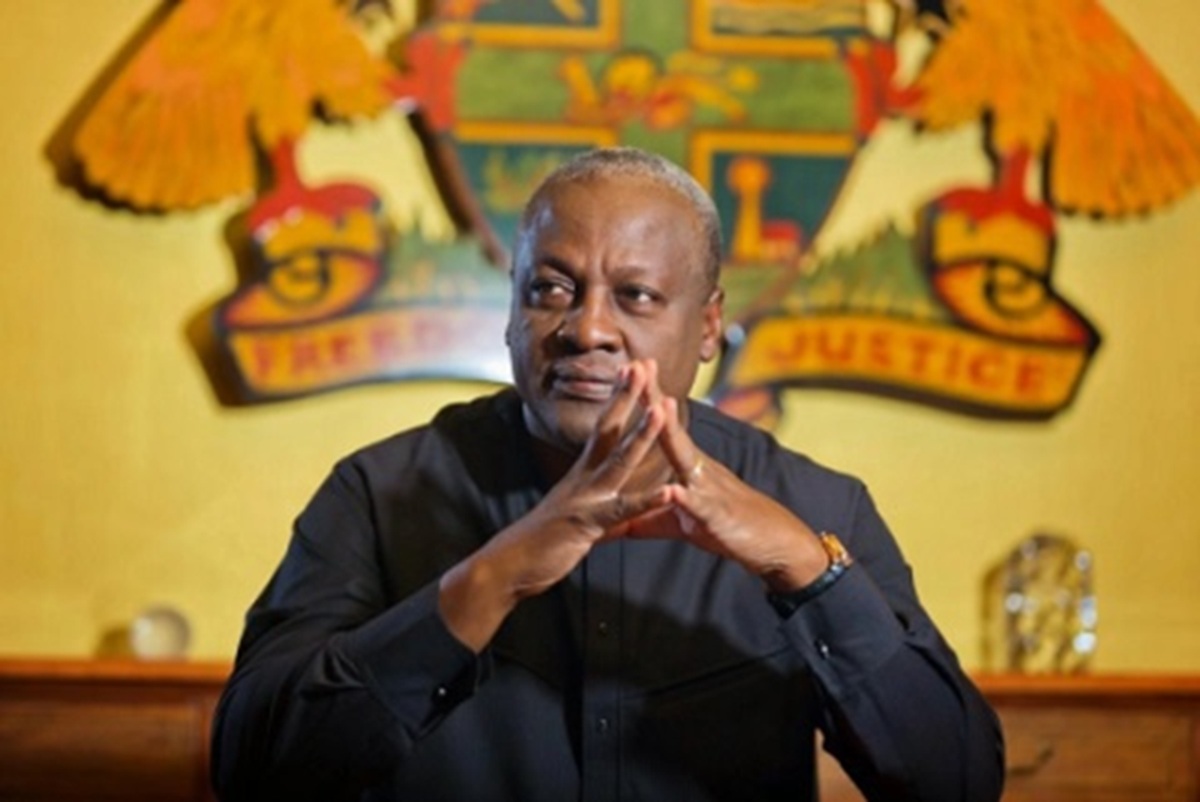
The Assemblywoman for the Ofankor Electoral Area, Humu Dilley Saeed, has sparked a national conversation by suggesting that Ghanaians would sooner welcome the Biblical Day of Judgment, known as ‘Atemuda,’ than a return of former President John Dramani Mahama. This bold stance highlights the deep-seated fears regarding the previous administration’s handling of the energy sector and its impact on the national economy.
As the December 7 polls approach, the rhetoric from local leaders is intensifying, focusing heavily on past performance versus future promises. For Humu Dilley Saeed, the primary concern is the potential for a recurring economic crisis if the leadership that oversaw the “Dumsor” era returns to the Flagstaff House. Her appeal to the electorate centers on the idea of stability and the preservation of landmark social interventions that have defined the current administration’s tenure.
Why is the ‘second coming’ of John Mahama being compared to ‘Atemuda’?
The comparison is a hyperbolic expression of the fear that a John Mahama victory would lead to an economic catastrophe similar to the prolonged power crisis experienced between 2012 and 2016. Assemblywoman Humu Dilley Saeed argues that the scars of the “Dumsor” era, which saw thousands of small businesses collapse and industrial growth stagnate, are still fresh in the minds of the Ghanaian electorate.
During his first term, the power crisis became a defining feature of the John Mahama administration, leading to a significant loss in GDP growth. According to data from the Institute of Statistical, Social and Economic Research (ISSER), Ghana lost between $324 million and $924 million annually in economic growth due to power outages during that period. For local leaders in the Greater Accra Region, the prospect of returning to such a state is viewed as more daunting than the ultimate spiritual reckoning.
How did the first term of John Mahama affect businesses in Accra?
The first term of Mr. Mahama saw an unprecedented collapse of Small and Medium Enterprises (SMEs) specifically due to the inability to predict or afford alternative power sources during the peak of the energy crisis. Humu Dilley Saeed emphasizes that the “mess” of the first term wasn’t just a political talking point but a lived reality for families in the Ofankor Electoral Area.
The manufacturing sector was particularly hard hit, with some factories operating at only 30% capacity or shutting down entirely to avoid the astronomical costs of running heavy-duty generators. This led to massive layoffs and a decrease in household disposable income. When businesses fail at such a scale, it creates a ripple effect that touches every part of the community, from the market woman to the high-level professional, making the argument against his return a very personal one for local constituents.
Why is the Free Senior High School (SHS) policy the deciding factor in 2020?
The Free SHS policy is being touted as the ultimate shield for vulnerable families, saving thousands of parents from the crushing debt of secondary education fees. Humu Dilley Saeed is appealing to Ghanaians to reward the Nana Addo-led administration for this specific intervention, which she believes has fundamentally changed the social fabric of the country.
Also Read: One Year of Mahama: How NDC 50 Ministers Are Delivering What NPP 120 Could Not
Verified data from the Ministry of Education indicates that since the implementation of Free SHS in 2017, the enrollment of students in secondary schools has increased by over 50%. For many families in the Greater Accra Region who previously had no resources to continue their children’s education, this policy provided a lifeline. The Assemblywoman argues that the risk of the NDC returning to power poses a direct threat to the sustainability of this policy, despite the opposition’s claims that they will “review” and “improve” it.
What is the goal of the campaign against spoilt ballots in Greater Accra?
The Assemblywoman is currently leading a grassroots campaign to educate voters on the correct way to thumbprint their ballot papers to prevent the high rate of “spoilt ballots” seen in previous elections. This initiative is crucial because every spoilt ballot represents a lost voice and can significantly alter the outcome in a closely contested presidential race.
In the 2016 general elections, over 166,000 ballots were rejected, a number large enough to influence the percentage thresholds required for a first-round victory. By teaching voters how to fold their papers and where to place their marks, Humu Dilley Saeed aims to ensure that the will of the people in the Ofankor Electoral Area is accurately reflected. This technical education is just as important as the political messaging, as it ensures that the “reward” she speaks of for the current government actually counts in the final tally.
Should Ghanaians be wary of the NDC’s 2020 campaign policies?
Humu Dilley Saeed suggests that the policies presented by the National Democratic Congress (NDC) are designed to deceive the public and gloss over the failures of their past leadership. She warns that the promise of a “People’s Manifesto” does not guarantee a departure from the economic mismanagement that characterized the 2012–2016 era.
A key point of skepticism often cited by critics is the NDC’s shifting stance on the Free SHS policy itself. Earlier in the 2016 cycle, the NDC had campaigned heavily against the feasibility of the policy, calling it a “political gimmick.” The Assemblywoman believes this inconsistency is proof that the opposition cannot be trusted to protect the interests of the youth. In her view, the current government has proven its capability through action, whereas the opposition only offers rhetoric that could lead back to the “suffering” of the past.
How does the energy sector stability under Nana Addo compare to the previous era?
Under the Nana Addo Dankwa Akufo-Addo administration, the narrative of “Dumsor” has largely been replaced by a focus on “Keeping the Lights On” through aggressive debt management and fuel supply agreements. While the sector still faces financial challenges, the daily blackouts that crippled the economy have been significantly mitigated.
The government’s decision to move the Ameri Power Plant to Kumasi and the resolution of gas supply debts to Nigeria are often cited as major wins for the energy sector. Stability in power supply is not just about lights; it is about the “ease of doing business.” When a barber, a cold-store owner, or a tailor knows the power will be available, they can invest in their future. This predictability is what the Assemblywoman argues is at stake in the 2020 election.
What are the long-term implications of allowing John Mahama to return?
The argument presented by the Ofankor Assemblywoman is that a second term for Mahama would signal a return to the “IMF era” where fiscal discipline was imposed from the outside rather than managed from within. She believes that the current path of “Ghana Beyond Aid” is the only sustainable way to build a resilient nation.
The historical context of 2015, where Ghana sought an $918 million bailout from the International Monetary Fund, remains a significant talking point. Critics of the NDC argue that the conditions of that bailout—including a freeze on public sector hiring hurt the youth the most. Humu Dilley Saeed’s stance is that the progress made in the last four years in restoring the economy and creating jobs under programs like “1D1F” (One District, One Factory) would be dismantled if the previous leadership regained control.
Why does local leadership in the Ofankor Electoral Area matter for national news?
Local leaders like Assemblywomen are the closest point of contact between the government and the citizens, making their observations on “suffering” and “success” highly relevant. When a local leader claims her people prefer ‘Atemuda’ to a specific political outcome, it reflects the deep anxieties of the grassroots population.
The Greater Accra Region is often the “kingmaker” in Ghanaian elections, and the sentiment in electoral areas like Ofankor provides a snapshot of the national mood. By focusing on tangible results like Free SHS and energy stability, Humu Dilley Saeed is framing the 2020 election as a choice between a proven future and a problematic past. For the voters she leads, the message is clear: protect the progress made, or risk a crisis that they believe would be truly apocalyptic.
Also Read: Despite the progress, President Mahama says one thing still worries him