

 By Ghana News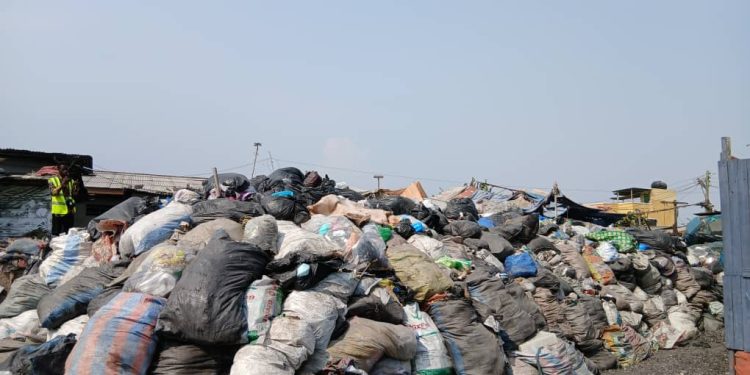
The raging public debate over waste management in our major urban centers has taken a highly confrontational turn within the halls of legislature. The Deputy Ranking Member of Parliament’s Sanitation Committee, Ralph Poku Adusei, has directly blamed the central government for Ghana’s worsening sanitation challenges, stating that state authorities are failing to protect our communities.
The intense parliamentary evaluation follows several oversight site visits conducted by the Select Committee on Sanitation and Water Resources. The legislative findings reveal an appalling situation across various landfill sites, highlighting a severe structural breakdown that poses an immediate threat to public health.
The core of the policy crisis lies in a basic misunderstanding of our national legal frameworks. Speaking directly on Citi FM’s Eyewitness News on Tuesday, July 7, 2026, the Bekwai lawmaker reminded state managers that pursuant to the Ghana Environmental Sanitation Policy, the state bears ultimate responsibility for keeping our streets clean.
Poku Adusei argued logically that waste management should never be treated as a loosely shared obligation with private service providers. While citizen led morning clean up exercises are highly commendable, volunteerism alone cannot replace the government’s core duty to build sustainable waste management systems.
The real operational bottlenecks stem from severe funding gaps and prolonged administrative delays from the Ministry of Finance. The Bekwai Member of Parliament criticized the state’s handling of the Environmental Service Providers Association, noting that delayed financial payments have completely destroyed the capacity of waste companies to operate.
Because the state has failed to settle outstanding balances or renew expired service agreements, local waste collectors lack the heavy logistics, modern facilities, and protective personnel required to lift bins. This financial starvation has forced contractors to park their compaction trucks, leading to huge heaps of uncollected rubbish in commercial zones.
The sanitation emergency is particularly volatile within the national capital, turning waste accumulation into a certified national security concern. According to verified local government statistics, the Greater Accra metropolis generates more than four thousand tonnes of solid waste every single day.
Faced with this massive volume, the lawmaker did not mince words when pointing fingers at regional leadership. Poku Adusei openly accused the Greater Accra Regional Minister, Linda Ocloo, of being completely detached from the crisis, alleging that the regional minister is simply sleeping on her job while plastic pollution chokes the city’s drainage networks.
The parliamentary committee is urging the executive to treat metropolitan waste as a critical national emergency to avoid severe health outbreaks like cholera. To reverse this dangerous trend, the state must immediately release the necessary funds to clear all outstanding debts owed to local environmental service providers.
Furthermore, municipal assemblies must invest heavily in modern landfill infrastructure and embrace a circular economy that transforms plastic waste into useful local products. If regional ministers refuse to wake up and enforce basic environmental bylaws, the capital will continue to battle preventable floods and heavy health hazards for years to come.
Also Read: After the Flooding in Accra, 48,000 people were displaced—Mahama