

 By Zobia Zulfqar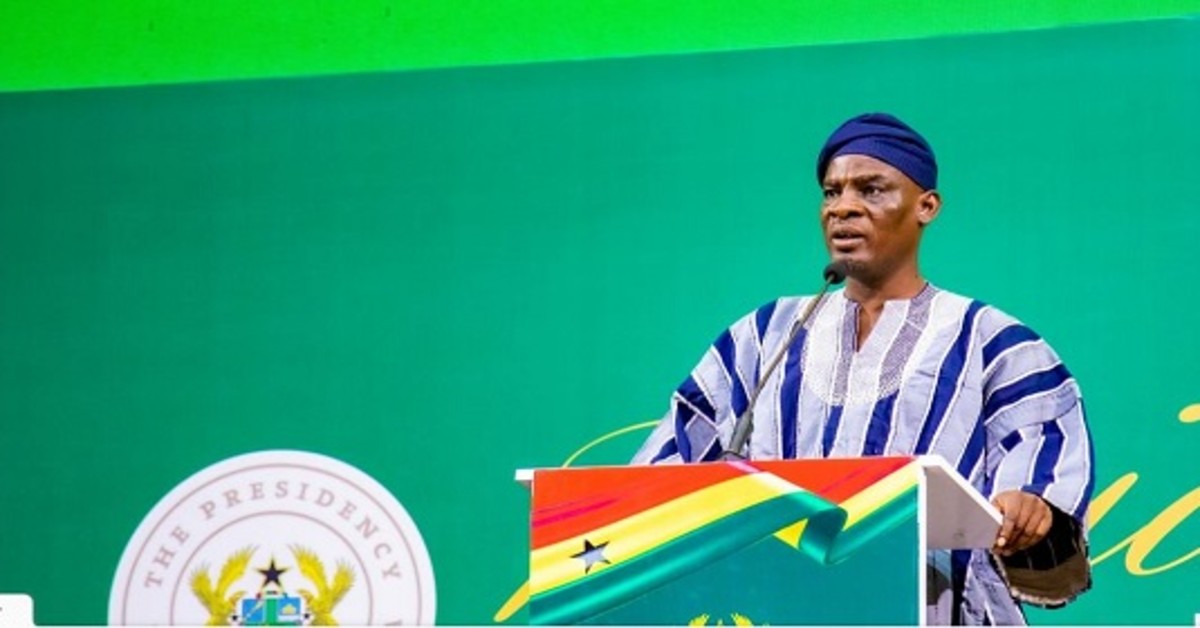
Education Minister Haruna Iddrisu has announced that the government now plans to end Ghana’s Senior High School (SHS) double track system by 2029, extending the earlier target of 2027 announced by President John Dramani Mahama.
The minister made the announcement on Monday, July 20, during the Government Accountability Series press briefing in Accra. He explained that the revised timeline would allow the government to complete a major school infrastructure programme designed to increase capacity in senior high schools and technical institutions across the country.
The new target differs from the commitment President Mahama made in May this year, when he said the double track system would end by 2027 through the expansion and upgrading of selected schools.
Mr Iddrisu said Cabinet has approved the STAR J infrastructure programme, which is valued at 331 million. Parliament is expected to consider the proposal on July 21 before work begins.
According to the minister, the programme will improve facilities in senior high schools, senior high technical schools, and Technical and Vocational Education and Training (TVET) institutions across Ghana.
He said the project is expected to cover 210 educational institutions. However, the figures he provided during the briefing accounted for 200 institutions. The minister did not explain the difference.
Mr Iddrisu outlined several projects under the programme. They include the rehabilitation of 112 senior high schools and 38 TVET institutions. The government also plans to upgrade 30 Category C senior high schools to Category B and convert 20 Category B schools into Category A institutions.
He said these projects are intended to address the pressure created by the Free Senior High School policy, which has significantly increased student enrolment since its introduction in 2017.
According to the minister, many schools have seen rapid growth in student numbers without a similar expansion in classrooms, dormitories, laboratories, dining halls, and other essential facilities.
He cited Presbyterian Boys’ Secondary School and Achimota School as examples of schools where enrolment has increased sharply over the years.
Mr Iddrisu explained that improving school infrastructure remains the most effective way to eliminate the need for the double track system.
“By 2029, we should be done with double track with this intervention,” he said.
He also revealed that some schools require only basic resources rather than major construction projects.
“Some of the double track schools need only furniture. They are not asking for money. I hear about a hundred schools. If we provide them with adequate furniture, they can move out of double track. We simply need to coordinate what we are doing,” he said.
The STAR J programme also includes the construction of new community day senior high schools at Nima and Kasoa. In addition, the government plans to build a new special needs education facility in the Volta Region.
Mr Iddrisu said another special needs school is also being considered between Kintampo and a town in the Upper East Region to improve access to education for students with disabilities.
The minister said these investments are part of the government’s broader effort to improve educational infrastructure and provide quality learning environments for students across the country.
The announcement comes only weeks after President Mahama stated that the double track system would end by 2027 through the upgrading of 50 senior high schools. Under that earlier plan, 30 Category C schools were to be upgraded to Category B, while 20 Category B schools would become Category A institutions.
President Mahama had explained that the project would be financed through a 300 million US dollar World Bank facility approved by the bank’s Executive Board on June 16, 2026.
Mr Iddrisu also provided an update on this year’s Basic Education Certificate Examination (BECE). He said he had been informed that the examination results are expected to be released on or before July 31, 2026.
Following the release of the results, the Computerised School Selection and Placement System will begin. The minister explained that the placement process will start only after the results become available, saying the new arrangement is intended to reduce favouritism and improve fairness during school placements.
The government’s latest announcement means students, parents, teachers, and education stakeholders will now look toward 2029 as the new target for ending the double track system, while the planned infrastructure projects are expected to create additional learning spaces and improve conditions in schools across Ghana.
Also Read: Ghana Nears End of External Debt Restructuring After Final Bond Exchange