

 By Zobia Zulfqar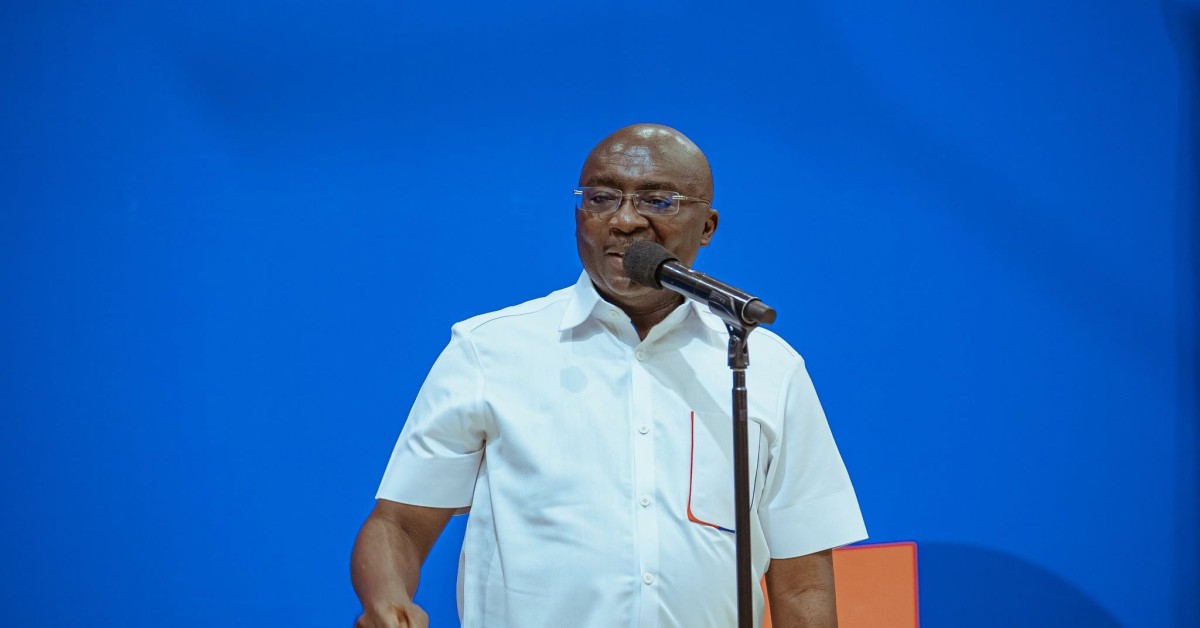
Former Vice President and New Patriotic Party (NPP) flagbearer Dr Mahamudu Bawumia has appealed to President John Dramani Mahama not to sign the Public Tribunals Bill, 2026, into law without first consulting Ghanaians.
Dr Bawumia said the proposed law could significantly change Ghana’s justice system, public confidence in the Judiciary, and the future of the country’s democracy. He argued that such an important decision should not be made without broad national discussions involving key institutions and citizens.
He made the appeal in a video message after Parliament passed the Public Tribunals Bill last week. The bill seeks to reintroduce tribunals into Ghana’s judicial system and now awaits the President’s approval before it becomes law.
Addressing President Mahama directly, Dr Bawumia urged him to pause the process and allow the nation to debate the proposed legislation.
“I have one respectful request of President Mahama. Mr President, do not sign this bill. Pause, and let the nation talk,” he said.
He stressed that his appeal was not based on politics but on the need to protect Ghana’s justice system.
“This is not a partisan request,” he said.
Dr Bawumia pointed to the concerns raised by the Trades Union Congress (TUC), which has called for the bill to be withdrawn. According to him, the labour body believes the legislation, in its current form, could become a tool for unfair justice.
He said the concerns expressed by organised labour should not be ignored because they represent the views of millions of Ghanaian workers.
“The Trades Union Congress has warned that the bill could become a potent tool for weaponising justice delivery. Those are the words of Ghanaian workers, not of any political party,” he said.
The former Vice President also called on President Mahama to organise a national consultation before making a final decision. He proposed inviting the Ghana Bar Association, other lawyers’ associations, organised labour, civil society organisations, political parties, including the NPP, and members of the Judiciary to discuss the bill.
According to Dr Bawumia, the Judiciary should play a central role because judges and court officials will be responsible for implementing any changes introduced by the new law.
He also urged the President to publish the report of the government’s Constitution Review Committee before proceeding with the bill.
Dr Bawumia explained that the committee reportedly recommended removing regional tribunals from the Constitution because the High Court already handles the types of cases that tribunals previously managed.
He questioned why Parliament had chosen to move in the opposite direction before the committee’s findings had even been made public.
“The report has not been published, and before the nation reads it, Parliament has rushed through and legislated in the opposite direction,” he said.
The NPP flagbearer also raised concerns about provisions that could allow tribunal panels to include members who are not trained lawyers in criminal cases.
He said many Ghanaians still remember the country’s past experience with tribunals and believe any return to that system should be considered carefully.
Instead of creating another layer within the justice system, Dr Bawumia suggested strengthening the existing courts by appointing more judges, building additional courtrooms, and expanding the use of digital technology to speed up the handling of cases.
“Our courts are congested, but the answer is to strengthen the courts with more judges, more courtrooms, and digitised processes. It is not to build a second system of justice beside the one the Constitution already gives us,” he said.
Dr Bawumia acknowledged that the government has a strong majority in Parliament and therefore has the numbers needed to pass legislation. However, he said political strength should be exercised with restraint.
He argued that history would not judge leaders by the number of votes used to pass a law but by whether the law reflected the wishes of a broad section of Ghanaian society.
He repeated his appeal for President Mahama to delay signing the bill and instead invite national dialogue through the Council of State under the provisions of Articles 90 and 106 of the 1992 Constitution.
Parliament passed the Public Tribunals Bill, 2026, after waiving the mandatory one day interval between the consideration stage and the third reading, allowing the legislation to be approved on the same day. The Minority objected to the bill during the debate, while organised labour also publicly opposed its passage.
The bill will now be forwarded to President Mahama, whose decision on whether to sign or delay the legislation is expected to attract significant public attention in the coming days.
Also Read: U.S. Embassy in Accra to Suspend Most Consular Services from July 20 to July 31