

 By Collins Sarkodieh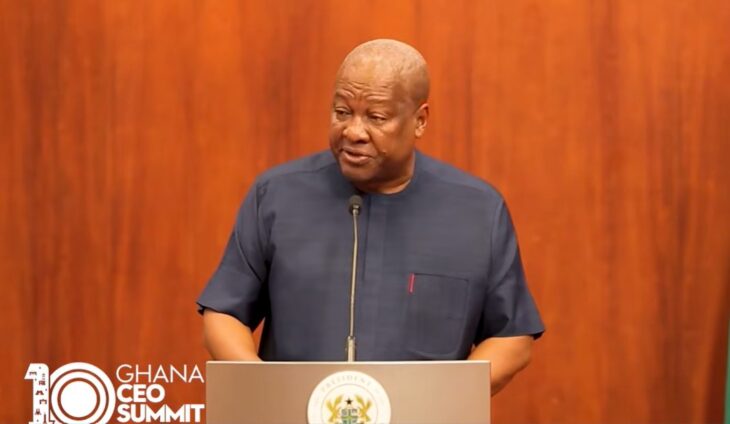
President John Dramani Mahama has officially announced that the government will no longer grant blanket tax waiver exemptions on import duties. Instead, exemptions will be reviewed on a case-by-case basis to ensure that fiscal incentives are aligned with specific national development goals. This shift aims to improve revenue mobilization while still supporting essential sectors like healthcare and education through targeted relief.
The President made this disclosure in Accra during the commissioning of a state-of-the-art PET-CT scan facility at the Sweden Ghana Medical Centre (SGMC). He clarified that while “blanket” waivers are ending, organizations importing critical items, such as advanced medical equipment, can still apply for exemptions. The government intends to look favorably upon applications that demonstrate a direct benefit to the public’s well-being and scientific advancement.
By moving away from broad exemptions, the administration seeks to close loopholes that previously allowed for potential revenue leakage. This new approach requires a more rigorous application process, ensuring that every cedi of tax waived is a deliberate investment in the country’s social infrastructure. For professional bodies and private investors, this means that the “merit” of their project is now the primary key to accessing tax relief.
How will the case-by-case tax exemption policy work?
The case-by-case tax exemption policy requires importers to submit specific applications for every major piece of equipment or cargo they wish to clear without duties. Rather than receiving a permanent “exempt” status, organizations must prove the necessity and social value of the items being imported. For example, medical facilities importing life-saving diagnostic tools will likely receive faster approvals than general commercial importers.
This strategy is designed to be flexible but disciplined. President Mahama noted that if a group like the Ghana National Association of Teachers (GNAT) orders medical equipment for cancer treatment, they can apply for an exemption with a high expectation of success. It allows the government to maintain a tight grip on the national budget while still acting as a supportive partner for non-profit and high-impact projects.
The shift also discourages the importation of non-essential luxury goods under the guise of “development projects.” By scrutinizing each application, the Ministry of Finance can better predict tax revenue and prevent the abuse of the system. It is a logical move toward “smart” fiscal management that prioritizes national health over generalized corporate tax breaks.
What is the GH¢3 Billion Housing Project for Teachers?
The government is partnering with GNAT, Republic Bank, and the State Housing Company (SHC) to launch a GH¢3 billion Housing Project for teachers. This initiative consists of two main branches: the Teacher Dabre Housing Project for on-campus accommodation and a Mortgage Housing Project for long-term ownership. The fund will be a collaborative effort, with contributions from the government, GNAT, and private financial institutions.
The Teacher Dabre project focuses on building residences directly on school campuses to eliminate the need for teachers to commute from town every day. This is expected to improve teacher punctuality, safety, and overall job satisfaction. Meanwhile, the second project focuses on professionals, allowing teachers to take out mortgages on houses built by SHC, TDC, and reputable private developers.
Crucially, these houses and mortgages will be designated in Ghanaian Cedis rather than US Dollars to protect teachers from exchange rate volatility. By paying a down payment and servicing the rest through salary deductions, teachers can secure a home before they reach retirement. As the President wittily put it, this ensures retirees have a place to “lay their head” without quarreling over rooms in a family house.
Factual Insights into Ghana’s New Policy and Healthcare Milestones:
- Policy Change: Blanket tax waivers on import duties are officially replaced by a case-by-case application process.
- Healthcare Leader: The Sweden Ghana Medical Centre (SGMC) is the leading cancer care provider in West Africa and was acquired by GNAT in 2020.
- Technology: The newly commissioned PET-CT scan is one of the most advanced imaging tools for cancer diagnosis in the sub-region.
- Housing Fund: The teacher housing initiative is backed by a GH¢3 billion fund involving public and private stakeholders.
- Mortgage Terms: Home loans under this project are strictly Cedi-denominated to ensure affordability for public sector workers.
- Institutional Partners: Key developers include the State Housing Company (SHC) and the Tema Development Company (TDC).
Why is the PET-CT scan at SGMC a game-changer for Ghana?
The PET-CT scan at the Sweden Ghana Medical Centre is a game-changer because it combines metabolic and structural information to diagnose diseases at the cellular level. Conventional imaging shows where a tumor is, but PET technology shows how active the cancer cells are. This allows doctors to monitor the effectiveness of treatment in real-time, potentially saving lives through more accurate interventions.
Since GNAT acquired SGMC in 2020, the facility has become a beacon of oncology excellence in West Africa. The addition of the PET-CT scan means that Ghanaians no longer need to travel to Europe or India for advanced staging of complex diseases. It effectively brings world-class diagnostic science to the doorstep of the Ghanaian teacher and the general public alike.
Furthermore, this investment by a labor union (GNAT) shows a maturing economy where professional associations are taking direct responsibility for the health of their members. By owning the leading oncology center in the region, GNAT has created a sustainable model for social welfare that goes beyond traditional salary negotiations.
A Balanced Future for Teachers and Taxpayers
The end of blanket tax waivers signals a more mature approach to Ghana’s fiscal policy, ensuring that every tax break is earned through public service. President Mahama’s dual focus on “smart exemptions” for medical equipment and a massive GH¢3 billion housing fund for teachers demonstrates a commitment to both economic discipline and social welfare.
As the Teacher Dabre and Mortgage Housing projects begin to take shape, the goal remains clear: to provide public servants with the dignity of a home and the security of top-tier healthcare. With the new PET-CT scan operational and a Cedi-denominated housing fund on the horizon, the future for Ghana’s professional class looks increasingly stable and scientifically advanced.
Also Read: Ghana Tax Updates 2026: How New Relief Measures Are Cutting Costs for Businesses