

 By Collins Sarkodieh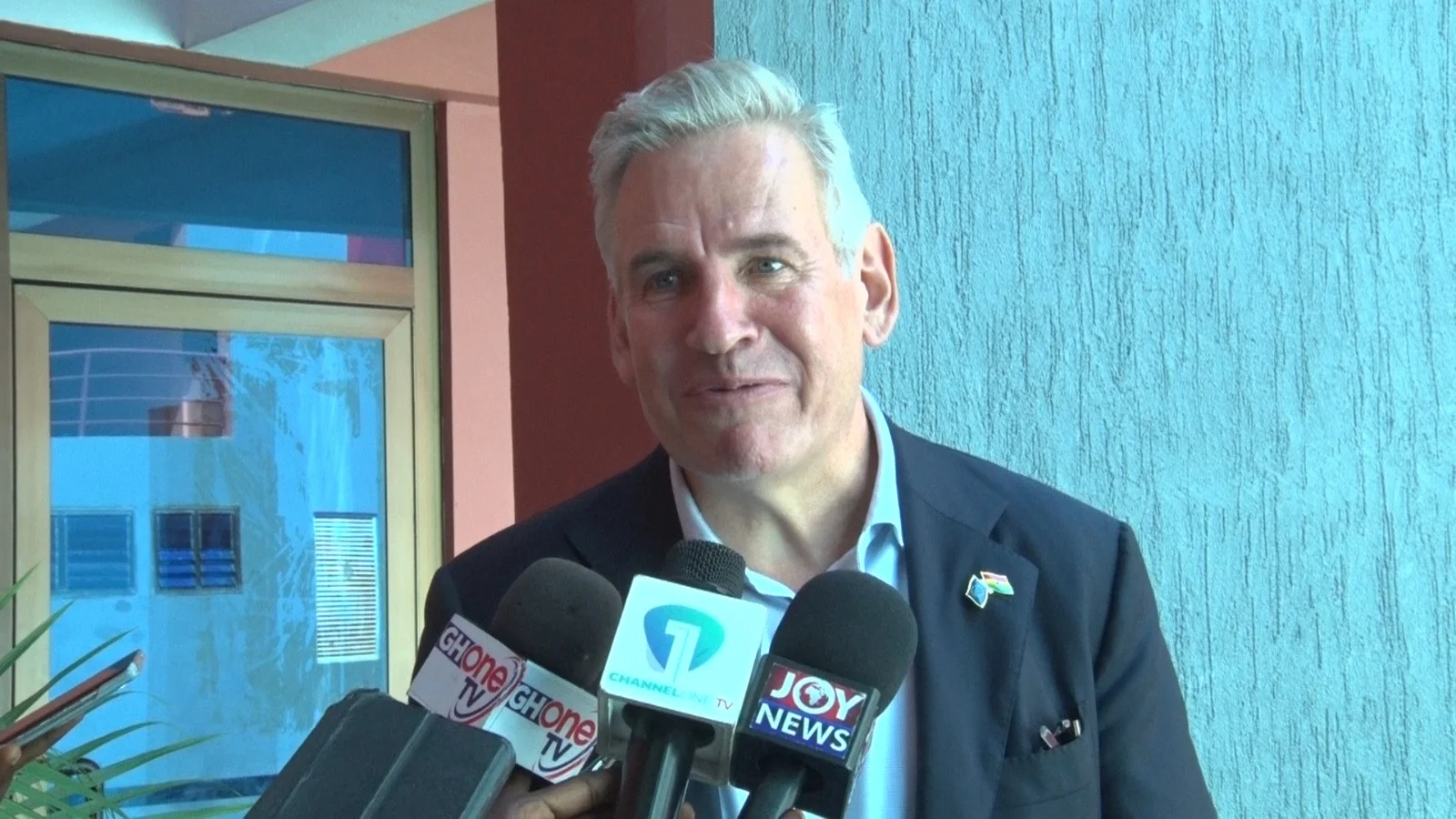
The European Union Ambassador to Ghana, Rune Skinnebach, has declared the current period a highly promising time for international investment in Ghana. Citing the nation’s democratic track record, expanding partnerships with the EU, and critical macroeconomic reforms, the Ambassador identified Ghana as a primary destination for European capital in West Africa. He urged the country to safeguard these gains to maximize benefits from the EU’s multi-billion-euro Global Gateway initiative.
Ambassador Skinnebach shared these insights at the Kwame Nkrumah University of Science and Technology (KNUST) following a keynote address on European scholarship programs. He revealed that over one billion euros in Global Gateway investments are already active within the country. This financial backing supports local infrastructure, private sector expansion, and development financing to foster sustainable industrial growth.
While the current economic outlook remains highly positive, the Ambassador cautioned that maintaining this trajectory requires absolute fiscal discipline. Ghana frequently faces economic pressures during election cycles, making continued adherence to structural reforms essential. By balancing democratic processes with predictable spending policies, the nation can secure its position as a preferred hub for foreign direct investment.
Why is the EU calling Ghana an attractive destination for investors?
The European Union considers Ghana an attractive investment destination due to its rare combination of peace, political stability, and strong democratic credentials. Since the return to constitutional rule in 1992, the country has built a successful track record of peaceful transitions of power. This predictability provides foreign companies with the long-term security required to commit substantial capital.
Furthermore, the European Union stands as Ghana’s largest export market, its biggest development partner, and a leading source of foreign direct investment. The operational framework is already bolstered by a one-billion-euro slice of the broader 150-billion-euro Global Gateway Investment Package for Africa. This massive financial relationship ensures that trade channels between Accra and Brussels remain robust and highly efficient.
The Ambassador described Ghana as a stable island in unruly regional waters, referencing the growing security challenges across the Sahel. This relative safety makes the country a natural entry point for businesses looking to access the wider West African sub-region. As long as the legal and physical infrastructure remains functional, the investment climate will continue to favor local expansion.
What challenges must Ghana overcome to retain European capital?
To retain European capital, Ghana must actively prevent neighboring countries from offering more favorable business conditions and looser fiscal constraints. Foreign direct investment is highly mobile, meaning that if macroeconomic stability or legal protections weaken locally, capital will naturally migrate to competing markets. Maintaining a business-friendly environment is a continuous competitive effort.
The primary near-term challenge is maintaining strict control over public expenditure as national elections approach. Historically, election seasons can tempt administrations into unsustainable spending, which often triggers inflation and currency volatility. The Ambassador questioned whether there will be enough collective willingness to maintain current fiscal reforms during these high-stakes political periods.
Sustaining recent economic gains, which are partly driven by high global gold prices, requires institutionalizing these spending policies. Investors look for deep structural continuity that outlasts individual political administrations. Strengthening legal frameworks and eliminating bureaucratic red tape are essential steps to keep the business climate highly competitive.
How does the EU view the role of Ghanaian youth in the economy?
The European Union views young Ghanaians as both the current reality and the future engine of the country’s economic transformation. Ambassador Skinnebach emphasized that interacting with students and youth groups provides the insights necessary to shape future EU-Ghana development policies. Listening to their aspirations helps align European educational and economic opportunities with local human resource needs.
By promoting European university scholarships at institutions like KNUST, the EU aims to equip young professionals with advanced technical and scientific skills. When these students return to Ghana, they bring back global expertise that enhances the local workforce readiness. This intellectual exchange creates a pool of highly skilled labor that directly benefits incoming European companies.
This focus on youth aligns with the “Results and Relevance for Jobs” strategy embedded in modern development pacts. Empowering the younger demographic ensures that the country can transition from a raw commodity exporter to a knowledge-based economy. The EU’s engagement strategy treats young people not just as beneficiaries, but as active stakeholders in national progress.
Factual Insights into EU-Ghana Bilateral Relations:
- Active Funding: Over one billion euros of the EU’s Global Gateway funds are already deployed on the ground in Ghana.
- Continental Strategy: The Global Gateway Investment Package for Africa is a massive 150-billion-euro initiative launched in 2022.
- Trade Standing: The European Union currently serves as Ghana’s largest external export market and primary development partner.
- Democratic History: Ghana has maintained uninterrupted, peaceful constitutional governance for over three decades since 1992.
- Growth Drivers: Ghana’s recent economic stabilization has been significantly supported by strong global commodity prices, particularly gold.
- New Agreements: Bilateral relations are expanding through fresh accords in forestry, defense cooperation, and regional peace.
The assessment by the European Union Ambassador proves that Ghana has a historic opportunity to cement itself as West Africa’s premier investment hub. The combination of democratic success and deep institutional partnerships with Europe has laid a solid foundation for sustainable growth.
However, the transition from a promising destination to an economic powerhouse depends entirely on domestic choices. By choosing long-term fiscal discipline over short-term political spending, Ghana can ensure that the investment climate remains favorable for decades to come. The global market is watching, and the path forward requires unwavering commitment to reform.
Also Read: Ghana’s Gold Sector: How Mining Output Drives Economic Growth and Stability