By Collins Sarkodieh
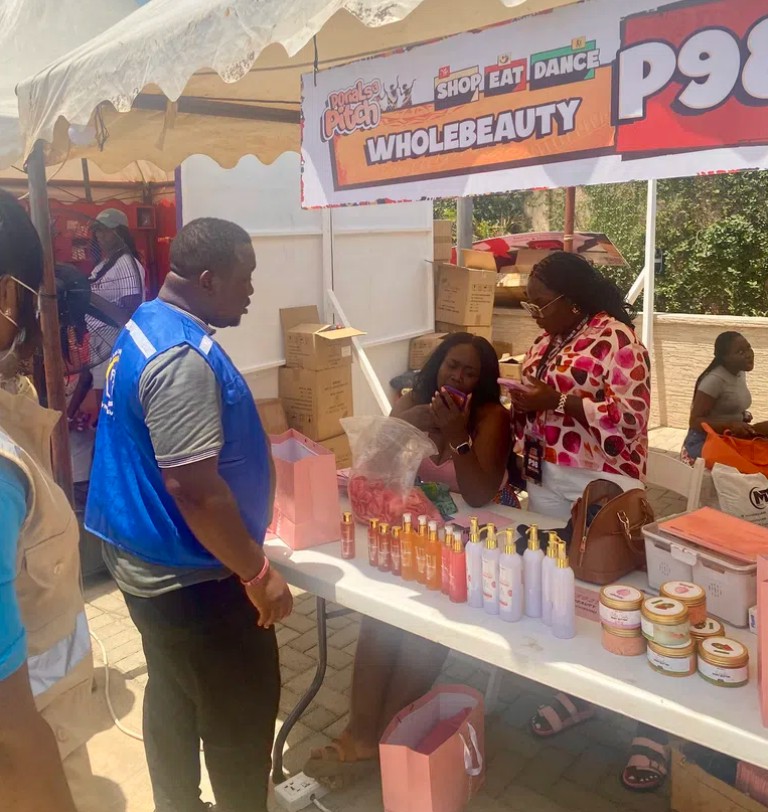
The latest enforcement action by Ghana’s Food and Drugs Authority Ghana at Porials Pitch 3 in Accra highlights a growing regulatory push to clean up informal markets where unregistered and potentially unsafe consumer goods continue to circulate.
During the operation, FDA enforcement officers seized a range of products that had not been approved for sale in the country. The agency explained that the exercise forms part of a broader national strategy to protect public health by removing items that bypass mandatory safety and quality checks.
What makes this development significant is not just the seizure itself, but the environment in which these products are being sold. Informal trading spaces in urban markets often operate with limited regulatory visibility, making them vulnerable entry points for unregistered food items, cosmetics, and medicinal products. In such settings, consumers are frequently exposed to goods without clear labelling, traceable origins, or verified manufacturing standards.
The FDA emphasized that the confiscated items were removed specifically because they had not gone through the required registration process under Ghana’s Public Health Act 2012, also known as Act 851. This law requires all food, drugs, and cosmetic products sold in the country to be officially registered before reaching the market. The purpose of this regulation is to ensure that products meet safety, quality, and efficacy standards before they are consumed or applied.
This latest operation in Accra is part of a wider enforcement pattern that has been unfolding across the country. Similar interventions have previously taken place in other regions, including the Volta Region, where large quantities of unregistered diaper products were removed from the market due to concerns about safety and hygiene standards. These recurring operations indicate that regulators are increasingly focusing on preventive enforcement rather than reactive responses after harm occurs.
From a public health perspective, the issue extends beyond regulatory compliance. Unregistered products can pose serious risks because their ingredients, production environments, and storage conditions are often unknown. In some cases, products may be counterfeit or illegally imported through unmonitored supply chains, increasing the likelihood of contamination or substandard formulation.
Experts in consumer safety argue that enforcement actions like this are only one part of the solution. Long term effectiveness depends on improving consumer awareness, strengthening supply chain monitoring, and increasing accountability among distributors and retailers. Without these supporting systems, unregulated products can quickly reappear in the market under different branding or distribution channels.
The FDA has therefore urged consumers to take a more active role in verifying the legitimacy of products before purchase. This includes checking for FDA registration numbers, reading product labels carefully, and avoiding purchases from informal or unverified sales points where regulatory oversight is limited.
The broader implication of this crackdown is the increasing formalization of Ghana’s consumer goods market. As enforcement intensifies, businesses operating outside regulatory frameworks may face higher risks of product seizure, penalties, or permanent removal from the market. This is likely to encourage more suppliers to pursue proper registration processes, which could gradually improve overall market safety standards.
However, enforcement alone will not eliminate the underlying challenge. Ghana’s retail ecosystem still relies heavily on informal trade networks, which are deeply embedded in local distribution systems. Balancing regulatory control with market accessibility will therefore remain a key policy challenge.
In the long term, sustained FDA operations could help shift consumer behaviour, strengthen trust in approved products, and reduce the circulation of unsafe goods. The success of this effort will ultimately depend on how consistently regulations are enforced and how effectively the public is engaged in understanding product safety standards.
Also Read: