

 By owuiye Ahmed zuleihat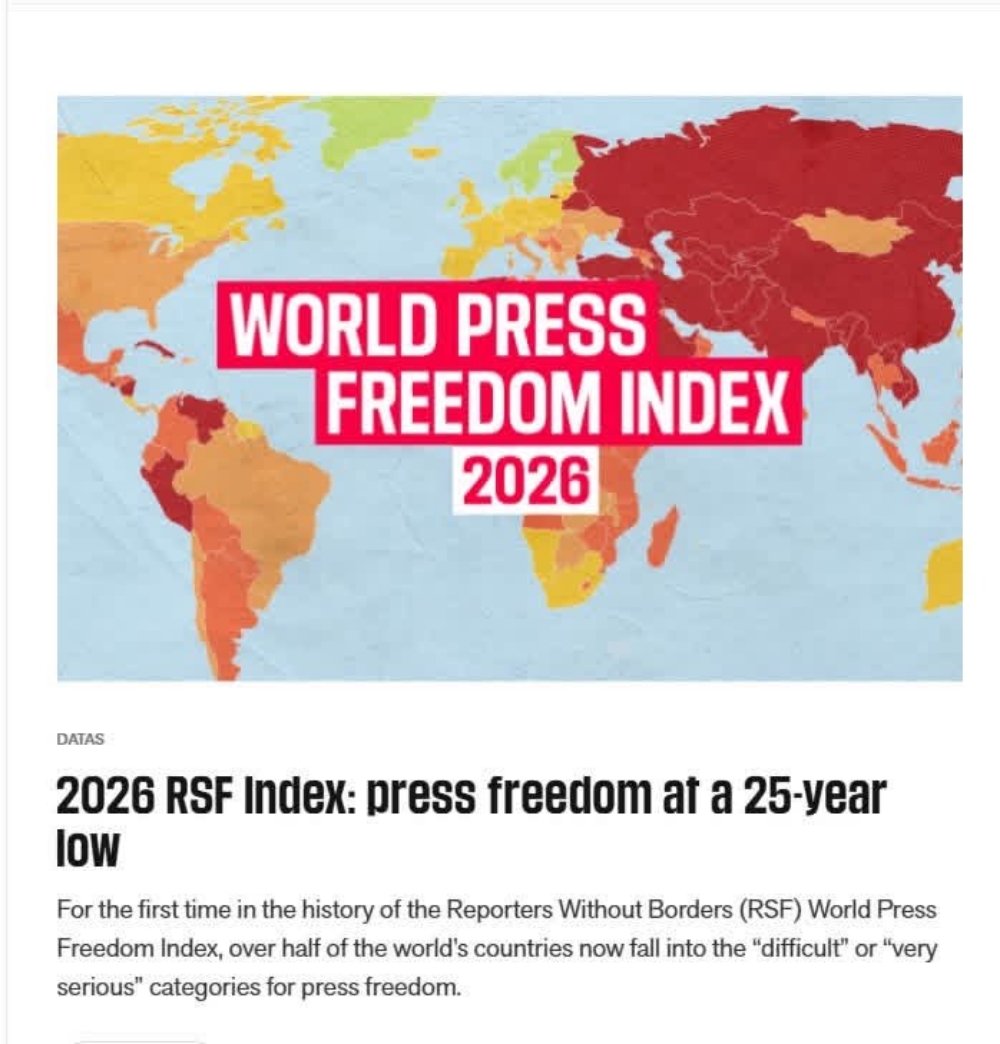
Ghana Rises to 4th in Africa on Press Freedom Index, MRI Urges Caution By News Ghana- May 4, 20260 Journalists Journalists Ghana has climbed to 39th place globally and 4th in Africa on the 2026 World Press Freedom Index published by Reporters Without Borders (RSF), but the Media Research Institute (MRi) has cautioned that the improvement, while welcome, does not reflect the country’s full potential
Ghana sports reportsRSF released the index on April 30, coinciding with World Press Freedom Day on May 3, under the theme “Shaping a Future of Peace.” Ghana’s global ranking improved by 13 places from 52nd in 2025, and its overall score rose from 67.13 to 72.20. On the continent, Ghana trails only South Africa, Namibia and Seychelles in the rankings.The improvement comes against a deeply troubling global backdrop.
The 2026 index records press freedom at its lowest point in 25 years, with more than half of the 180 countries assessed — 52.2 percent — now classified as having “difficult” or “very serious” conditions for journalists. RSF described the criminalisation of journalism as an accelerating global trend, driven by the misuse of national security legislation, strategic lawsuits, and political hostility toward independent media.Ghana’s progress stands out in this context,
but MR argued in a statement marking World Press Freedom Day that it should not be mistaken for a settled achievement. “MRi believes, whilst Ghana’s latest ranking on the World Press Freedom Index is a positive stride worth a pat on the shoulder, it is not impressive to warrant a wave of a white handkerchief, given the country’s potential to do better and pedigree as a pacesetter in Africa’s emancipation at all fronts,” the Institute said.
MRi’s breakdown of the index indicators reveals uneven performance. Ghana ranked 29th globally in both the Political and Legal categories, but fell to 50th in Economic conditions, 49th in the Social indicator and 60th in Security, pointing to persistent structural weaknesses in the media landscape that the headline ranking does not fully capture.Ghana sports reports
The Institute specifically cautioned the government against weaponising legal frameworks to restrict press freedom. “MRi particularly cautions the government to refrain from weaponising the law to criminalise press freedom,” its statement read, adding that collective efforts should focus on consolidating gains rather than allowing complacency to take hold.
concluded by commending Ghanaian journalists and media practitioners for their continued dedication to public interest reporting, democratic accountability and national development.
Infographic On Views On Media Freedom Most Africans Back Press Freedom, But Fewer Believe It Exists Roger A. Agana – May 2, 2026 Dj Sky And Abd Traore DJ Sky and Abd Traore Launch “One World Circle” TV show Isaac Kofi Dzokpo – January 14, 2026 Tv Licence Competition Expert Warns TV License Revival Threatens Private Broadcasters News Ghana – October 15, 2025 Broadcasting Committee Government Launches Committee to Overhaul Ghana’s Broadcasting Standards News Ghana – October 15, 2025 Newsghana NewsGhana Emerges as Ghana’s Premier Digital Portal News Ghana – October 8, 2025 Accra Street Journal New Logo Ghanaian Entrepreneur Builds Street-
Level Media Platform News Ghana – September 19, 2025 David Tamakloe New PRINPAG President Pledges Media Reforms in Ghana News Ghana – September 4, 2025 NPP and NDC Former Minister Condemns Political Protection of Offensive Remarks News Ghana – August 17, 2025 Akuapem Poloo Akuapem Poloo Prioritizes Faith Alignment in Relationships News Ghana – August 4, 2025 News Ghana
According to the 2026 World Press Freedom Index released by Reporters Without Borders (RSF) on April 30, Ghana now ranks 39th worldwide and 4th in Africa — a solid jump from 52nd globally last year. The country’s score also improved noticeably, rising from 67.13 to 72.20. In Africa, only South Africa, Namibia, and Seychelles sit ahead of Ghana.This progress stands out even more because the global picture is quite bleak. RSF reports that press freedom worldwide is at its lowest point in 25 years. More than half of the 180 countries surveyed — 52.2% —
now fall into the “difficult” or “very serious” categories for journalists. From crackdowns using national security laws to strategic lawsuits and outright political hostility, independent journalism is under pressure in many places.Yet for Ghana, the story is one of genuine forward movement. That’s worth celebrating in a tough international climate.Not time to wave the white handkerchiefThe Media Research Institute (MRI) welcomed the improvement but struck a note of caution in its World Press Freedom Day statement. While calling the rise “a positive stride worth a pat on the shoulder,” the Institute warned against treating it as a finished achievement.
“Given the country’s potential to do better and its pedigree as a pacesetter in Africa’s emancipation at all fronts,” MRI said, the current ranking is encouraging — but not yet impressive enough to celebrate wildly.The Institute pointed out that the headline global and continental rankings hide some important weaknesses when you dig into the details. Ghana performed strongly in the Political and Legal indicators (ranking 29th globally in both), but lagged in other areas:
These lower scores highlight ongoing structural challenges in the media environment — issues like financial sustainability, social pressures, and safety concerns that still need serious attention.A call for vigilanceMRI specifically cautioned the government against using legal tools to stifle criticism or criminalize journalism. “MRi particularly cautions the government to refrain from weaponising the law to criminalise press freedom,” the statement read.
Instead of complacency, the Institute called for collective effort to build on the gains already made. Ghana has a long tradition of vibrant media and democratic accountability, and the goal should be to strengthen that foundation rather than risk sliding backward.At the same time, MRI commended Ghanaian journalists and media practitioners for their resilience and commitment to public interest reporting, holding power to account, and contributing to national development —
especially under sometimes difficult conditions.Why this mattersIn many parts of the world, press freedom is retreating. Ghana’s rise, even with its imperfections, shows that steady progress is possible. But as MRI reminds us, rankings are only snapshots. The real test is whether the country can address the economic fragility of many newsrooms, improve safety for reporters, and resist the temptation to use laws as weapons against uncomfortable stories.World Press Freedom Day (May 3) came with the theme “Shaping a Future of Peace.”
For Ghana, that future depends on keeping media spaces open, independent, and economically viable.The improvement is real. The work ahead remains significant. And the conversation about how to make Ghana’s media landscape even stronger is one worth having — openly and vigorously.
Time to Celebrate Too Loudly Ghana has just received some encouraging news on the global stage. For the first time in recent memory, the country has climbed to 39th place worldwide and a very respectable 4th in Africa in the 2026 World Press Freedom Index released by Reporters Without Borders (RSF). It’s a noticeable step forward that many journalists and media watchers have welcomed with cautious optimism. But behind the improved numbers lies a more complex story —
one that local experts say should inspire hard work rather than loud applause.The index, published on April 30 to coincide with World Press Freedom Day on May 3, shows Ghana jumping 13 places from 52nd globally in 2025. Its overall score rose from 67.13 to 72.20. On the African continent, only South Africa, Namibia, and Seychelles now rank higher. In a world where press freedom is under serious strain, this progress stands out. Yet the Media Research Institute (MRI) — a Ghanaian think tank focused on media issues — is urging citizens, journalists, and the government not to get carried away.“This ranking is a positive stride worth a pat on the shoulder,”
MR noted in its statement marking World Press Freedom Day. “But it is not impressive enough to warrant waving a white handkerchief, given the country’s potential to do better and its proud history as a pacesetter in Africa’s journey toward freedom and development.”A Troubling Global PictureTo truly appreciate Ghana’s improvement, it helps to look at the bigger picture. According to RSF, press freedom across the globe is at its lowest point in 25 years. Out of 180 countries assessed, more than half — 52.2% — are now classified as offering “difficult” or “very serious” conditions for journalists. Many governments are increasingly turning to national security laws, expensive lawsuits, and political pressure to silence critical voices. Independent media outlets face harassment, financial struggles, and sometimes outright hostility.
Against this gloomy backdrop, Ghana’s rise feels refreshing. It reflects years of relatively vibrant media activity, active civic engagement, and a political culture that — despite occasional tensions — has generally allowed journalists to do their work. Ghanaians have grown accustomed to seeing sharp commentary on radio, investigative reports in newspapers, and lively debates on
This openness has become part of the country’s democratic identity since the return to multiparty democracy in the early 1990s.Still, MRI believes the headline numbers don’t tell the full story. When you break down the index into its different categories, Ghana’s performance
Economic conditions: 50th — a weaker spot, highlighting the financial difficulties many media houses face, from low advertising revenue to sustainability challenges.
Social indicator: 49th — pointing to issues like public trust, polarization, and sometimes hostile attitudes toward journalists on social media.Security: 60th — perhaps the most concerning, as it reflects ongoing risks, threats, and safety concerns that reporters still encounter in parts of the country.These gaps matter. A high overall ranking can create a false sense of comfort if the underlying problems — especially economic fragility and safety issues — are not addressed.
The Dangers of ComplacencyMRI’s caution comes from a place of genuine care for Ghana’s media ecosystem. The Institute is particularly worried about any temptation by those in power to “weaponise the law” against journalists. Using defamation suits, cybersecurity regulations, or national security provisions to harass or silence critical reporters is a growing global trend — and one Ghana must actively resist if it wants to maintain and improve its standing.
“MRi particularly cautions the government to refrain from weaponising the law to criminalise press freedom,” the statement emphasized. Instead of celebrating rankings, the focus should be on genuine consolidation: strengthening independent media financially, improving safety for journalists working in sometimes challenging environments, and fostering a culture where criticism is seen as part of democratic growth rather than an attack.
This balanced view is important. Ghana has long been viewed as one of Africa’s more stable and open democracies. Its media has played a key role in exposing corruption, holding leaders accountable during elections, and giving voice to ordinary citizens. But challenges remain real. Many newsrooms operate on tight budgets. Digital disruption has hurt traditional revenue streams.
Meanwhile, political polarization sometimes spills over into threats or online abuse directed at journalists. In rural areas or during tense political periods, reporters can still face intimidation.Celebrating the People Behind the HeadlinesDespite these hurdles, Ghanaian journalists continue to show remarkable dedication. MRI took time to commend them for their commitment to public interest journalism, democratic accountability, and national development.
From investigative pieces that uncover mismanagement of public funds to community radio stations that amplify local voices, the media plays a vital everyday role in keeping Ghana’s democracy alive and responsive.World Press Freedom Day this year carried the theme “Shaping a Future of Peace.” For Ghana, building that peaceful and prosperous future requires a media landscape that is not only free but also professional, sustainable, and trusted.
Peace isn’t just the absence of conflict — it includes informed citizens who can hold their leaders accountable without fear, and journalists who can do their jobs safely.What Needs to Happen NextLooking ahead, several practical steps could help Ghana move from “good” toward “excellent” in future indexes: