

 By Ishmeal
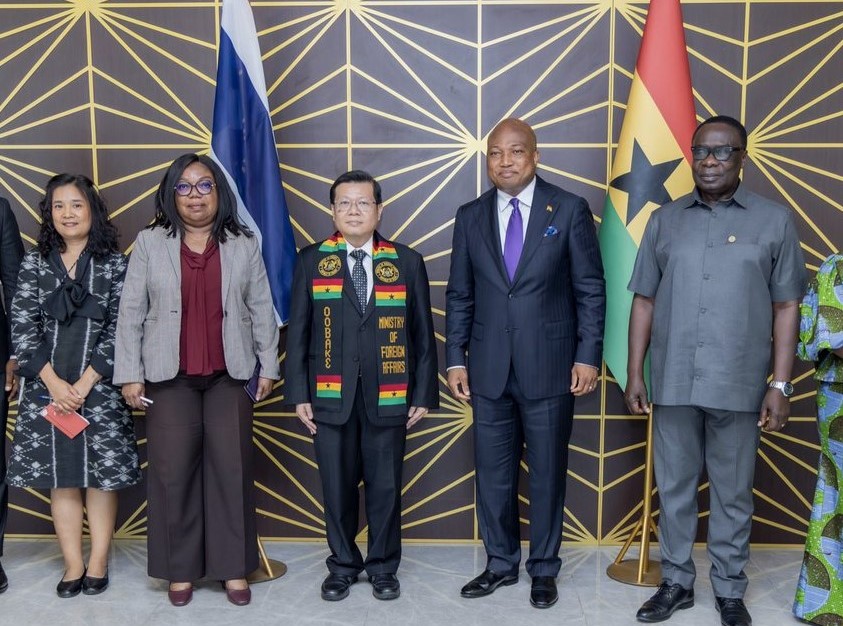
Ghana has received the Open Letters of four newly appointed non-resident ambassadors from Sweden, Slovakia, Finland and Thailand, as the government moves to strengthen diplomatic and economic relations with the four countries.
The Minister for Foreign Affairs, Samuel Okudzeto Ablakwa, received the envoys on Monday, November 9, 2026.
The ambassadors-designate are Anna Westerholm of Sweden, Martin Podstavek of Slovakia, Sanna Selin of Finland and Thirapath Mongkolnavin of Thailand.
Following the engagements, Ablakwa announced several areas of cooperation, including visa waiver negotiations, investment opportunities, technology, education, agriculture and fisheries.
Ghana and Slovakia to begin visa waiver negotiations
Ghana and Slovakia have agreed to immediately begin negotiations towards a Visa Waiver Agreement.
Slovakia is also expected to host a Ghana-Slovakia business forum within the next two weeks. The forum will focus on opportunities in the automotive, banking and pharmaceutical sectors.
The two countries are also exploring a possible partnership to supply buses to Ghana and establish a vehicle assembly plant.
Ghana and Sweden to strengthen economic ties
Ghana and Sweden are expected to expand their longstanding relationship through cooperation in several sectors.
According to Ablakwa, the partnership will support President John Dramani Mahama’s New Economy initiative.
The areas identified include railway construction, artificial intelligence investments, agribusiness, digitalisation of revenue administration and defence cooperation.
Finland partnership to cover education and security
Ghana and Finland have also agreed to deepen existing cooperation in education, technical and vocational education and training (TVET), fintech incubation, maritime security and counterterrorism.
The expanded partnership is expected to strengthen collaboration in skills development, financial technology and security.
Thailand to support Ghana’s BRICS ambition and agriculture
Ghana and Thailand will work together on Ghana’s application for BRICS partnership, drawing on Thailand’s experience as an official BRICS partner country.
The two countries have also agreed to hold political consultations and exchange expertise in rice production.
The cooperation is intended to help Ghana reduce its dependence on rice imports while building local production capacity and creating jobs.
Other areas include labour mobility and fisheries cooperation, with a particular focus on boosting canned fish production in Ghana.
Ghana seeks stronger international partnerships
The engagements form part of Ghana’s broader diplomatic efforts to attract investment, expand trade and build stronger relationships with international partners.
While the proposed areas of cooperation present opportunities for economic growth, some initiatives, including the visa waiver arrangement and vehicle assembly partnership, will require further negotiations and implementation.
Also Read:Trump Says Fbi Probes Nvidia Ceo Over Spy Allegations