

 By Collins Sarkodieh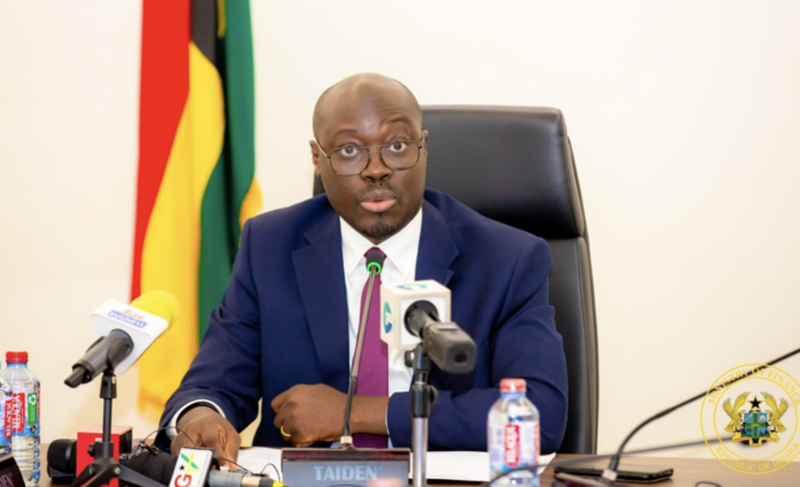
The Finance Minister, Dr. Cassiel Ato Baah Forson, has announced that the newly established Value for Money Office will officially begin operations in January 2027. This specialized institution was created following President John Dramani Mahama’s assent to the Value for Money Office Bill, a strategic move intended to eliminate the over-inflation of government contracts and wasteful public spending.
The primary objective of this office is to safeguard the public purse by reviewing all single-source procurement contracts before they are finalized. By shifting this responsibility from the Finance Ministry’s Legal Division to a dedicated technical office, the government aims to ensure that every cedi spent on infrastructure and services reflects the true market value.
This reform is a direct response to historical challenges such as abandoned projects, massive cost overruns, and the “padding” of contract prices. Dr. Forson believes that the office will pay for itself almost immediately by identifying and preventing billions of cedis in unnecessary expenditure, ultimately creating the fiscal space needed to fund other critical sectors of the economy.
Why is the Value for Money Office starting in January 2027?
The January 2027 start date allows the government a six-month window to properly constitute the office, hire specialized technical staff, and nominate leadership. Finance Minister Dr. Forson explained that this preparation period is essential to ensure the office has the “requisite skills and ability” that were previously lacking when the Finance Ministry’s Legal Division handled these tasks.
Transitioning from a bill to a fully functional institution requires setting up rigorous implementation frameworks and procurement audit protocols. During the remainder of 2026, the government will focus on recruitment and training to ensure that the technical team can effectively analyze complex government contracts and spot over-pricing trends from day one.
The January launch also aligns with the new fiscal year, allowing the office to oversee the 2027 budget execution from the very beginning. This timing ensures that any new single-source procurements initiated in the 2027 cycle are subjected to the highest standards of scrutiny before a single signature is placed on a contract.
How will the Value for Money Office curb public sector corruption?
The office will curb corruption by mandating that all single-source procurement contracts pass through a rigorous technical review to check for over-inflated pricing and “contract padding.” By institutionalizing this process, the government is removing the discretionary power of individuals and replacing it with a data-driven, skill-based auditing system.
In the past, the lack of a specialized technical body meant that contract prices could be artificially increased without easy detection. The Value for Money Office Act now provides the legal teeth to reject contracts that do not meet market benchmarks. This creates a transparent “bottleneck” where only fair-value projects can proceed, significantly reducing the incentive for kickbacks and fiscal mismanagement.
Dr. Forson noted that similar offices in other countries have proven highly effective at reducing public debt. By ensuring that a project that should cost GH¢10 million isn’t billed at GH¢20 million, the office protects taxpayers and ensures that the government gets more “bang for its buck” on every public infrastructure project.
What is the difference between this office and the previous Finance Ministry role?
The new Value for Money Office is a properly institutionalized, technical body with specialized expertise, whereas the previous role was handled by the Legal Division of the Ministry of Finance. The Minister admitted that the Legal Division lacked the specific engineering, quantity surveying, and financial forensic skills required to truly evaluate if a project offered real value for money.
The previous arrangement focused largely on the legalities of the contract the fine print and signatures—rather than the actual technical cost of the materials and labor. The new office will be staffed by professionals who understand the industrial costs of building roads, hospitals, and schools, allowing them to challenge “padded” estimates with authority.
By making the office independent and technically focused, the government is ensuring that “Value for Money” is no longer a secondary legal check but a primary economic requirement. This separation of powers within the financial ecosystem is designed to close the loopholes that allowed for abandoned projects and massive cost overruns in the past.
Factual Insights into Ghana’s Public Expenditure Reform:
- Legislative Milestone: President Mahama assented to the Value for Money Office Bill alongside the Governance Advisory Council Bill and the Legal Education Bill in May 2026.
- Procurement Focus: The office will have mandatory oversight over all “single-source” procurement, which is often identified as the highest-risk area for contract inflation.
- Fiscal Space: Reducing contract inflation by even 10% could save Ghana billions of cedis annually, according to regional economic benchmarks.
- Staffing Timeline: The next six months (June–December 2026) are dedicated to recruiting the leadership and technical audit teams.
- Global Precedent: Value for Money (VfM) audits are standard in countries like the UK and Canada, where they are used to ensure “Economy, Efficiency, and Effectiveness” in public spending.
- Cost Overruns: Historical data in West Africa shows that unmonitored infrastructure projects can exceed their original budgets by over 30% due to poor oversight.
Can the Value for Money Office really “pay for itself”?
Finance Minister Dr. Forson has stated that this office is one of the few government institutions that can “pay for itself” from day one by saving more money than it costs to operate. By preventing even a single major over-inflated contract, the office covers its annual operational budget, including salaries and technology costs.
The “savings” generated by the office are effectively recovered funds that would have otherwise been lost to “leakage” or corruption. These funds can then be redirected to develop other sectors, such as healthcare and education. This makes the office an investment in national development rather than an administrative burden.
As Ghana continues its economic recovery, the ability to do “more with less” is paramount. The Value for Money Office represents a shift toward a more business-like approach to governance, where every expenditure is scrutinized for its return on investment. If the office operates as intended in 2027, it could become the most important tool for fiscal discipline in the country’s history.
The launch of the Value for Money Office in January 2027 marks a critical turning point for transparency and fiscal responsibility in Ghana. By honoring a campaign pledge to institutionalize this office, President Mahama and the Finance Ministry are signaling that the era of over-inflated contracts and “padding” is coming to an end.
While the next six months will be busy with technical recruitment and organizational setup, the long-term benefits are clear. A country that spends its money wisely is a country that can grow sustainably. For Ghanaians, 2027 promises a future where public funds are treated with the respect they deserve, ensuring that national development is built on a foundation of honesty and value.
Also Read: We’ll Return Inflation to Single Digit, Promises Finance Minister-Designate